
Remote Fob Parts Guide for Smarter Replacements
A remote that has cracked, lost its buttons or stopped responding does not always need a complete replacement key. This remote fob parts guide explains what sits inside a typical car key, which components can often be replaced separately, and the details that must match before you order. For vehicle owners, that can mean avoiding unnecessary dealership cost. For locksmiths and garages, it helps keep jobs moving without ordering the wrong component.
What Parts Are Inside a Remote Fob?
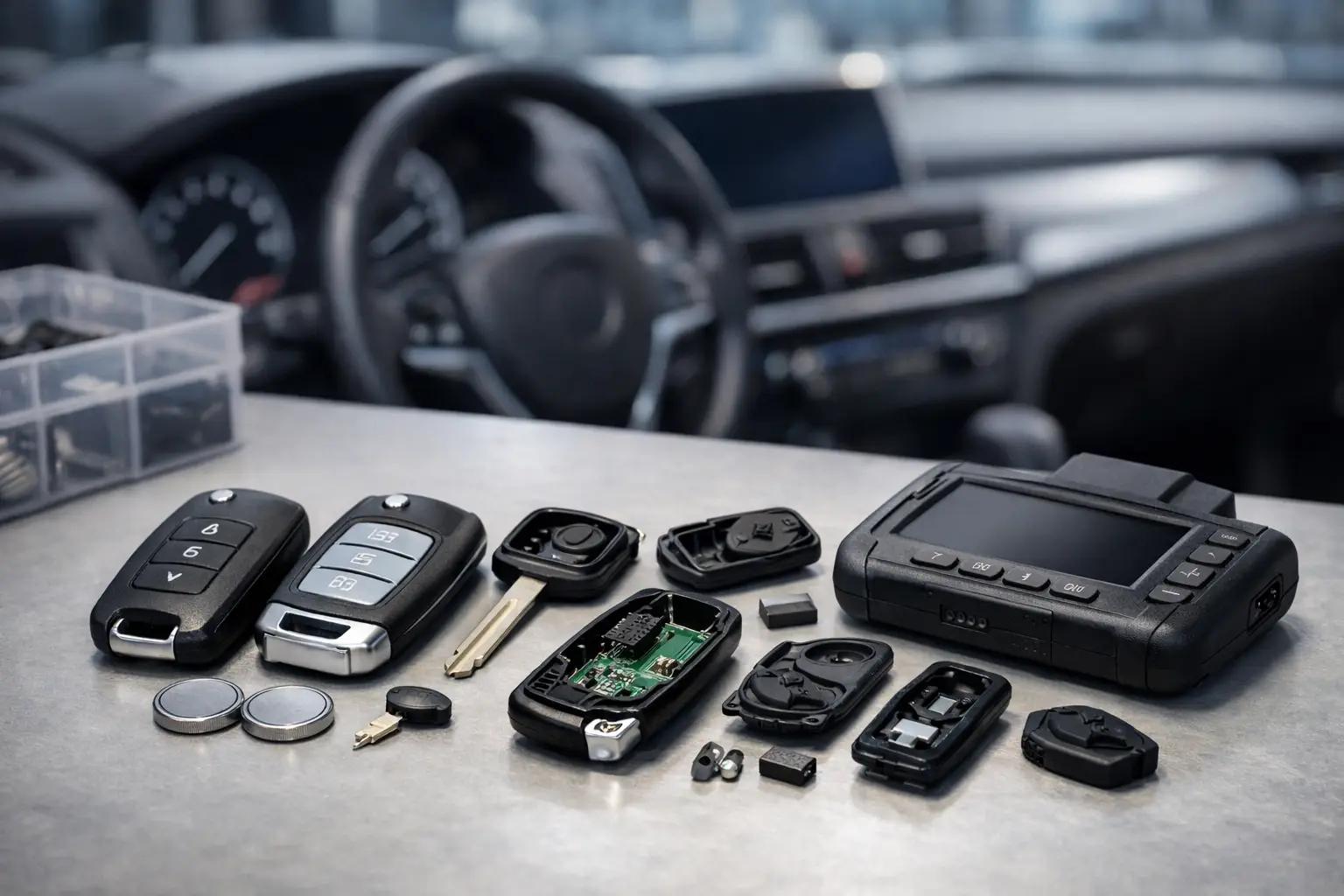
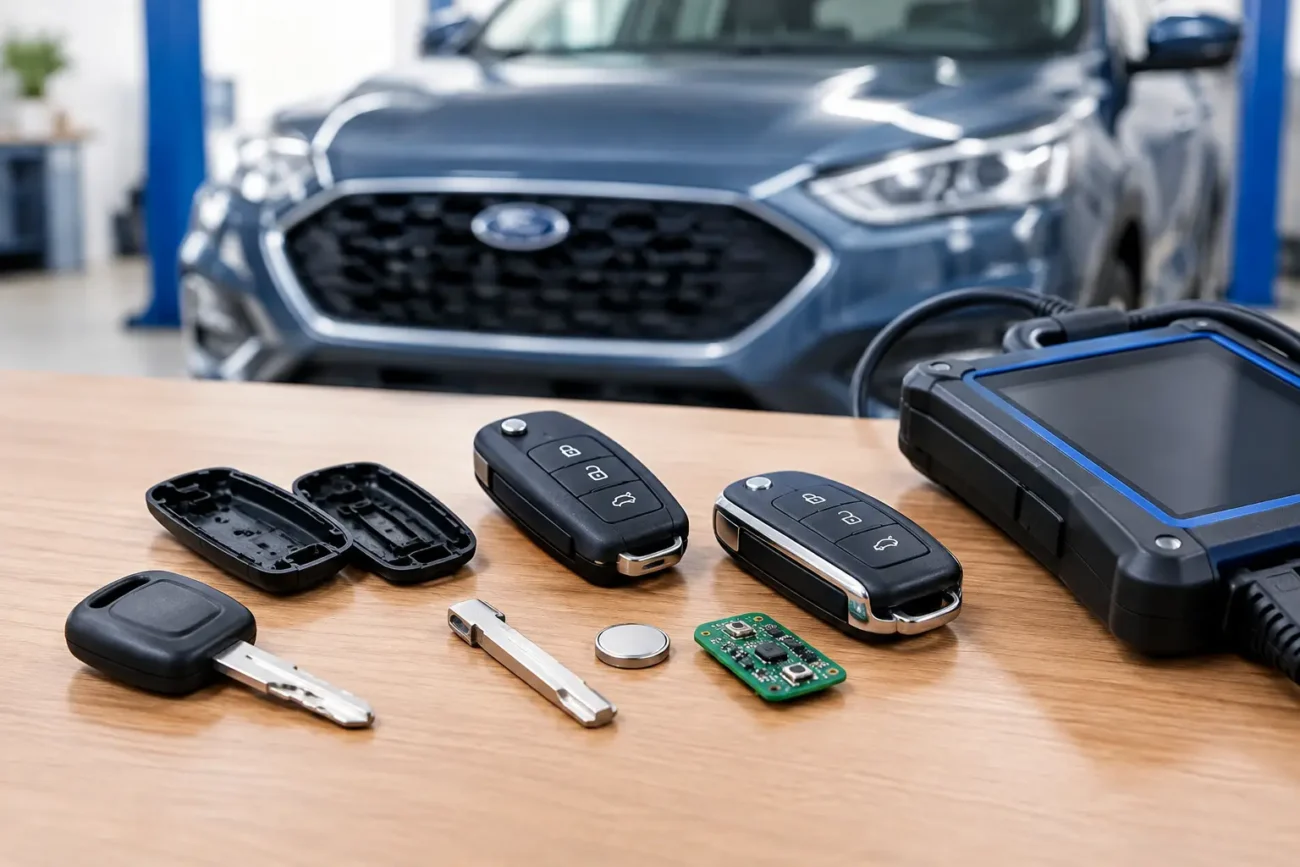
Although key designs vary between manufacturers, most remote fobs are built around a few familiar components. Knowing their individual roles makes it easier to diagnose the fault and buy only what is required.
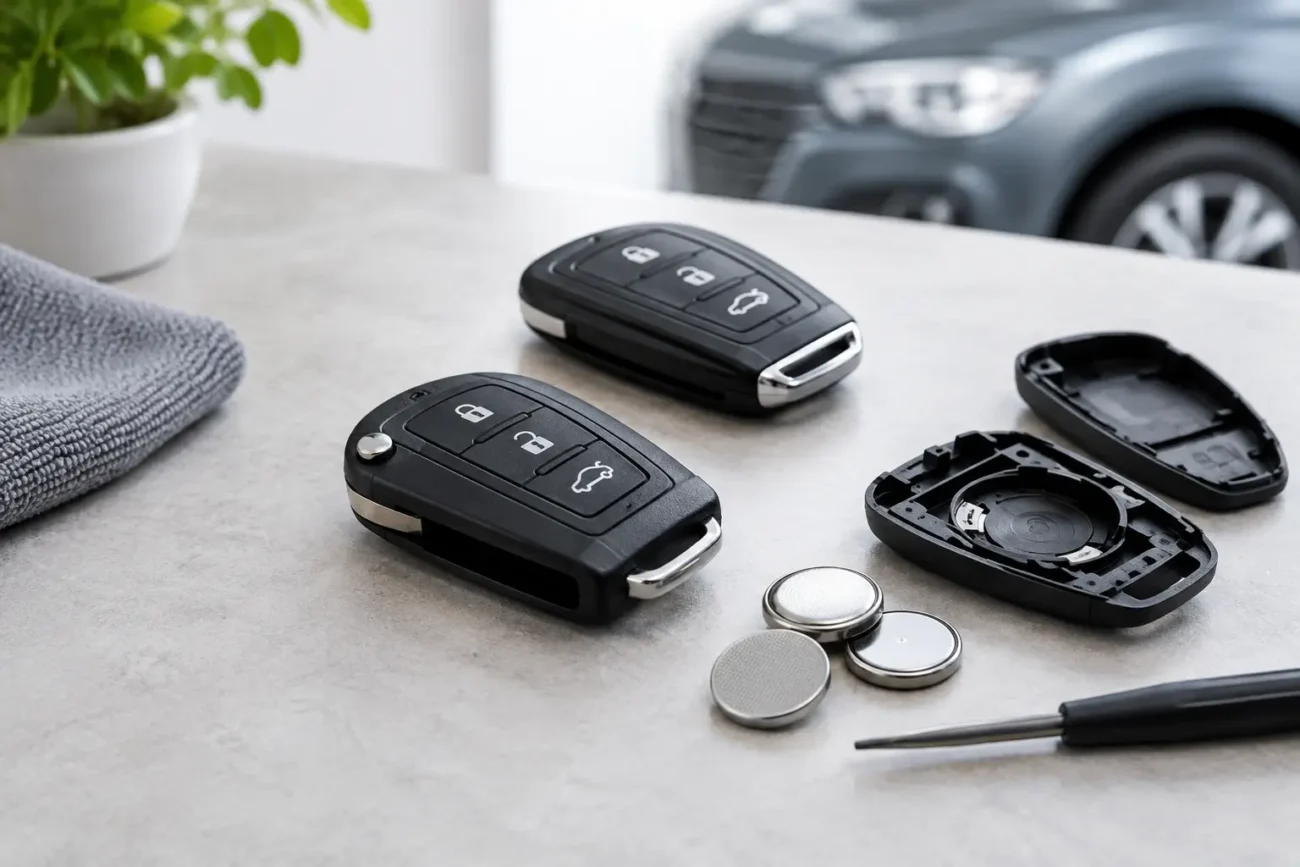
The outer shell, also called the case or housing, protects the electronics and gives the key its button layout. It is usually the first part to wear out. Split seams, broken key rings, missing button pads and a damaged blade hinge are common shell faults. A replacement shell can be a cost-effective answer when the original circuit board and transponder are still working.
The circuit board is the electronic heart of the remote. It carries the buttons, radio transmitter and battery contacts. On many vehicle keys, it also works alongside a separate immobiliser transponder chip. The board must be handled carefully during a shell swap, as a damaged button switch, lifted battery terminal or static damage can turn a cosmetic repair into a non-working remote.
A battery supplies power to the remote locking functions. It does not usually power the immobiliser chip itself, so a flat battery may prevent locking and unlocking while the vehicle still starts. Battery type matters: the correct code, such as CR2032 or CR2025, should be confirmed from the old cell or fob specification. Similar-looking batteries can differ in thickness and may not make reliable contact.
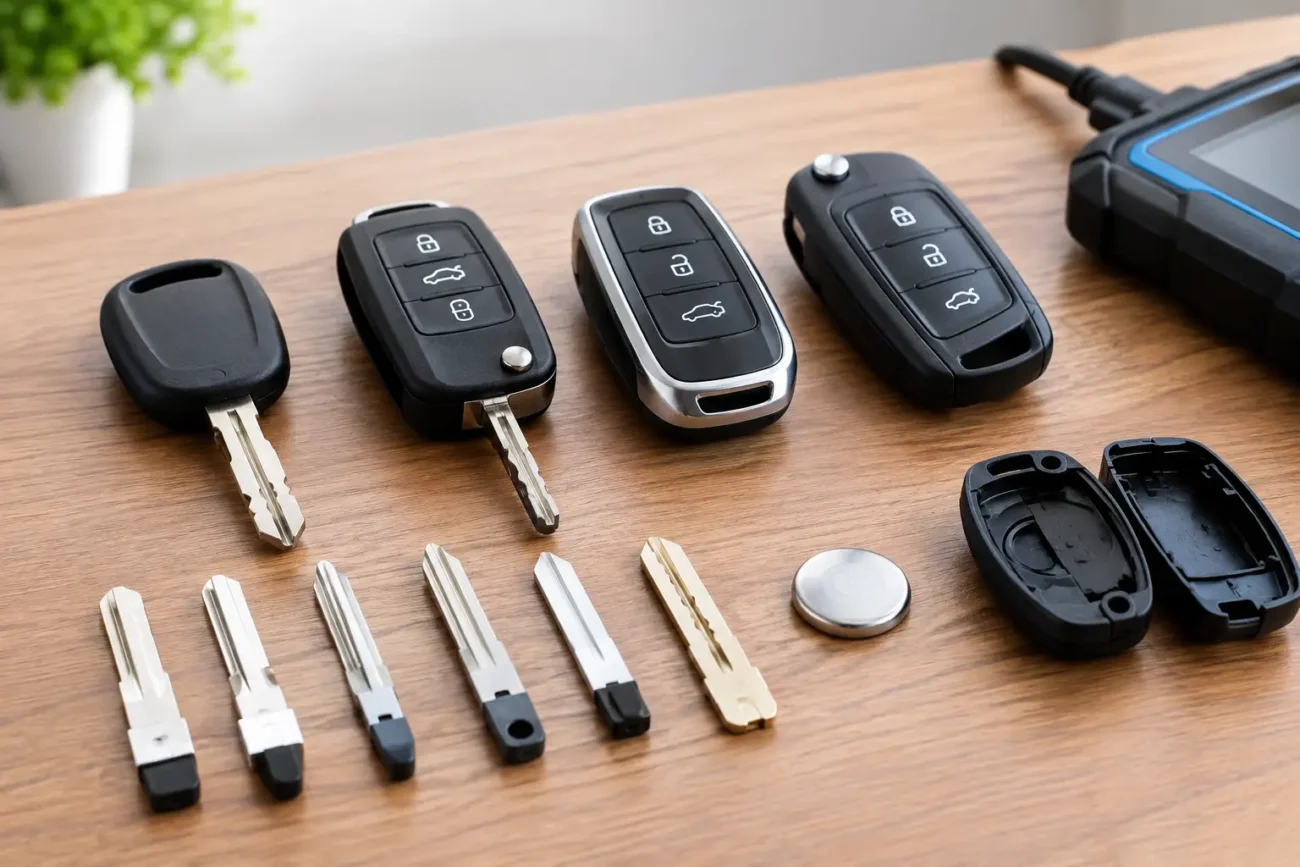
Shells, Button Pads and Key Blades
Replacement shells are not universal. The number of buttons, their shape, the position of the battery compartment and the internal locating points all need to correspond with the original fob. A three-button Ford-style shell, for example, is not automatically suitable for every three-button Ford remote.
Rubber button pads are sometimes supplied as part of a shell and sometimes separately. If the plastic case is sound but the buttons have become soft, torn or difficult to press, a new pad may be all that is needed. Check that its conductive contact points align with the switches on the existing board.
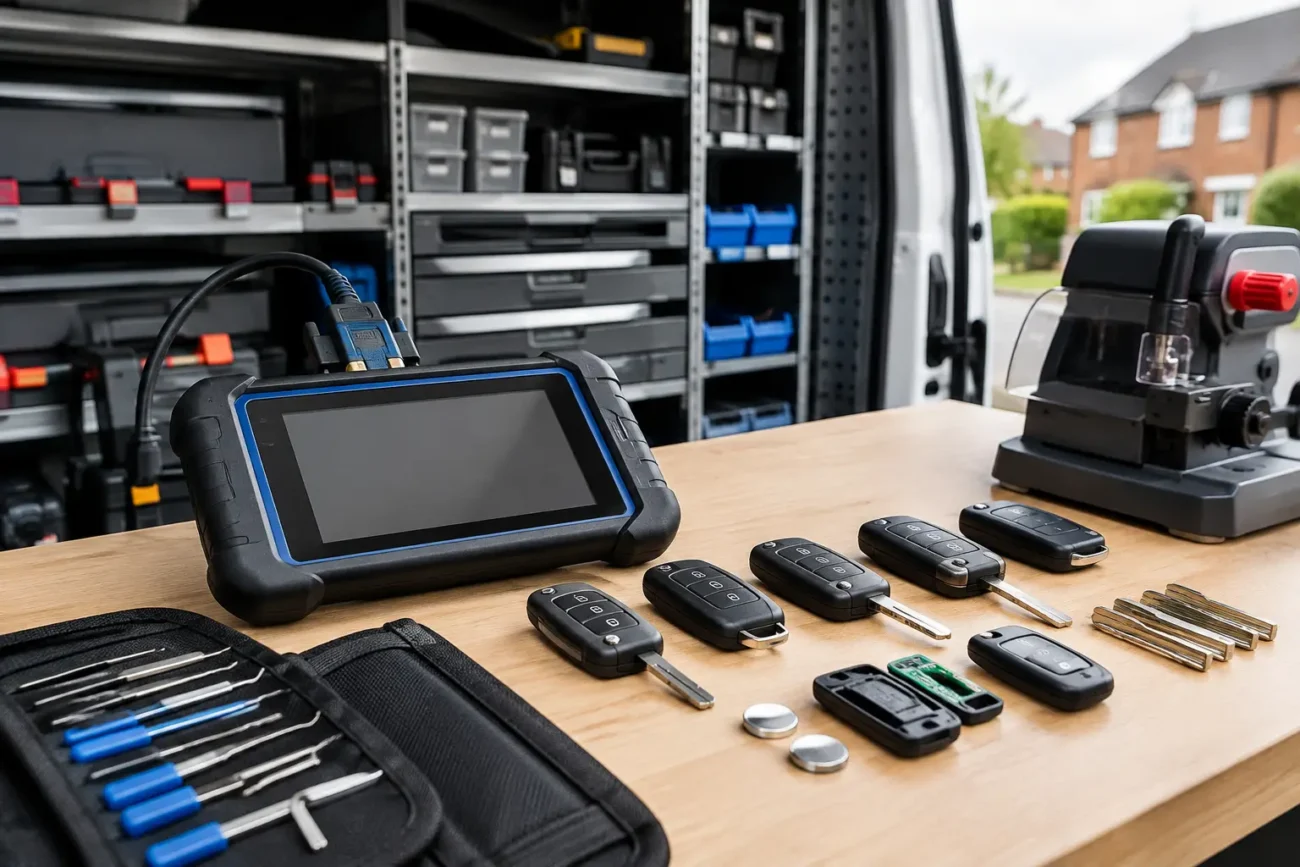
Where the key has a flip-out blade, the blade profile is equally important. A replacement blade may need cutting by a suitable key cutter, while some shells require the original blade to be transferred. Blade style, hinge design and retaining pin arrangement vary, even across vehicles from the same manufacturer.
Circuit Boards, Transponder Chips and Smart Key Components
A remote circuit board is not simply a generic electronic part. Frequency, button configuration and board reference can all affect whether it communicates with the vehicle. UK and European remotes commonly operate on 433 MHz, but this must never be assumed from appearance alone.
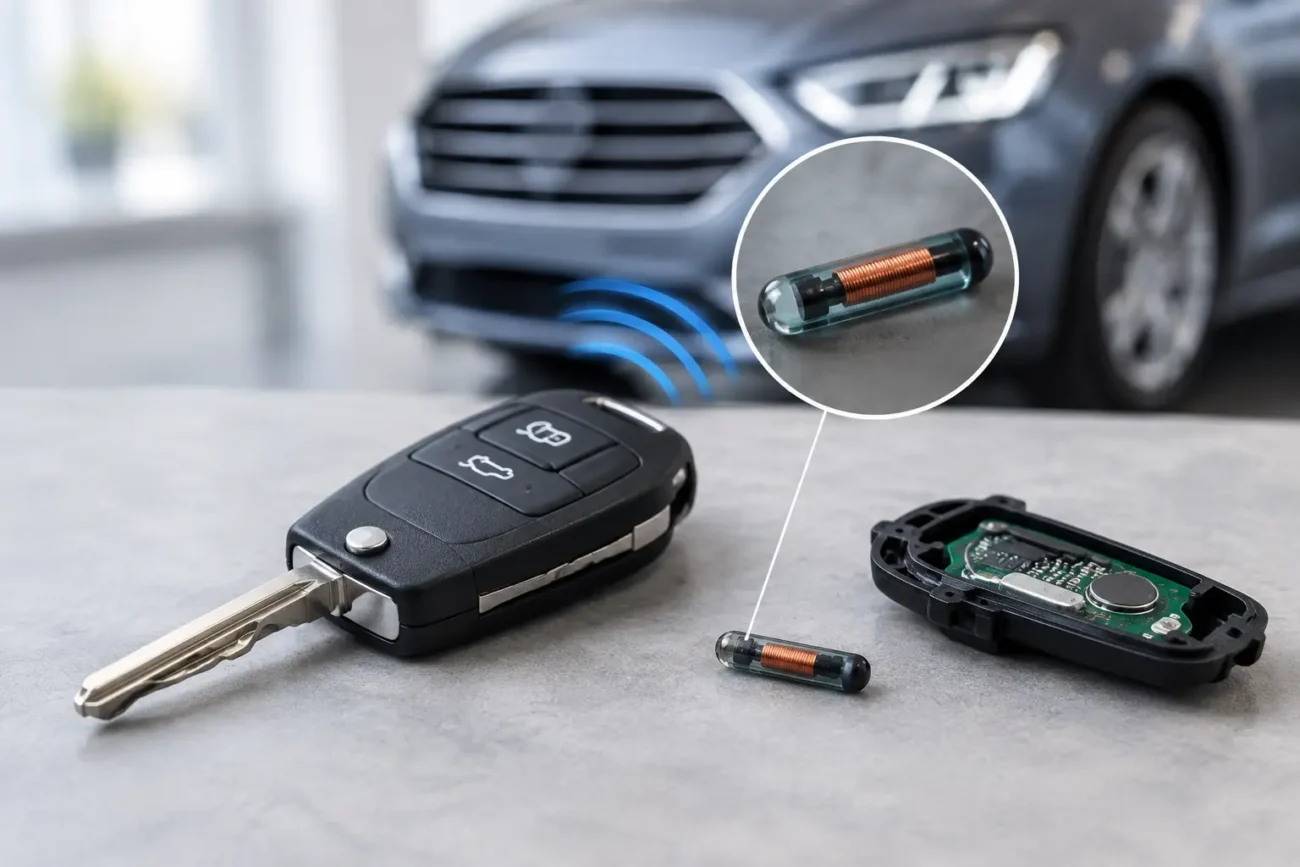
The immobiliser transponder is the component that permits the engine to start when recognised by the vehicle. It may be a small glass capsule, carbon chip or integrated element on the circuit board, depending on the key design. If you are transferring electronics into a new shell, make sure the transponder is moved too where it is separate. Leaving it in the old case can result in a key that locks the car but will not start it.
Keyless entry and smart keys add further parts, such as emergency key blades, battery trays, proximity antennas and, on some designs, rechargeable cells. These units should be matched particularly carefully by part number and frequency because similar housings can contain different electronics.
Remote Fob Parts Guide: How to Identify the Correct Part
The quickest route to a suitable replacement is to identify the fob from its technical details rather than the vehicle badge alone. A manufacturer can use several remote versions during one model generation, and facelift vehicles often introduce changes that are not obvious from outside.
Before ordering, compare the original fob against the product specification and check these points:
- the vehicle make, model, year and body variant where relevant
- the exact number and arrangement of buttons
- any printed part number or board reference inside the remote
- the radio frequency and transponder or chip type, if stated
- the blade profile, flip mechanism and battery position
Photographs are useful for confirming the shape of a shell, but they should support, not replace, those checks. The internal moulding is particularly revealing: if the locating tabs, battery holder or circuit board shape differ, the shell may not accept your existing electronics.
For trade buyers, recording board numbers and frequencies at intake saves time later. It also helps distinguish between a job requiring a shell transfer and one requiring a complete compatible remote with programming. For retail customers, a clear photo of both sides of the key and the board, taken before opening or ordering, can prevent an avoidable return.
When a Shell Repair Makes Sense
A shell replacement is usually the sensible choice when the remote works normally but the exterior has failed. Typical examples include a snapped flip blade, worn button symbols, a broken key ring loop or a case that will no longer close around the battery. Reusing the original board and transponder retains the vehicle’s existing recognition, so no remote programming is normally needed solely because the housing has changed.
That said, shell transfers need care. The board should sit flat in its intended position, the battery contacts must touch correctly, and the transponder must be accounted for before the old case is discarded. If the original blade is being reused, ensure it is secure in the replacement hinge. A poorly assembled shell can cause intermittent button operation or allow the blade to work loose.
If the original board has corrosion, missing surface-mounted components, damaged switches or no response after fitting a known-good battery, a new shell will not resolve the electrical fault. In that situation, a replacement remote, repair service from a suitable specialist, or a programmed spare key may be more appropriate.
Choosing a Complete Remote or Smart Key
A complete remote is the practical option when the electronics are beyond repair, the key has been lost, or you need an additional working key. Unlike a shell, a replacement remote normally requires cutting of the blade where fitted and programming to the vehicle. The process and equipment vary by manufacturer, model year and immobiliser system.
Professionals should confirm whether the product is supplied as a remote-only unit, with a transponder included, or as an OEM-board solution. The required programming method should also be established before committing to the job. Some systems can accept an additional key through standard diagnostic procedures, while others require specialist tools, security data or an all-keys-lost process. Those are different jobs with different preparation requirements.
Vehicle owners should be wary of treating programming as an afterthought. A remote can look identical yet remain unsuitable because its frequency, chip specification or board reference is wrong. Selecting by the full compatibility information gives a far better starting point than selecting by looks alone.
Common Ordering Errors to Avoid
The most frequent mistake is ordering a shell based only on button count. Two remotes may both have lock, unlock and boot buttons yet use completely different board shapes and blades. Another common issue is confusing a remote battery fault with an immobiliser fault. Replacing a battery is a sensible first check for weak remote range, but it will not repair a damaged transponder or a failed circuit board.
Do not overlook regional frequency differences either. A fob sourced for a different market may have the same casing but be incompatible with a UK vehicle. Likewise, a smart key emergency blade must match the vehicle lock profile even though the blade is not used for normal keyless operation.
At Global Keys Direct, detailed compatibility information is there to support accurate ordering, but it remains essential to compare part numbers, frequency, button layout, chip details and blade type with the key in hand. This is especially relevant on vehicles with multiple key options across the same registration years.
A Better Starting Point for Any Key Job
Start with the fault, not the catalogue. If the electronics work and the housing is worn, a shell, blade or button pad may be the efficient repair. If the remote has failed electronically or a spare key is needed, identify the exact board and programming requirements before choosing a complete unit. A few minutes spent checking the original fob can turn an urgent replacement into the right replacement first time.
Add a review
Your email address will not be published. Required fields are marked *