
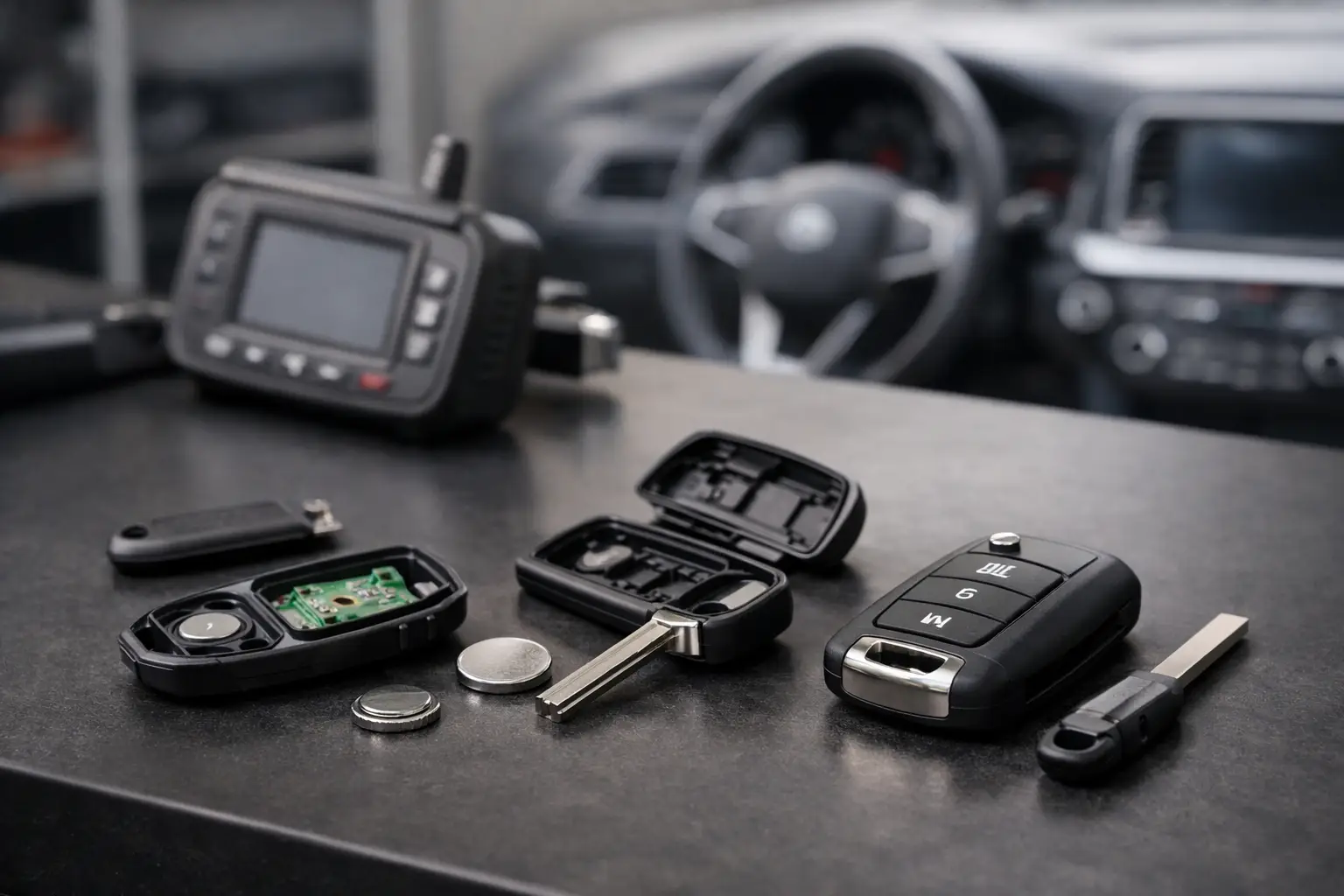
Remote Shell Quality Review: What to Check
A cracked key case can turn a perfectly working remote into a daily annoyance. Buttons may sit loose, the blade may wobble, or the circuit board can become exposed to moisture and dirt. A remote shell quality review focuses on the parts that determine whether a replacement case will restore reliable everyday use: correct fitment, sound moulding, secure blade retention and responsive button action.
For vehicle owners, a replacement shell is often the cost-effective answer when the electronics still work but the outer housing has worn out. For locksmiths, garages and key specialists, shell quality affects both fitting time and the confidence you can have when handing a finished key back to a customer. The lowest-priced case is not always poor, but it should still be assessed against the details that matter for that specific vehicle key.
What a quality remote shell should do
A remote shell has a straightforward job, but it must do it precisely. It needs to hold the existing remote board, battery and transponder components in their correct positions while protecting them from knocks, pocket wear and contamination. It also needs to allow the button contacts to meet the circuit board cleanly every time.
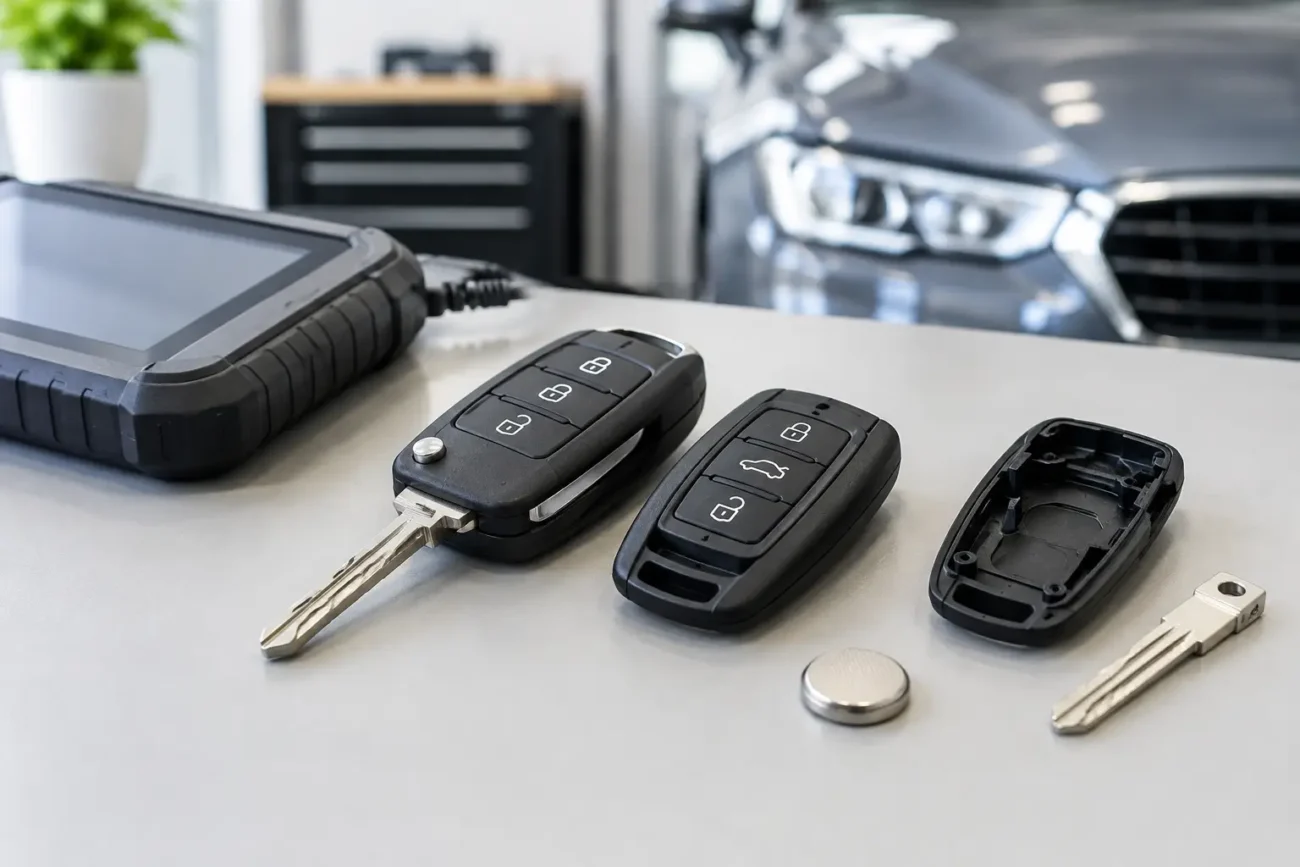
The most convincing replacement shells do not feel fragile or improvised once assembled. The case halves meet evenly, the keyring loop is properly formed, and the blade mechanism operates without excessive movement. On flip-key designs, the release button should return cleanly after use and the blade should lock positively in both the open and closed positions.
That said, an aftermarket replacement shell should be judged as an aftermarket part. Material texture, markings and minor cosmetic details can vary from the original key. The priority is compatible fitment and dependable function, not assuming every replacement case will reproduce every visual feature of the original.
Remote shell quality review: the checks that matter
Confirm the key design before comparing quality
A shell can look almost identical to another version yet be unsuitable. Before ordering, compare the number and position of buttons, the blade profile, the location of the battery compartment, the hinge arrangement and the internal mounting points. Check the part number where available, alongside the vehicle make, model and year range in the fitment information.
Frequency and chip type are especially relevant when buying a complete remote, but they can also help identify the correct family of key. A shell itself does not create a remote signal or replace an immobiliser transponder. It is a housing for compatible existing components, so the circuit board and chip must physically match the internal design.
For trade buyers handling several variants of the same model, this check prevents unnecessary returns and lost workshop time. For retail buyers, clear photographs of the original key alongside the product images are often the quickest way to spot differences in button layout or blade arrangement.
Examine moulding and case alignment
A well-made shell should have tidy edges and consistent joins. Minor moulding marks may be normal on a replacement component, but sharp flashing around the button apertures, hinge, blade channel or keyring eyelet can indicate poor finishing. These areas are subjected to repeated pressure and movement, so they deserve more attention than the outer face alone.
Once fitted, the two halves should close without forcing the retaining screw or clips into place. If the board rocks inside the housing, the shell may be the wrong version or the internal locating posts may not match. Never force a case shut over a circuit board. Pressure in the wrong place can damage button switches, battery terminals or surface-mounted components.
Look also at the battery cover where applicable. It should sit flush and remain secure when the key is handled normally. A loose cover is more than a cosmetic fault: it can allow a battery to move, causing intermittent remote operation that may be mistaken for an electronic problem.
Test button feel and membrane placement
Button feel is one of the clearest indicators of a useful replacement shell. The rubber or silicone membrane should sit flat against the button contacts, with each button aligned to its corresponding switch. When pressed, it should give a consistent response rather than feeling permanently soft, jammed or offset.
A case that looks correct externally can still have slightly misplaced internal button guides. This can lead to one function working reliably while another needs a hard press. On multi-button remotes, test each function only after confirming the board is seated correctly and the battery is fitted securely.
Avoid judging a shell solely by the printed icons. Icons can vary between production runs, and wear on an old key can make the new markings appear different. Position, shape and internal alignment are more useful compatibility checks than cosmetic printing alone.
Check blade retention on flip and fixed-blade keys
The blade area receives more mechanical stress than most parts of a remote shell. On a flip-key case, inspect the hinge pin, spring seat and release mechanism before transferring parts. The blade should deploy smoothly and lock firmly without catching on the housing. When folded, it should sit within the case without protruding or rattling excessively.
A small amount of movement can be normal, particularly on a key that has been carried for years. Noticeable side-to-side play, difficulty locking open or a weak release action is not. These faults become inconvenient quickly and can leave the user struggling at the vehicle door or ignition.
For fixed-blade keys, ensure the blade insert is fully supported by the shell design. The correct blade type matters as much as the case. Do not rely on a similar-looking blade or attempt to adapt it if the mounting arrangement differs.
Material quality and real-world durability
Most replacement remote shells are moulded from durable plastic, but the grade and thickness of material influence how they age. A decent shell should resist normal pocket pressure, keyring knocks and occasional drops. It should not flex heavily when held around the button section or feel thin around the keyring loop.
The keyring loop is worth particular scrutiny. It is easy to overlook, yet it carries the weight and movement of the key set every day. A cleanly moulded, well-supported loop is less likely to crack than one with thin edges or visible stress points.
Durability also depends on how the key is used. A remote carried alone in a pocket will experience less strain than one attached to a heavy collection of keys. Customers who regularly use a flip key in a tight ignition barrel may place more stress on the blade hinge. Even a good shell benefits from being kept away from water, harsh cleaning chemicals and unnecessary impact.
When a new shell is the right repair
Replacing the shell makes sense when the remote functions correctly but the casing is cracked, buttons are worn through, the blade housing is damaged or the keyring mount has failed. It can preserve a working circuit board and avoid the need to purchase a complete remote.
It is not the right answer for every fault. If the remote has no response after a known-good battery is fitted, has suffered water damage, has missing electronic components or has an immobiliser issue, the problem may extend beyond the outer case. A complete compatible remote, diagnostic testing or specialist key services may be required depending on the vehicle and fault.
There is also a practical skill consideration. Many shell transfers are manageable where the design allows the board and battery to move across cleanly. However, some keys contain delicate transponder components or use blade and spring arrangements that require care. If there is any uncertainty, use a suitably experienced automotive key professional rather than risking the original working electronics.
Buying with fitment accuracy in mind
The best purchasing decision combines quality checks with precise identification. Match the product listing to the vehicle details, then verify button count, blade profile, internal case shape and any listed reference numbers. If the old case remains available, use it as the main comparison point rather than relying on vehicle model alone.
Global Keys Direct supplies model-specific replacement key products for a broad range of vehicles, helping both drivers and trade customers source the parts needed without dealership-level replacement costs. Product details should still be checked carefully, as manufacturers can use different key versions across model years and trim levels.
A replacement remote shell is a small component with a large effect on day-to-day convenience. Choose the correct design, inspect the moulding and moving parts before fitting, and keep the original electronics protected throughout the transfer. A properly matched shell should leave you with a key that feels secure in the hand and dependable whenever you need it.
Add a review
Your email address will not be published. Required fields are marked *