
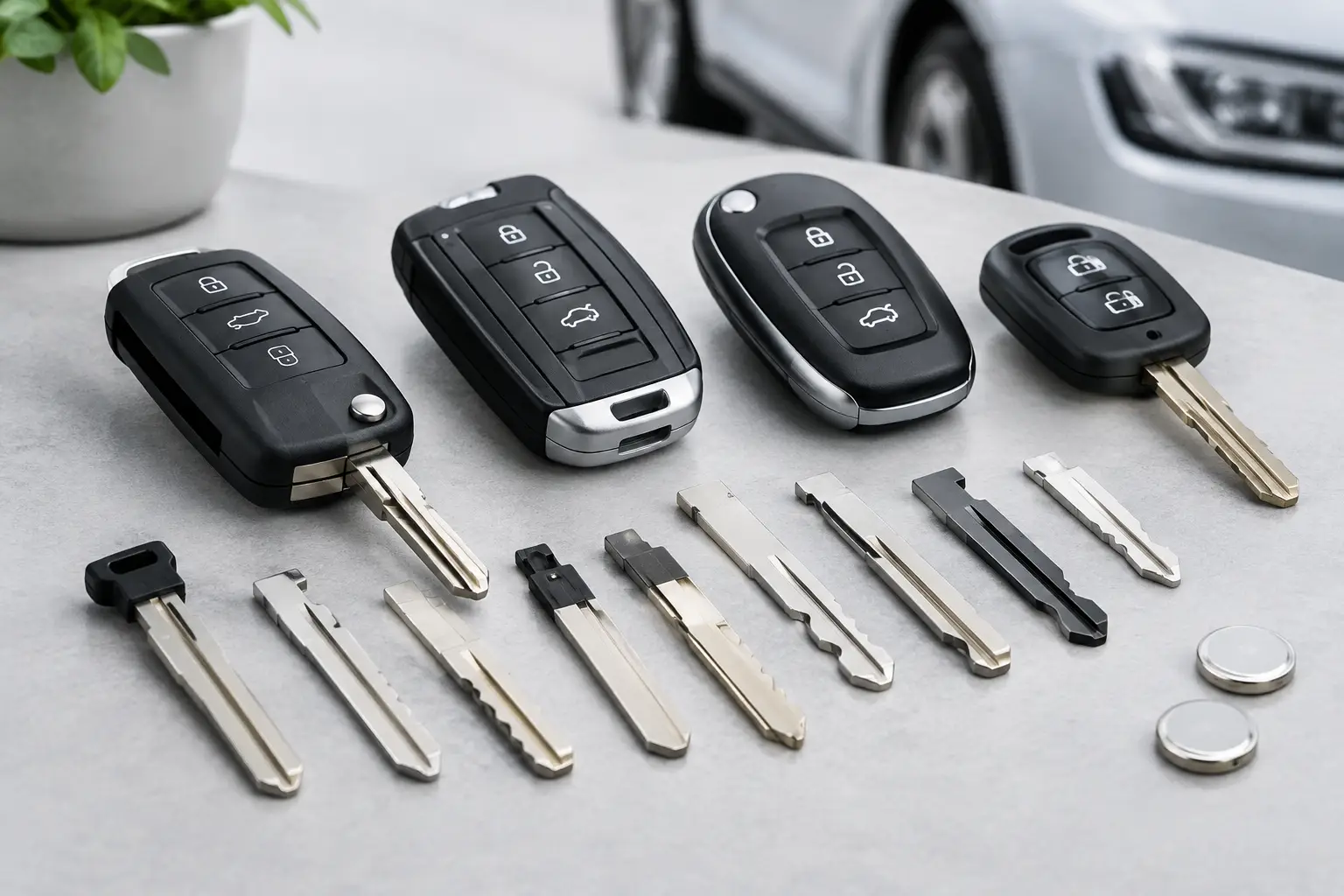
A Guide to Key Blade Profiles for Car Keys
A replacement remote can look identical to your original key, yet still be unusable if the metal insert is the wrong shape. This guide to key blade profiles explains what that shape tells you, why it matters, and how to check it before ordering a replacement key, shell or blank.
For vehicle owners, getting the blade profile right prevents delays and repeat purchases. For locksmiths, garages and automotive key professionals, it is a basic but essential compatibility check before cutting, programming or handing a key back to a customer.
What is a key blade profile?
A key blade profile is the physical design of the metal part of a key that enters the vehicle lock. It includes the blade’s outline, grooves, channels, thickness, tip shape and shoulder position. These features must match the lock cylinder before a key can be cut and used correctly.
The profile is not the same as the cuts on the key. The cuts, also called bitting, are the individual depths or tracks that make one key operate a particular lock. A blade blank has the correct profile but is uncut. Once it is cut to match an existing working key or authorised key data, it becomes specific to that vehicle’s mechanical locks.
This distinction matters when buying replacement key parts. A remote shell may be supplied with a blade already fitted, while a remote key blank may need the correct blade selected separately. Even where the electronics, button layout and frequency are suitable, an incorrect blade profile will not fit the lock.
Why car key blade profiles vary
Manufacturers use different blade designs across their ranges, and a single marque can use several profiles depending on model, year, market and key system. A Ford blade from one generation may not match another Ford model. The same is true for BMW, Audi, Toyota, Vauxhall, Peugeot, Mercedes-Benz, Hyundai, Kia and other manufacturers.
Changes often happen when a manufacturer updates a platform, introduces a new remote housing or moves from a conventional key to a proximity smart key with an emergency blade. Lock designs can also differ between vehicles that share a similar-looking remote.
That is why matching by vehicle make alone is not enough. A listing that says it suits a particular manufacturer is a useful starting point, not final confirmation. Check the blade reference, original key design and stated vehicle fitment before ordering.
Common automotive blade profile types
Standard edge-cut blades
A standard edge-cut blade has cuts along one or both outer edges. It is commonly found on older and many mainstream vehicle key systems. The blade may look simple, but the blank profile still needs to match the keyway exactly. Width, groove arrangement and the location of the shoulder can all vary.
These blades are often used with separate remote fobs, fixed-head transponder keys and some flip-key housings. When replacing only a damaged shell, the existing working blade can sometimes be moved into the new housing if the design allows it. This avoids recutting, but only where the blade and retaining mechanism are genuinely compatible.
Sidewinder or internal-track blades
Often described as laser-cut keys, sidewinder blades have a winding or straight track cut into the face of the blade rather than obvious edge cuts. “Laser key” is widely used in everyday conversation, but it describes the blade style rather than confirming how a particular key was manufactured.
These blades are common on many modern vehicles and normally require appropriate cutting equipment. The profile remains critical: two internal-track blades can appear very similar in a photograph while having different grooves, track positions or blade lengths.
Tibbe-style blades
Tibbe-style keys use a distinctive rounded blade with a series of angled positions around its edge. They are associated with selected Ford applications, particularly older models and certain commercial vehicle ranges. Their appearance makes them easy to recognise, but the correct profile and key type must still be checked against the vehicle application.
A Tibbe blade should not be chosen simply because it looks broadly similar to the original. Confirm the relevant product details, as vehicle age and remote style can affect the correct replacement option.
Dimple and special-profile blades
Some vehicles use dimple-style blades, where the working cuts are placed on the flat faces of the blade. Others use manufacturer-specific profiles designed for particular lock systems. These may be fitted to conventional keys, flip remotes or emergency inserts for smart keys.
Special-profile blades are an area where close visual comparison is especially useful, but it should support, not replace, a part-number or fitment check. Photos can hide blade thickness and minor channel differences that affect whether the key enters the lock correctly.
Blade references: the most useful identifier
Many automotive blanks are identified by a profile code. You may see references such as HU66, HU92, VA2, VA6, TOY43 or SIP22. These codes describe recognised blade blank families and provide a far more reliable starting point than a general description such as “Audi key blade” or “Toyota flip key”.
However, a blade reference is only one part of the order check. Some keys use a shared blade family but differ in remote board, transponder chip, frequency, number of buttons or emergency-key arrangement. The correct approach is to match the complete key specification, not just the metal blade.
If you are a trade buyer, recording blade references against common customer jobs can speed up future sourcing. For retail buyers, a clear photo of the blade beside the existing key and the product listing can help you spot obvious differences before placing an order.
How to identify the correct blade before ordering
Start with the original key where possible. Look for a stamped code on the blade, remote housing or keyring tag, although not every key will show a useful reference. Then compare the key’s overall style with the product information: is it a fixed blade, flip blade or removable emergency blade?
Next, inspect the blade itself. Compare the grooves on each side, the width of the metal, the shape of the tip and where the blade stops against the key housing. A blade with the same number of visible channels can still be wrong if those channels are in different positions.
It also helps to confirm the vehicle’s make, model, year and body type. Be precise where possible. A model name may span many years and several key systems, especially around facelift or model-generation changes. If the product listing includes a part number, compare it with the original key or existing remote where available.
For a remote or smart key, check these details alongside the blade:
- button count and button layout
- frequency where stated
- transponder chip type or board specification
- original remote part number
- whether the key requires a separate emergency blade
These checks take a few minutes and can prevent the much larger inconvenience of receiving a key that looks right but cannot be cut, fitted or programmed for the intended vehicle.
Replacement shells, flip keys and emergency blades
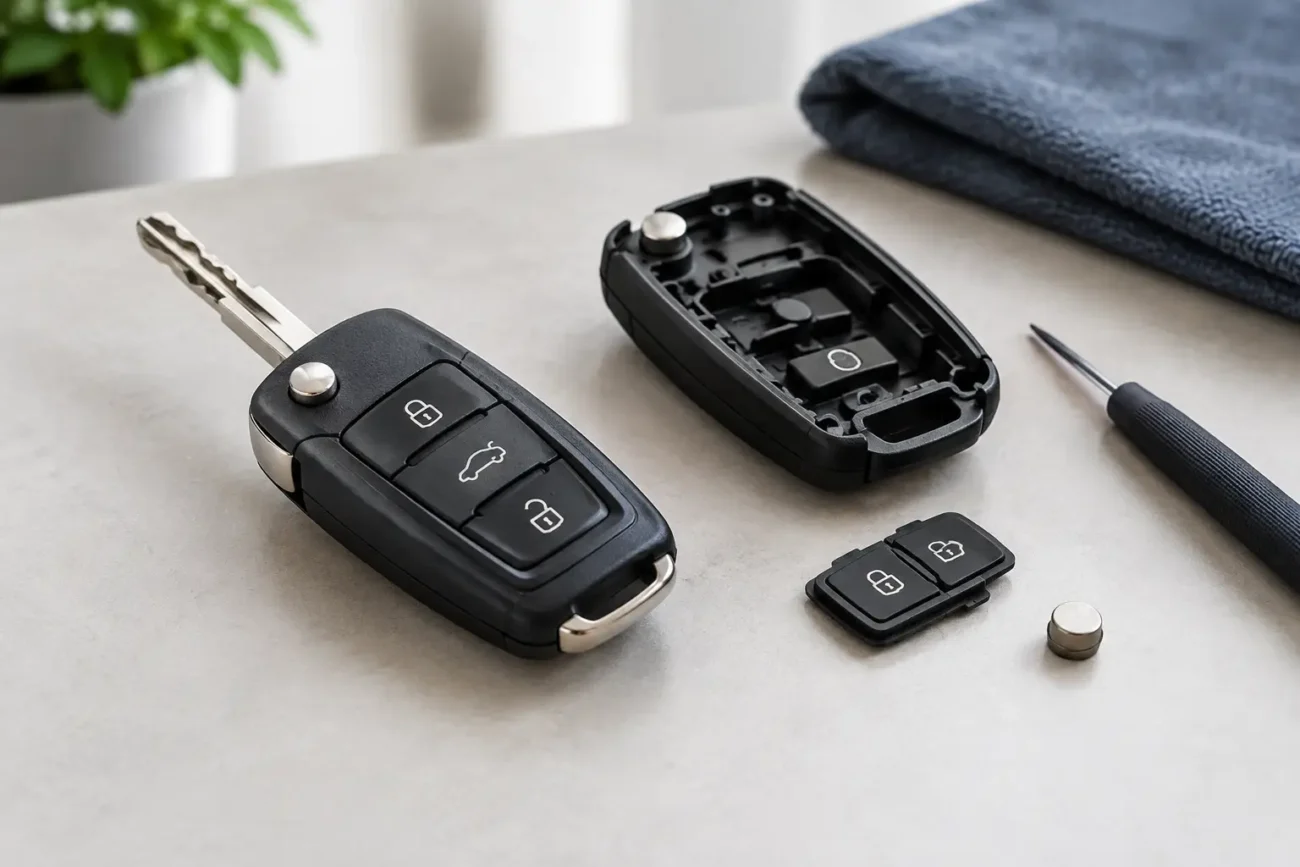
A damaged case does not always mean you need a complete replacement key. If the electronics still work and the original blade is in good condition, a compatible replacement shell can be a practical, cost-effective option. Many flip-key shells are designed to accept the existing remote board, transponder and blade, though the internal layout must match exactly.
The trade-off is that shell replacement requires careful transfer of the components. A damaged transponder, misplaced chip or incorrectly seated blade can leave the key unable to start the car, even if the remote buttons operate. If you are unsure whether your original parts can transfer, compare the internal shell design as well as the outside shape.
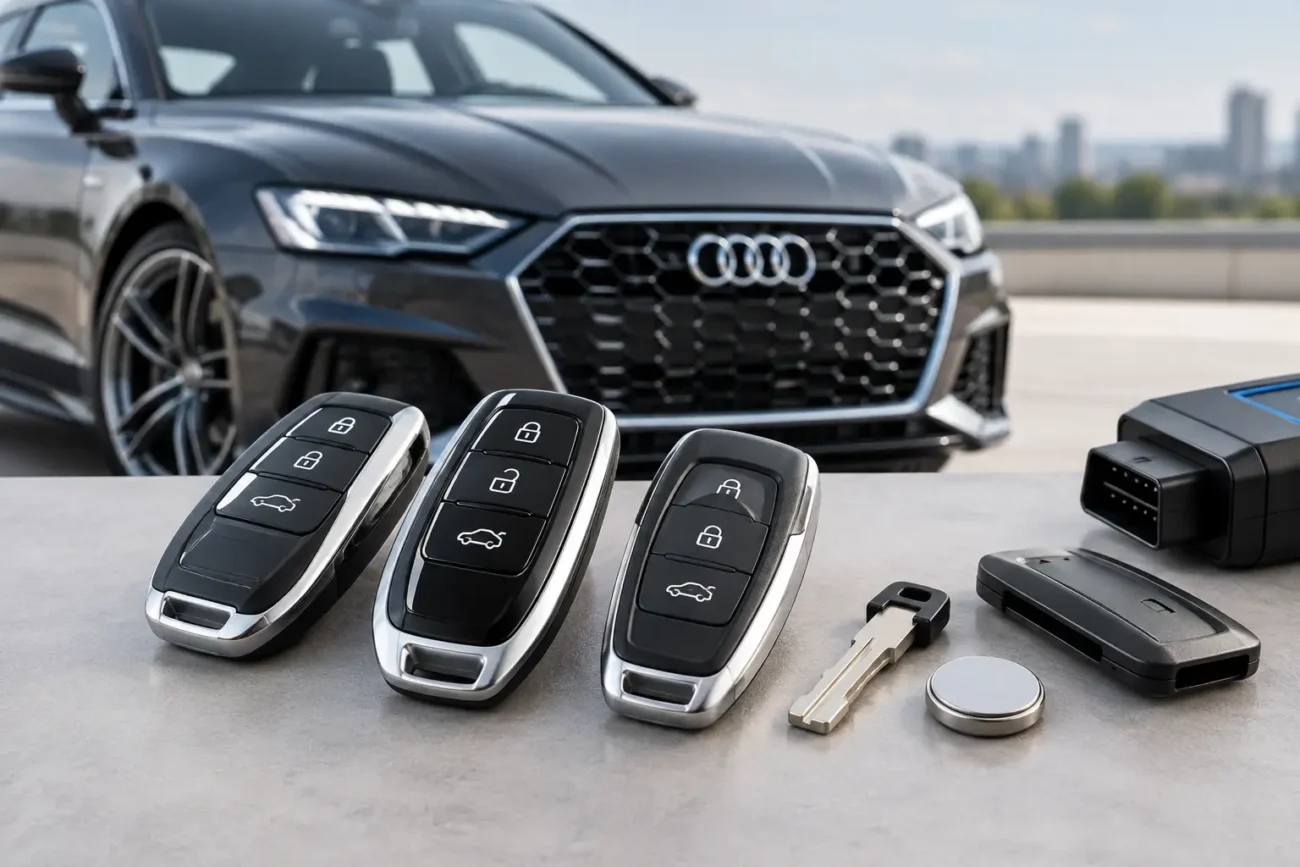
Smart keys add another variation. The keyless remote may have a small emergency blade stored inside the housing. This blade is for mechanical access where applicable and is not necessarily the same profile as a conventional key used on an earlier version of the vehicle. Always check whether the replacement smart key includes an emergency insert, accepts your existing one or needs a separate blade.
Cutting and programming are separate jobs
Selecting the right blade profile solves the mechanical side of the replacement. It does not automatically make a modern key start the vehicle. Most transponder, remote and smart keys also need programming or pairing to the vehicle, depending on its system and the replacement product being used.
Conversely, programming-compatible electronics do not overcome an incorrectly selected blade. Think of the key as three connected elements: the blade for the locks, the transponder for vehicle authorisation and the remote electronics for central locking or keyless functions. A complete replacement must be suitable in all relevant areas.
For this reason, professional buyers should verify the required programming method and equipment before quoting a job. Vehicle owners should check product fitment details and arrange suitable key cutting and programming support where required. Avoid forcing a new blade into a lock or assuming that an uncut key can be tested by turning it.
A practical final check before purchase
Before adding a key product to your basket, compare the blade profile, vehicle fitment, remote style and technical specification against the original key. If one detail does not line up, pause and check rather than relying on appearance alone. Global Keys Direct stocks a wide range of vehicle-compatible key blades, shells and remote options, but accurate identification is what turns a replacement part into the right solution.
The best replacement key is rarely the one that merely looks familiar. It is the one whose blade, electronics and intended vehicle application all match the job in front of you.
Add a review
Your email address will not be published. Required fields are marked *