
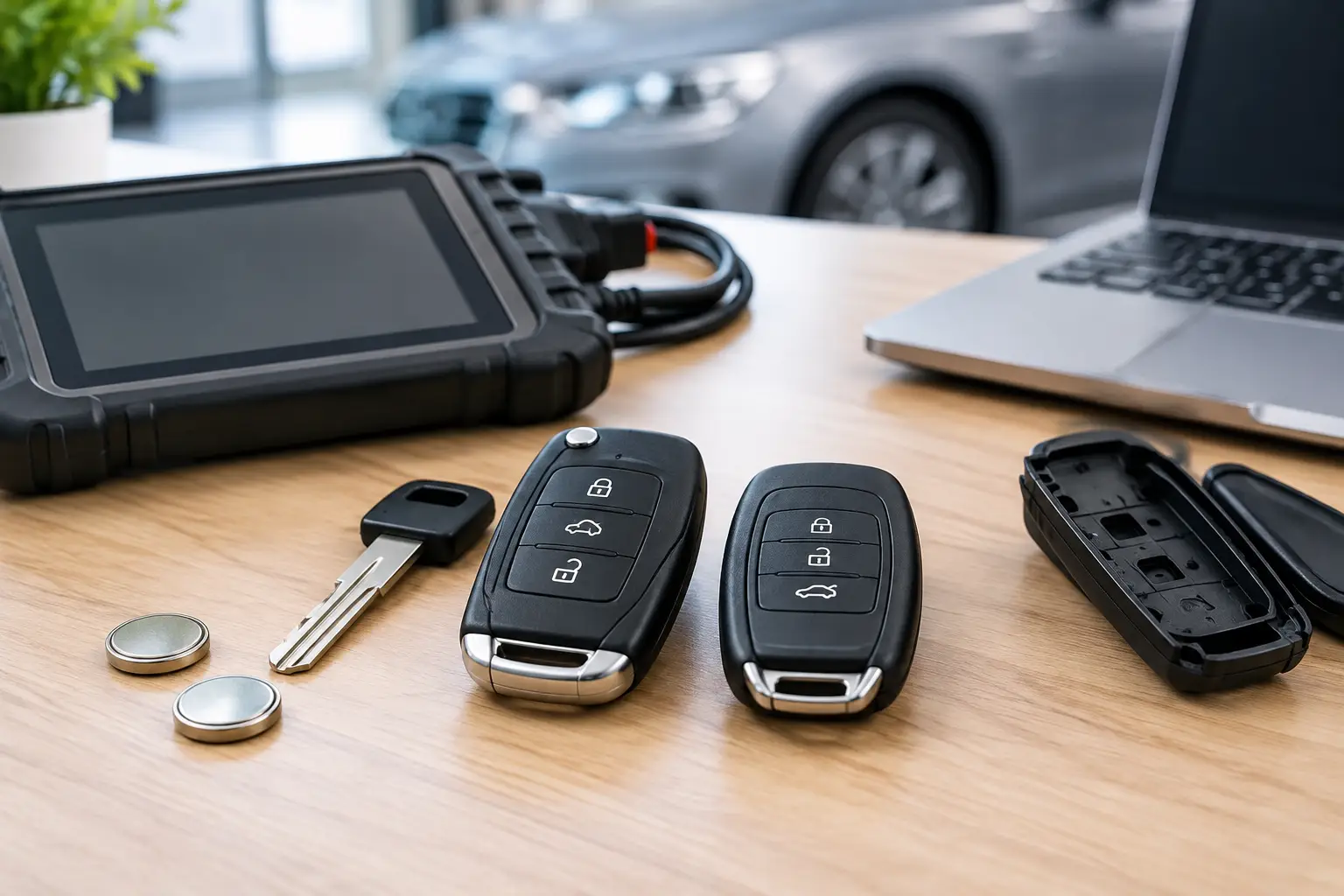
Aftermarket Key Coding: What Must Match First
A replacement key can look exactly right, have the same number of buttons and even accept the original blade, yet still fail at the final stage. That is because aftermarket key coding is not simply a case of connecting a programming tool and pressing a button. The remote, transponder, vehicle system and key profile must all be compatible before coding can succeed.
For drivers, this distinction prevents wasted time and the frustration of buying a key that cannot be used. For locksmiths, garages and automotive technicians, it protects margins and helps keep customer jobs moving. The most reliable route is to establish the specification first, then select a suitable key and coding method for that particular vehicle.
What aftermarket key coding actually means
Aftermarket key coding is the process of pairing a compatible non-dealer replacement key, remote or smart key with a vehicle. Depending on the vehicle, it may involve one or more separate functions: remote central locking, the immobiliser transponder and keyless entry or start authorisation.
These functions are often confused. A remote may lock and unlock the doors but fail to start the engine if its transponder has not been correctly programmed. Equally, a correctly coded transponder key may start the vehicle while its remote buttons do nothing. On many modern vehicles, particularly proximity and smart-key systems, several functions are managed together but still rely on the correct electronic specification.
Coding is also separate from cutting. A key blade must be cut or supplied in the correct profile so that it operates the mechanical lock or emergency access slot. Coding permits the vehicle to recognise the key electronically. One does not replace the other.
The compatibility details that matter most
The vehicle registration is useful for identifying the model, but it is not always enough to select a key. Manufacturers can use different systems within the same model range, sometimes across the same production year. Facelifts, trim levels, country specification and mid-production changes can all affect the key required.
Start with the existing key where possible. Its part number, frequency, button layout and blade type provide valuable evidence. For transponder and smart keys, the chip type and board layout can be equally important. A matching appearance alone is not a dependable compatibility check.
Frequency and remote hardware
Remote keys operate on a specific radio frequency, commonly shown on the original fob or circuit board. A replacement remote with the wrong frequency will not communicate correctly, regardless of whether its case and buttons look identical. The number and arrangement of buttons also matter, especially where vehicles have separate boot release, panic or sliding-door functions.
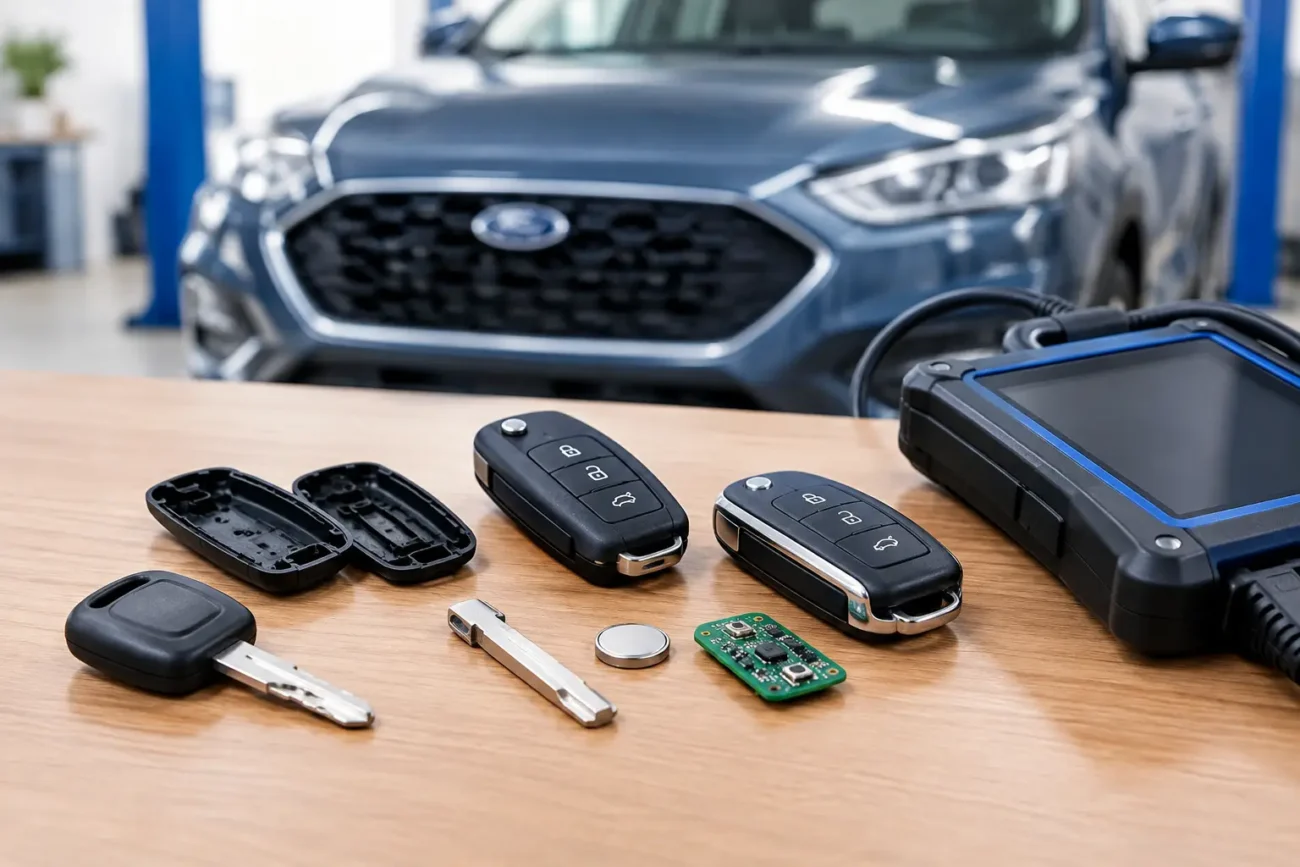
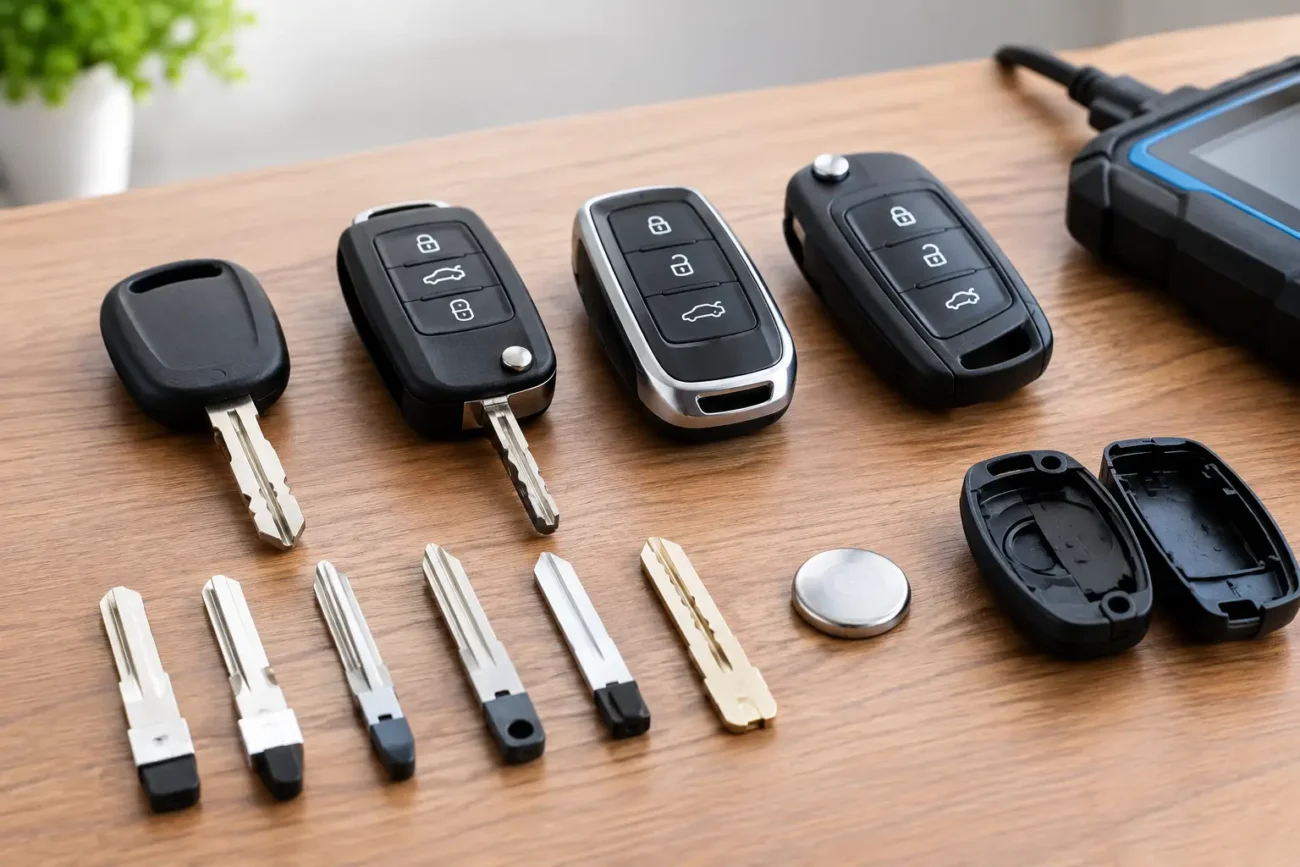
Some aftermarket remotes are supplied as complete units, while others are designed for transferring an existing electronics board into a replacement shell. These are very different products. A replacement shell solves worn buttons, damaged housings or a broken key-ring loop, but it does not provide new remote electronics or a new transponder.
Transponder chip and immobiliser system
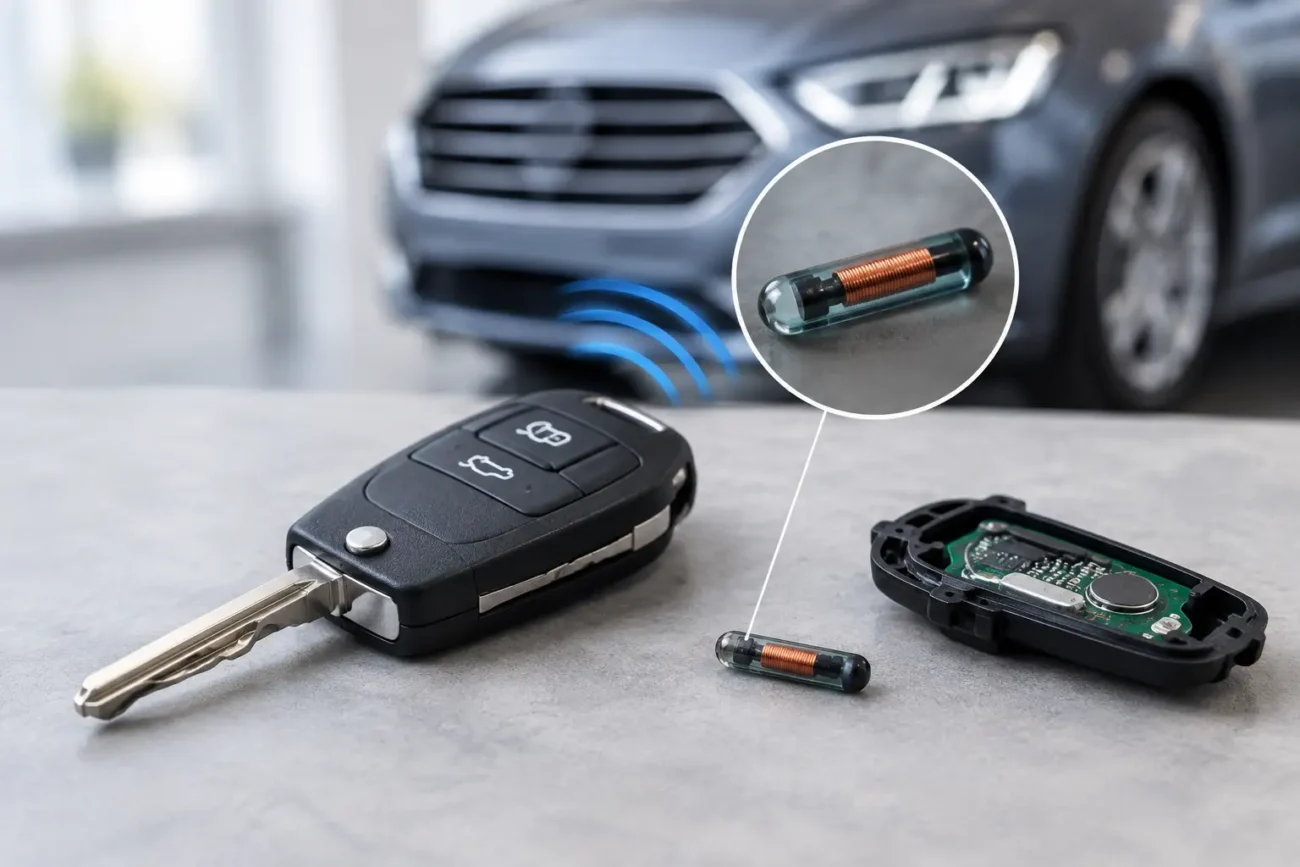
The transponder is the small electronic component that communicates with the vehicle immobiliser. Older systems may use a fixed chip type; later systems can require a specific transponder generation, a pre-coded key or an authorised-compatible smart key.
A blank key with an incorrect or unsuitable chip is unlikely to program correctly. Some keys can be prepared using specialist equipment before they are introduced to the vehicle, while others are supplied ready for the relevant application. The correct route depends on the vehicle system and the key product, not simply the make badge on the bonnet.
Blade profile and emergency key
For conventional flip keys, check the blade profile as carefully as the electronics. Two blades can be similar in length but have different tracks, shoulders or mounting arrangements. Smart keys often use a removable emergency blade, and that blade must match the vehicle’s lock profile.
Where a blade is included, confirm whether it is blank and requires cutting. Where it is not included, verify the correct emergency blade reference before ordering. This small check avoids a key that is electronically suitable but mechanically unusable.
Why model year alone can cause expensive mistakes
A common request is for a key “for a 2016 Ford” or “for a 2018 BMW”. That is a starting point, not a final specification. A vehicle registered in one year may have been manufactured earlier, and a model can span several different immobiliser platforms during its production life.
Part number checking remains the best practical safeguard. If the existing key is unavailable, use as much vehicle information as possible: exact model, year of manufacture, engine variant, body style, whether it is keyless, the current key’s button layout and any identification printed on surviving components. Trade users may also confirm the system through suitable diagnostic equipment before ordering.
This is why a quality supplier presents fitment details, frequencies, chip information and photographs. Buyers should compare these details rather than rely only on a broad model list. Compatibility needs to be established before a key is cut, programmed or handed to a customer.
Coding routes for replacement keys
The correct coding route depends on the vehicle, the key type and the equipment available. Some older vehicles allow limited remote synchronisation procedures, but immobiliser programming generally requires suitable diagnostic or key-programming equipment. Modern smart-key systems can require advanced functions, security access and carefully matched hardware.
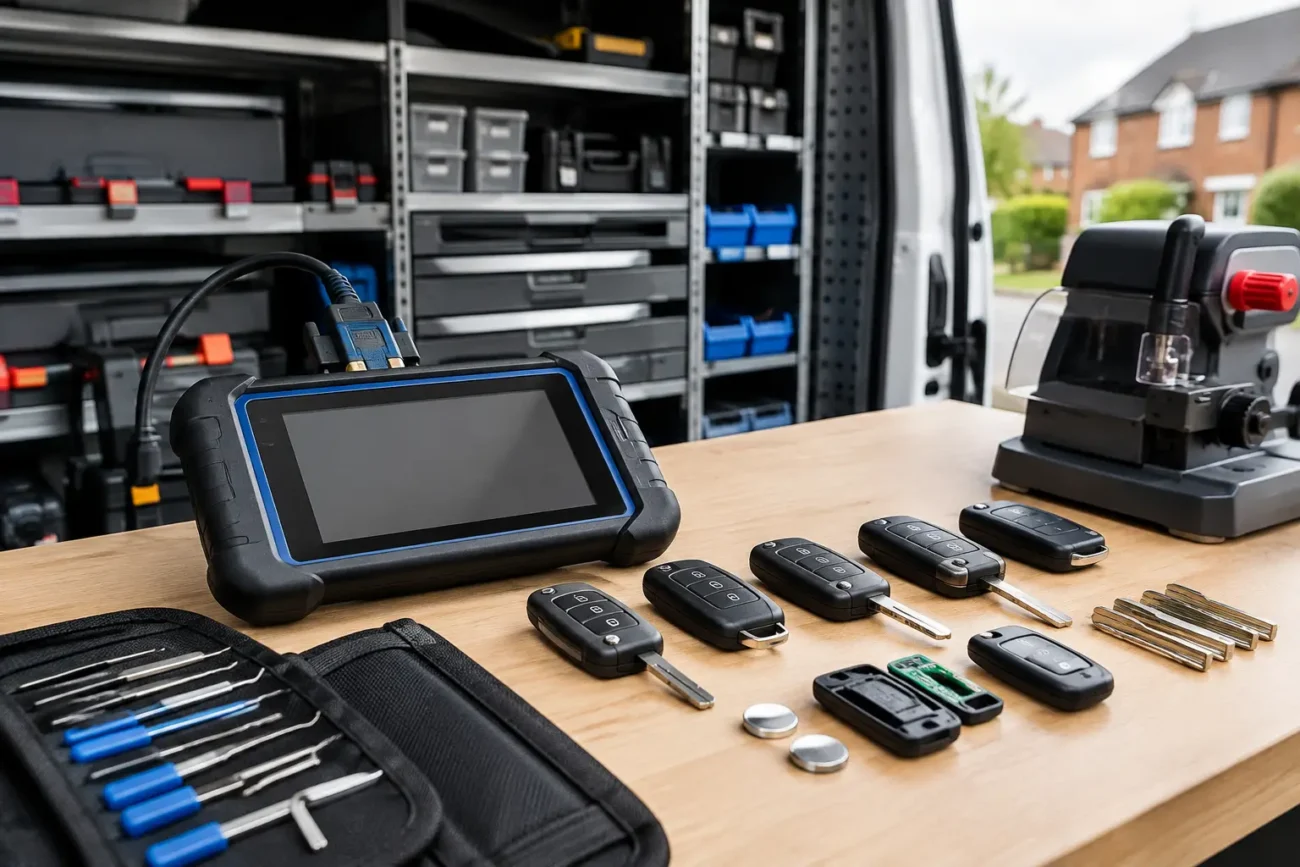
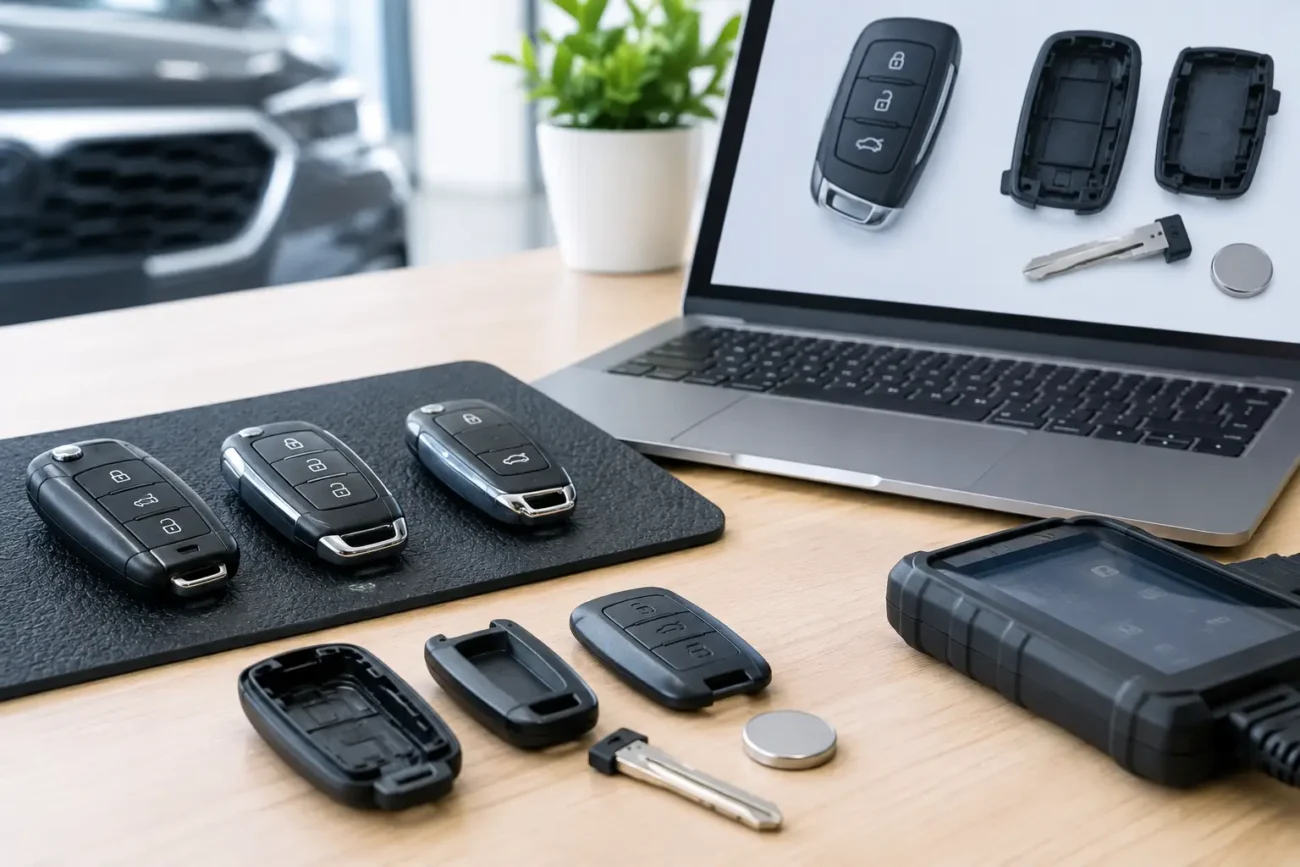
Professional users often choose dedicated key programming tools because they support a wider selection of transponder, remote and smart-key applications. Equipment from established automotive tool ranges can help technicians identify system information, prepare compatible keys and perform authorised programming work efficiently. Tool coverage should always be checked against the specific vehicle and function required.
For retail customers, the practical answer is often to source the correctly specified key first, then arrange programming with a qualified automotive locksmith, garage or key specialist. Ask before purchasing whether they will programme customer-supplied aftermarket keys and what information they need. Policies vary, especially for smart keys and newer immobiliser systems.
Only authorised work should be carried out, with proof of ownership and any required vehicle documentation available. Apart from being the responsible approach, it helps a professional establish the correct vehicle identity and key requirement.
When an aftermarket key is the sensible choice
A well-matched aftermarket key can be a cost-effective solution when the original is damaged, missing or simply needed as a spare. It is particularly useful for everyday remote keys, flip keys and many transponder applications where the required frequency, chip and blade specification are known.
The trade-off is that not every aftermarket option is appropriate for every vehicle. Late-model smart keys, keys with unusual functions or vehicles with tightly controlled security systems may require a more specific product and a programming route that should be confirmed in advance. The lowest-cost key is not good value if it lacks the correct electronics or cannot be supported by the chosen programmer.
For many customers, a replacement shell is the better answer. If the original remote still works and the transponder is intact, transferring the existing board and chip into a compatible shell can restore the key’s condition without coding a new unit. It is a different repair, but often the quickest and most economical one.
A practical pre-order check
Before ordering a replacement remote, transponder key or smart key, compare the original key’s part number where available. Then confirm the frequency, number of buttons, blade or emergency blade type, chip specification and whether the vehicle uses a conventional ignition, push-button start or keyless entry.
Also check what is supplied. A complete key, a remote-only unit, a blank transponder key and a replacement shell each solve different problems. If programming is required, establish whether the selected key is suitable for the equipment or specialist who will carry out the work.
Global Keys Direct supports this process with a broad range of vehicle-compatible key products and programming equipment for retail and trade buyers. The useful choice is not simply the key that looks closest to the original, but the one whose specification matches the vehicle from blade to chip.
A few minutes spent checking those details can turn a replacement key from an uncertain purchase into a dependable spare that is ready for the road.
Add a review
Your email address will not be published. Required fields are marked *