
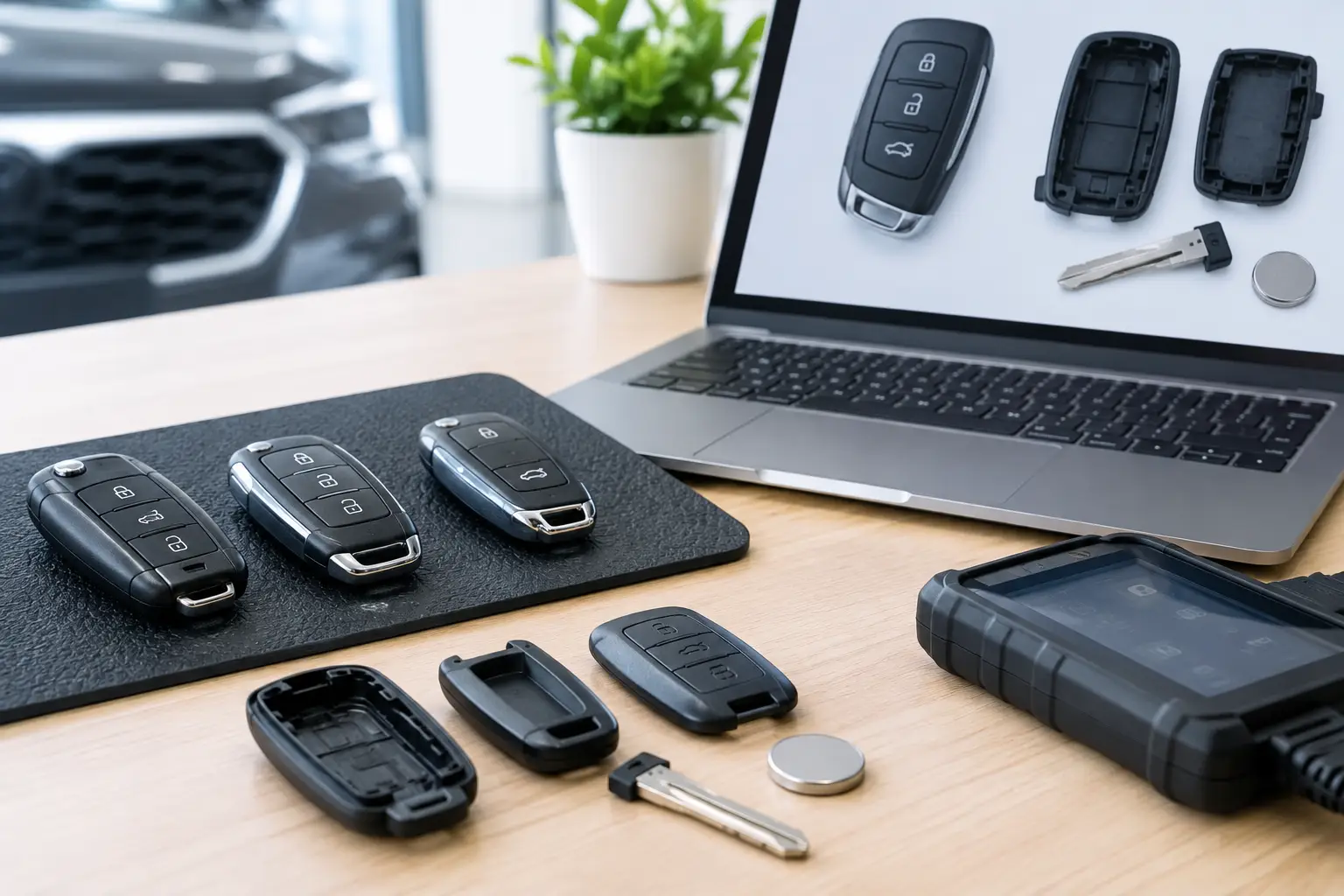
How to Verify Remote Part Numbers Before Buying
A replacement remote can look identical to the key in your hand and still be wrong for the vehicle. The button layout may match, but the frequency, transponder specification, circuit board reference or blade arrangement may not. Knowing how to verify remote part numbers before ordering avoids wasted time, unnecessary returns and a key that cannot be programmed for your car.
For vehicle owners, that means getting a practical replacement without paying dealership-level prices for the wrong item. For locksmiths, garages and key professionals, it means protecting job margins and avoiding delays when a customer needs a working remote quickly.
Start with the number on your existing remote
The most reliable place to begin is the original remote or smart key. Check the back case, inside the battery compartment and the circuit board for printed, moulded or laser-marked references. A part number may be a combination of letters and numbers, sometimes alongside a manufacturer logo, frequency marking or approval code.
Do not rely on the number printed on a replacement shell alone. The shell identifies the housing style, whereas the electronic board inside determines whether the remote can communicate correctly with the vehicle. If the original case is damaged, opening it carefully and reading the markings on the board can provide the information you need.
Write down every reference exactly as shown, including hyphens, spaces and letter suffixes. A small difference can matter. For example, two remotes from the same manufacturer may share a three-button case but use different electronic revisions for different model years, regions or keyless entry systems.
If no clear part number is visible, take clear photographs of both sides of the remote, the circuit board and the key blade. This gives you a useful record to compare against product fitment information.
How to verify remote part numbers against vehicle details
A part number is the strongest compatibility clue, but it should not be checked in isolation. Match it with the vehicle’s make, model, year and body type where relevant. A hatchback, saloon and SUV in the same model family can sometimes use different key systems, particularly across a facelift or production change.
The registration number can help identify the vehicle, but it does not always reveal the exact remote specification. The VIN is more precise when there is uncertainty, especially for later vehicles with keyless entry, proximity functions or multiple factory key options.
Check the following information together before placing an order:
- The exact remote or circuit board part number
- Vehicle make, model and production year
- Number and function of the buttons
- Remote frequency, usually shown in MHz
- Blade type, if the key includes a blade
- Transponder chip type or key system specification, where listed
A match across several identifiers is far more dependable than a visual match alone. This is particularly relevant for popular vehicles such as Ford, BMW, Audi, Toyota, Vauxhall, Hyundai, Kia, Peugeot, Mercedes and Land Rover, where similar-looking remotes can cover a wide range of systems.
Check the frequency, not just the case shape
Remote frequency is normally marked on the original unit or its circuit board, with common examples including 433 MHz and 868 MHz. It is one of the most useful checks when comparing remotes that share the same housing.
Frequency can vary by market and production period. A remote intended for another region may look correct but will not necessarily be suitable for a UK vehicle. When a product listing specifies frequency, treat this as a required match rather than a secondary detail.
That said, frequency alone does not confirm fitment. Two boards operating on the same frequency may have different part numbers, encryption systems, button configurations or transponder arrangements. Use it as one part of the verification process.
Count buttons and compare their functions
Count the buttons on the original remote and look at what each one does. Lock, unlock and boot release are common, but panic, sliding door, tailgate and remote start functions can create variations within the same vehicle range.
A three-button replacement is not automatically right because your key has three buttons. The symbols, spacing and assigned functions should be compared with the original. On smart keys, check whether the emergency blade is supplied, removable or needs to be transferred from the existing key.
Button layout matters most when buying a complete remote or replacement shell. If you are purchasing a shell only, the internal board must still physically fit the new case, and the blade profile must match if a new blade is included.
Separate a remote, shell and complete key
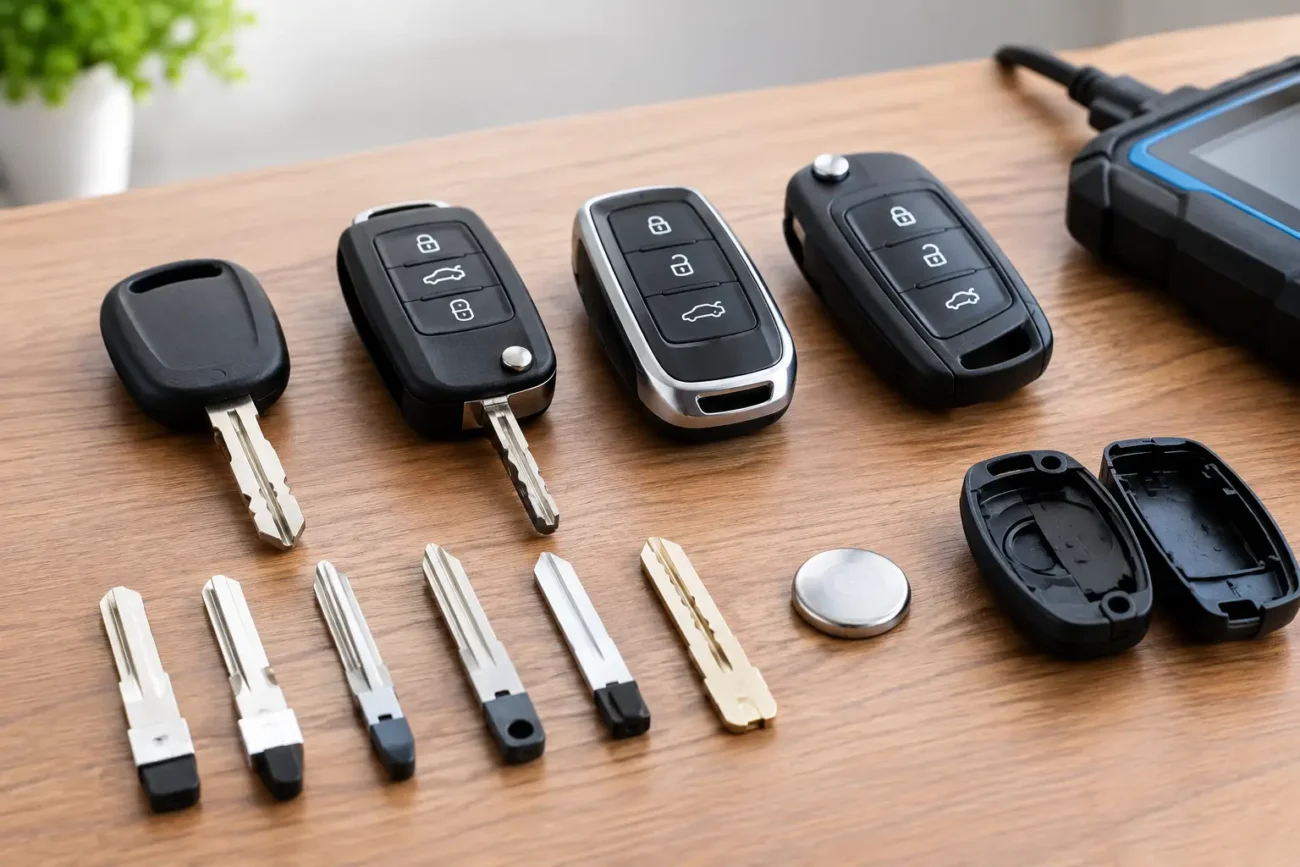
Many compatibility mistakes happen because buyers order the correct-looking product type but not the product they actually need. A replacement shell is a casing designed to reuse your existing electronics and, in many cases, your existing transponder chip. It does not provide a new working remote board.
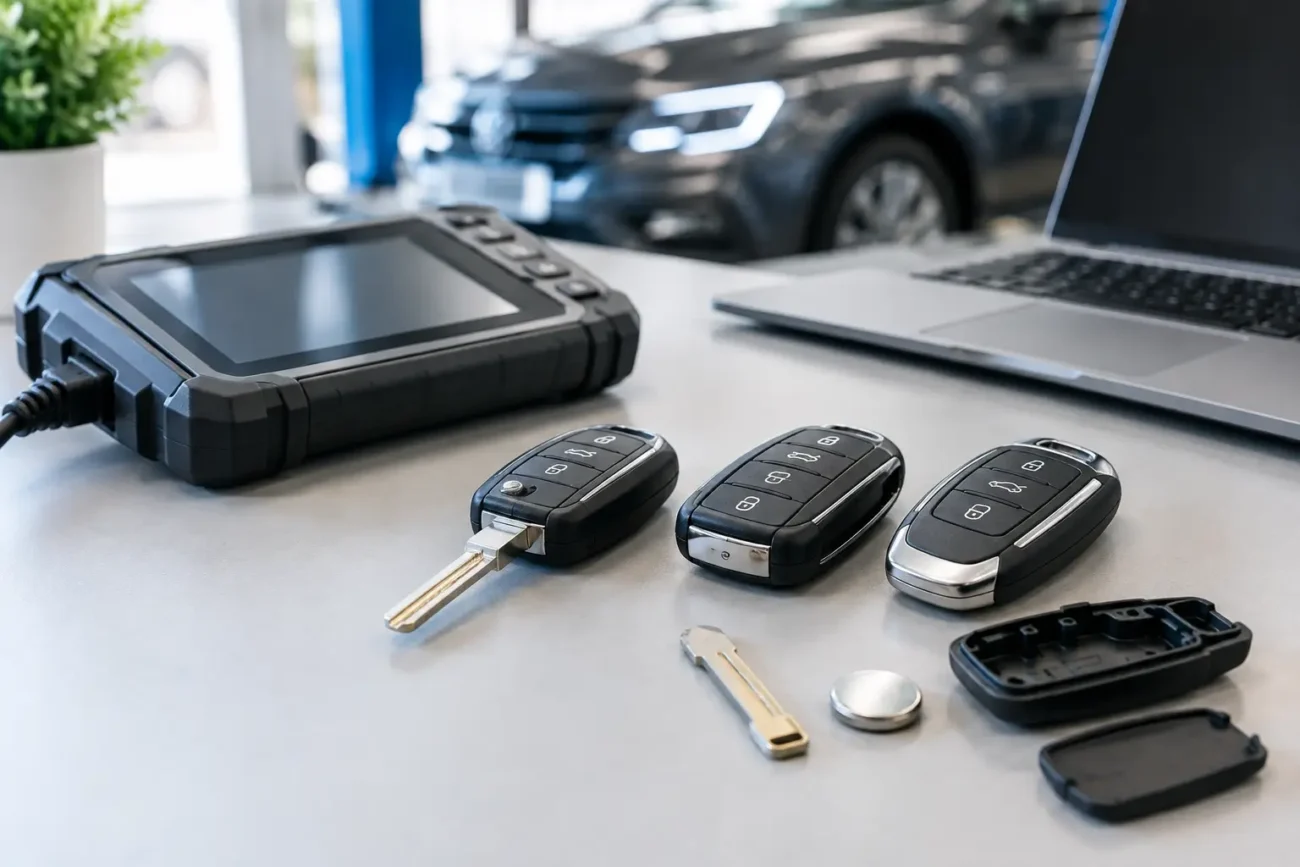
A complete remote or smart key includes electronics and may require professional programming or diagnostic equipment before it works with the car. Some keys also require the blade to be cut. An aftermarket remote can be a cost-effective option when its specification matches, but it must be selected from the listed part number, frequency, chip and vehicle fitment details.
There are also aftermarket universal and programmable remote options used by trade professionals. These can be highly useful for suitable applications, but they should be chosen according to the tool, software coverage and vehicle system involved. They are not a substitute for checking the original key data.
When the circuit board number differs
A different case number does not always mean the remote is wrong, but a different circuit board number needs closer attention. Manufacturers often revise housings, labels and supplier markings during a model’s production run. In some cases, a superseded number is compatible. In others, the updated board is for a different immobiliser or proximity-key setup.
Look for a product description that specifically lists both the original reference and compatible replacement references. If the listing only states a broad vehicle range, use that as supporting information rather than the final decision point.
For trade work, it is sensible to record the original board reference before dismantling the key. This reduces the risk of fitting a shell or ordering a remote based only on a customer’s description, particularly when the old casing is cracked or the printed label has worn away.
Common checks that prevent the wrong order
The quickest mistakes to make are assuming that a car’s year is enough, using a photograph from an online listing as the main comparison, or ordering based on the shape of the blade. All three can lead to a remote that fits physically but is unsuitable electronically.
Be cautious with vehicles built around changeover years. A car registered in one year may have been manufactured earlier, and a new model generation can begin before the registration plate date suggests. Check production details and the original remote reference whenever possible.
Also inspect whether the existing key has signs of previous replacement. A non-original-looking shell may be hiding a correct board, while a key that appears factory-fitted may already have been rebuilt. The circuit board marking remains the better reference.
What to do if you cannot find a part number
Some worn remotes have no readable label, and not every board carries a clear reference. In that situation, build the best possible compatibility profile from the vehicle details, button layout, frequency marking, blade type and photos of the internal board.
Do not guess between two similar remotes simply because one is cheaper. The cost of an incorrect remote is more than the purchase price once cutting, programming time or a repeat customer visit is involved. If the key is a proximity smart key or uses a specialist transponder system, obtaining an accurate identification before ordering is especially worthwhile.
A clear set of photographs and complete vehicle information also makes it easier for a specialist supplier to help you compare the available options. Global Keys Direct carries replacement solutions across a wide range of vehicle makes, with product-specific details designed to support accurate selection.
The right remote is rarely identified by one detail alone. Read the original part number, then confirm the frequency, buttons, blade, chip information and vehicle fitment around it. Taking a few extra minutes before ordering is usually the fastest route to getting the replacement key job finished properly.
Add a review
Your email address will not be published. Required fields are marked *