
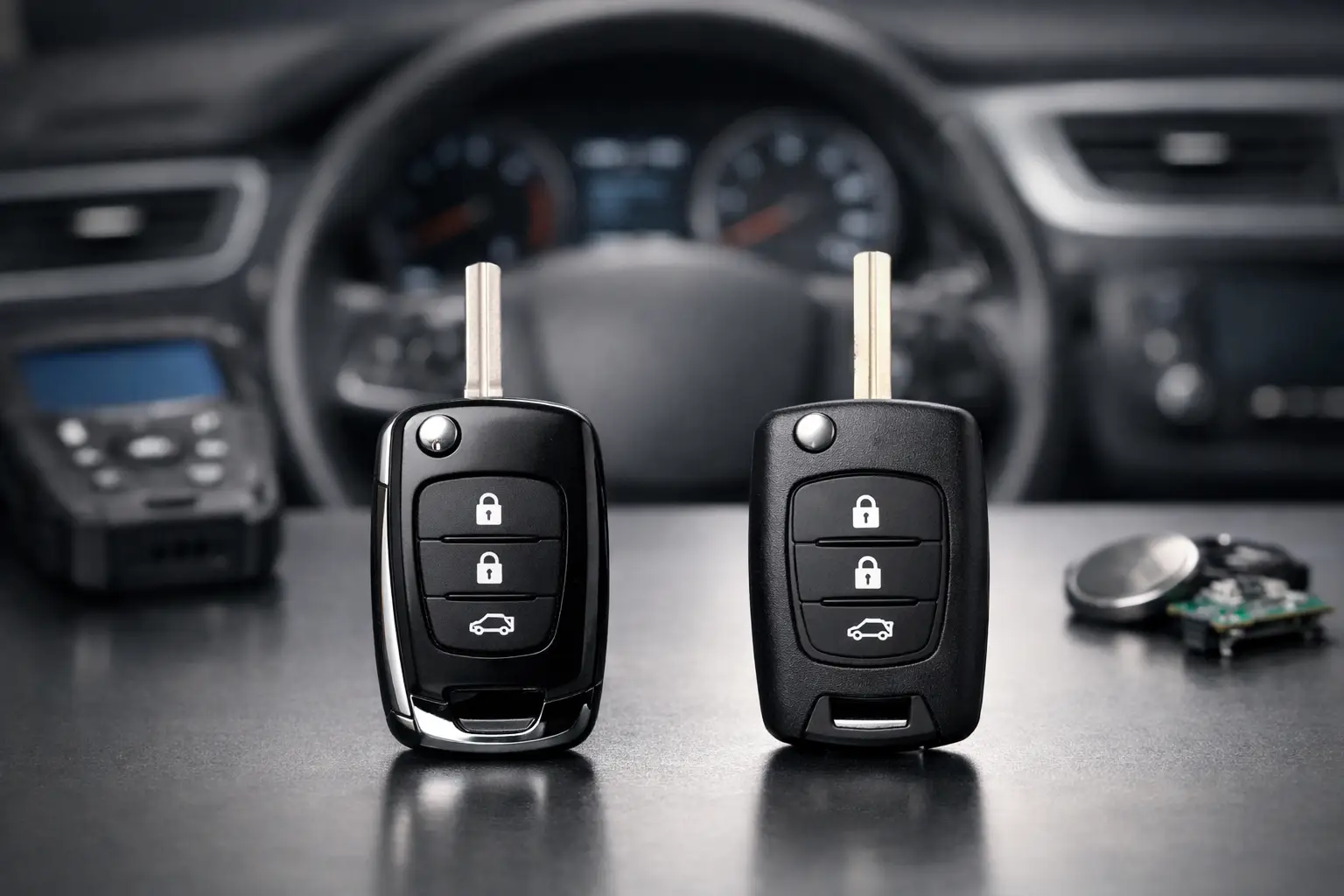
Dealer Key Versus Aftermarket Key Compared
A lost remote on a busy Monday morning is rarely the moment drivers want to discover the difference between a dealer key versus aftermarket key. Yet the source of a replacement can affect cost, programming requirements, finish, availability and how quickly the vehicle is back in use. The right choice is not automatically the most expensive one. It is the key that is correctly matched to the vehicle and fitted or programmed by the appropriate professional.
What is a dealer key?
A dealer key is normally supplied through a vehicle manufacturer’s authorised dealer network. Depending on the marque and model, it may be ordered against the vehicle identification number (VIN), supplied as a complete remote or smart key, and prepared through dealer-level systems.
For some newer vehicles, especially those with high-security keyless entry and start systems, the dealer route can be the only practical option. The manufacturer may restrict key data, require an online authorisation process or insist on a key supplied for that specific vehicle.
The main attraction is straightforward: the dealer has access to manufacturer information and established procedures for the make. This can be useful where no working key remains, where the vehicle uses a restricted system, or where a particular key version has limited aftermarket coverage.
That does not mean every dealer-supplied key is identical in every respect. Key designs can change during a model run, and the correct part still depends on the vehicle’s build specification. A registration number alone may not identify the precise remote, blade or transponder required.
What is an aftermarket key?
An aftermarket key is a replacement product supplied outside the vehicle dealer network. It may be a complete remote key, smart key, transponder key, replacement shell, key blade or remote fob. Quality and specification vary by product, which is why buying from a specialist supplier with clear fitment information matters.
A well-matched aftermarket remote can provide an economical spare or replacement for many common vehicles. It is particularly useful when the original key has a damaged case, worn buttons, broken blade or failed remote electronics, provided the relevant component can be replaced separately.
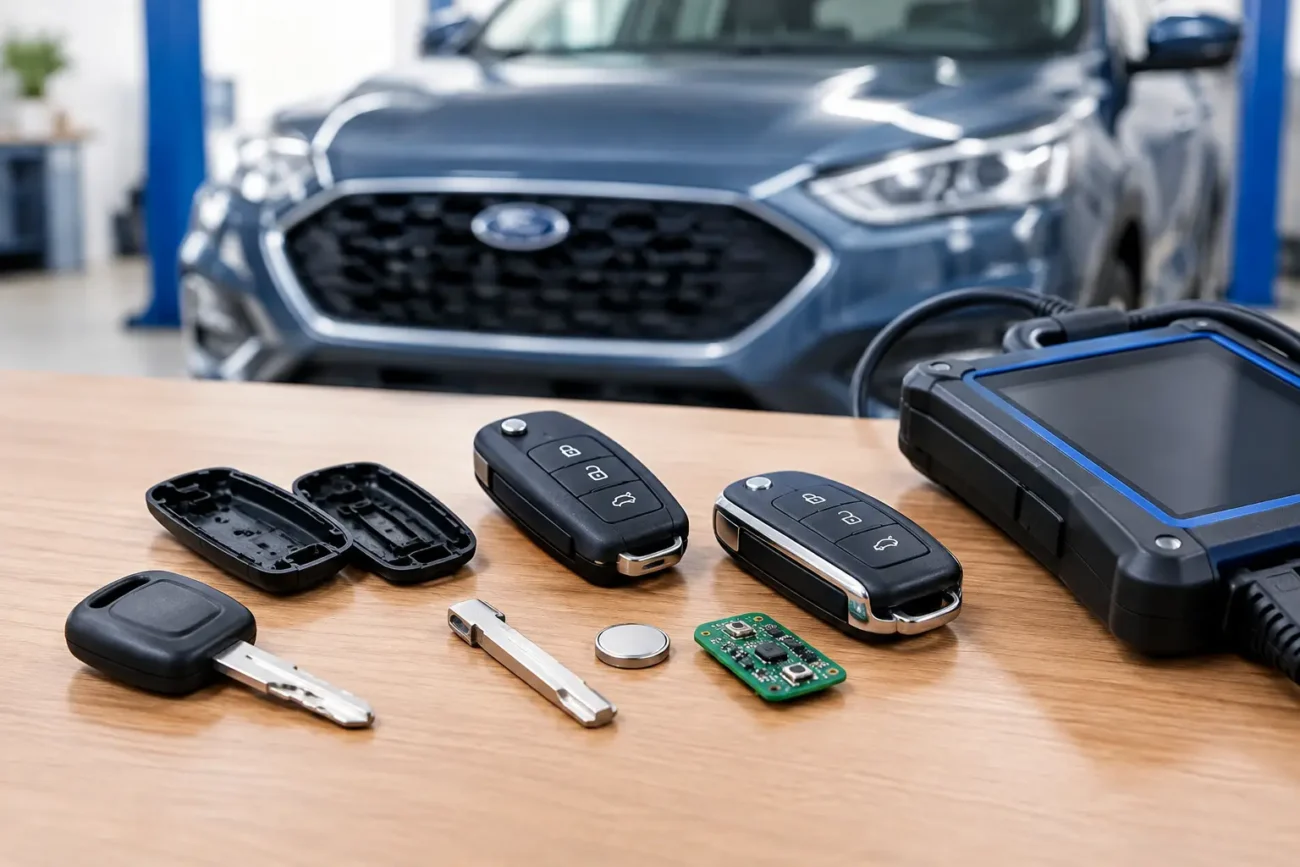
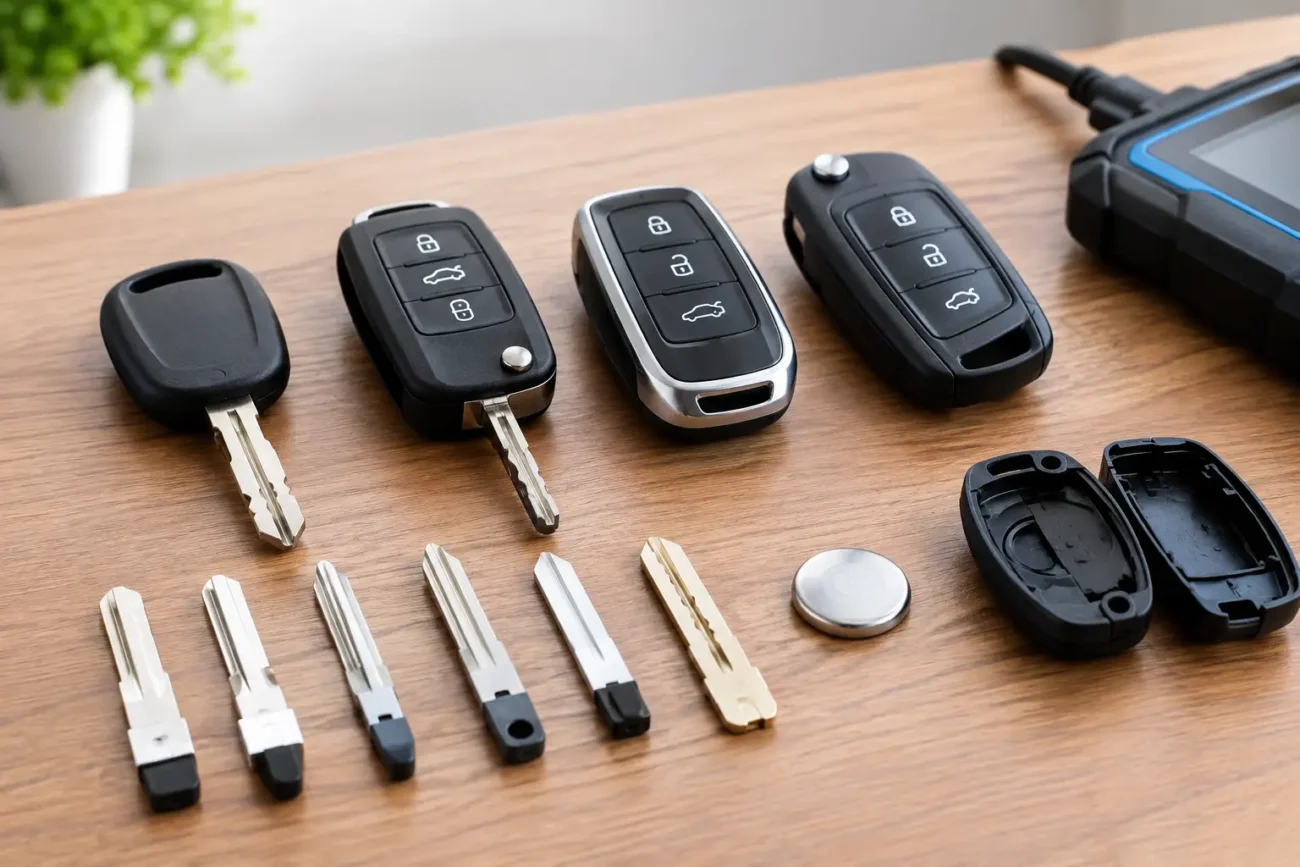
Aftermarket does not mean one single type of product. Some items are empty shells designed to reuse the original circuit board and transponder. Others are complete keys requiring cutting and programming. Professional buyers may also select programmable remotes, replacement PCBs or OEM-board solutions for suitable applications.
The practical question is not simply whether a key is dealer or aftermarket. It is whether the exact product has the correct frequency, chip type, blade profile, button layout and vehicle coverage.
Dealer key versus aftermarket key: the real differences
The comparison below shows where the decision usually comes down to the vehicle, the fault and the required result.
| Factor | Dealer key | Aftermarket key | |—|—|—| | Source | Ordered through an authorised manufacturer network | Supplied by specialist replacement-key retailers and trade suppliers | | Cost | Often higher because of manufacturer supply and dealer processes | Usually more cost-effective, particularly for spare keys, shells and common remotes | | Availability | May involve ordering and an appointment | Many popular products can be held in UK stock for fast delivery | | Choice | Normally limited to the manufacturer’s current part route | Broad selection of shells, blades, remotes, smart keys and programmable options | | Programming | May be completed through dealer systems | Depends on the vehicle and key type; may require a locksmith, garage or suitable programming equipment | | Best fit | Restricted systems, complex all-keys-lost cases and manufacturer-controlled applications | Compatible routine replacements, repair parts and many spare-key requirements |
For vehicle owners, cost is usually the first visible difference. A replacement shell may resolve a cracked housing or missing button pad without replacing the remote electronics at all. That can be far more economical than ordering a full key, but only if the original circuit board and chip are undamaged and can be transferred correctly.
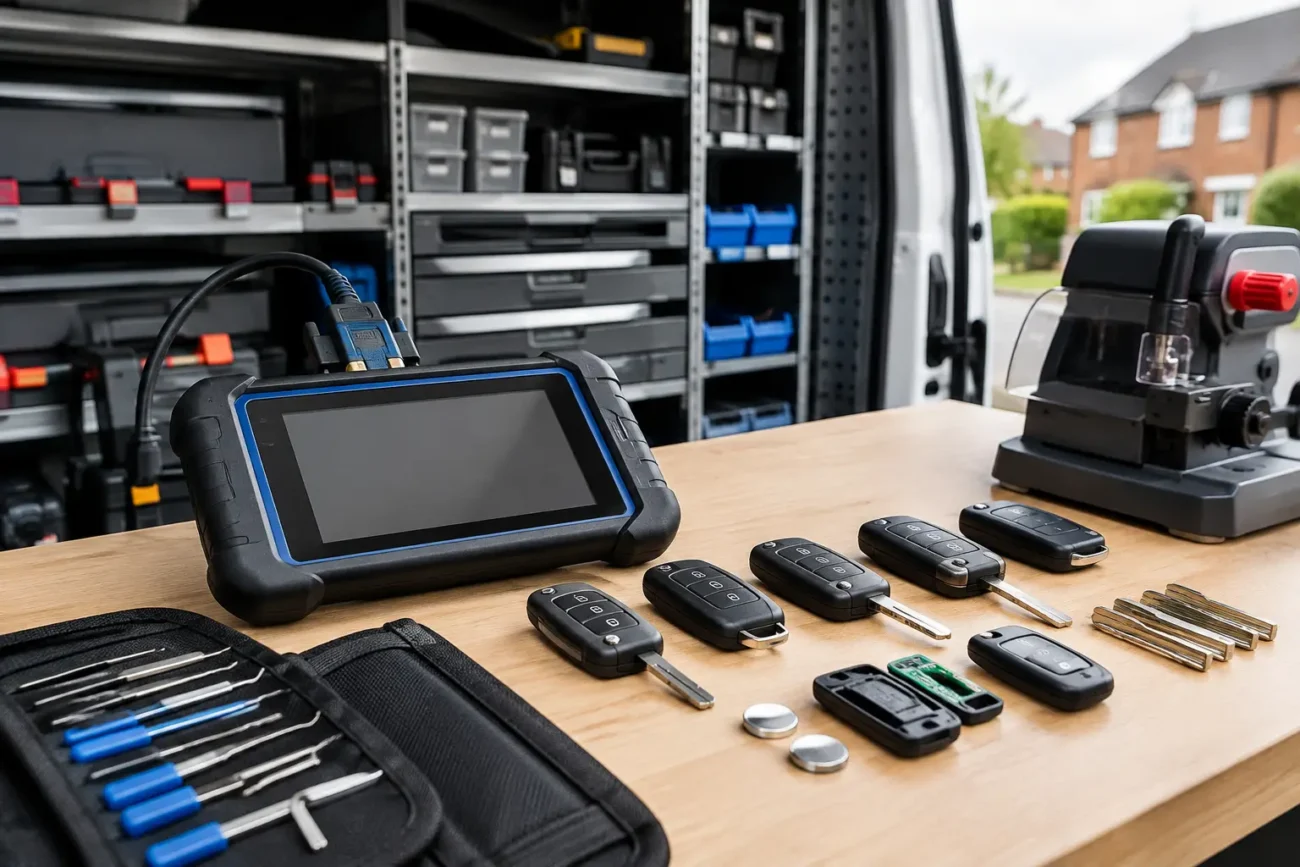
For trade customers, availability and workflow can be just as important. A compatible aftermarket key can allow a garage or locksmith to complete a standard job without waiting on a dealer order. However, a lower purchase cost is only a saving if the key can be programmed successfully and meets the required specification. Checking data before ordering prevents wasted time and stock.
When an aftermarket key is the sensible choice
An aftermarket replacement is often a strong option where the vehicle has an established, supported key system and the product details match the original. It can be especially practical for a second working key, a damaged three-button remote, a worn flip-key shell or a snapped blade where the original electronics remain serviceable.
It is also a sensible route for drivers who want a spare before the only working key is lost. Having a compatible spare can avoid the greater cost and complexity that often comes with an all-keys-lost situation.
The quality of the individual product matters more than the aftermarket label. A correctly specified replacement shell should have a secure fit for the PCB, a suitable button membrane and the correct blade position. A complete remote must match the immobiliser and remote system requirements, not merely look like the original from the outside.
Global Keys Direct supplies model-specific key products for a wide range of major vehicle makes, helping retail and trade buyers source compatible options without defaulting to dealership pricing. Product descriptions should always be checked against the original key and vehicle details before purchase.
When a dealer key may be the better route
Some jobs call for the manufacturer network. This is most likely with late-model vehicles using encrypted smart-key systems, restricted key codes or security procedures that cannot be handled through standard aftermarket programming routes.
A dealer may also be preferable when there is no existing key to compare, the vehicle has had previous module changes, or the manufacturer requires an authorisation process linked to the VIN. In those cases, paying more may reduce uncertainty and provide the correct path for that particular security system.
There is no advantage in forcing an aftermarket solution onto a vehicle that does not support it. A professional assessment can save the owner from buying a key that cannot be added, even if its case, buttons and frequency appear correct.
Check compatibility before you order
Car keys are precise electronic components, not universal accessories. Before choosing either route, compare the key in hand and the vehicle information against the product specification. For complete replacement remotes and smart keys, check these details carefully:
- the vehicle make, model, year and, where available, VIN range;
- the original part number printed on the remote or circuit board;
- frequency, such as 433 MHz or 434 MHz, where stated;
- button count, button icons and key blade profile;
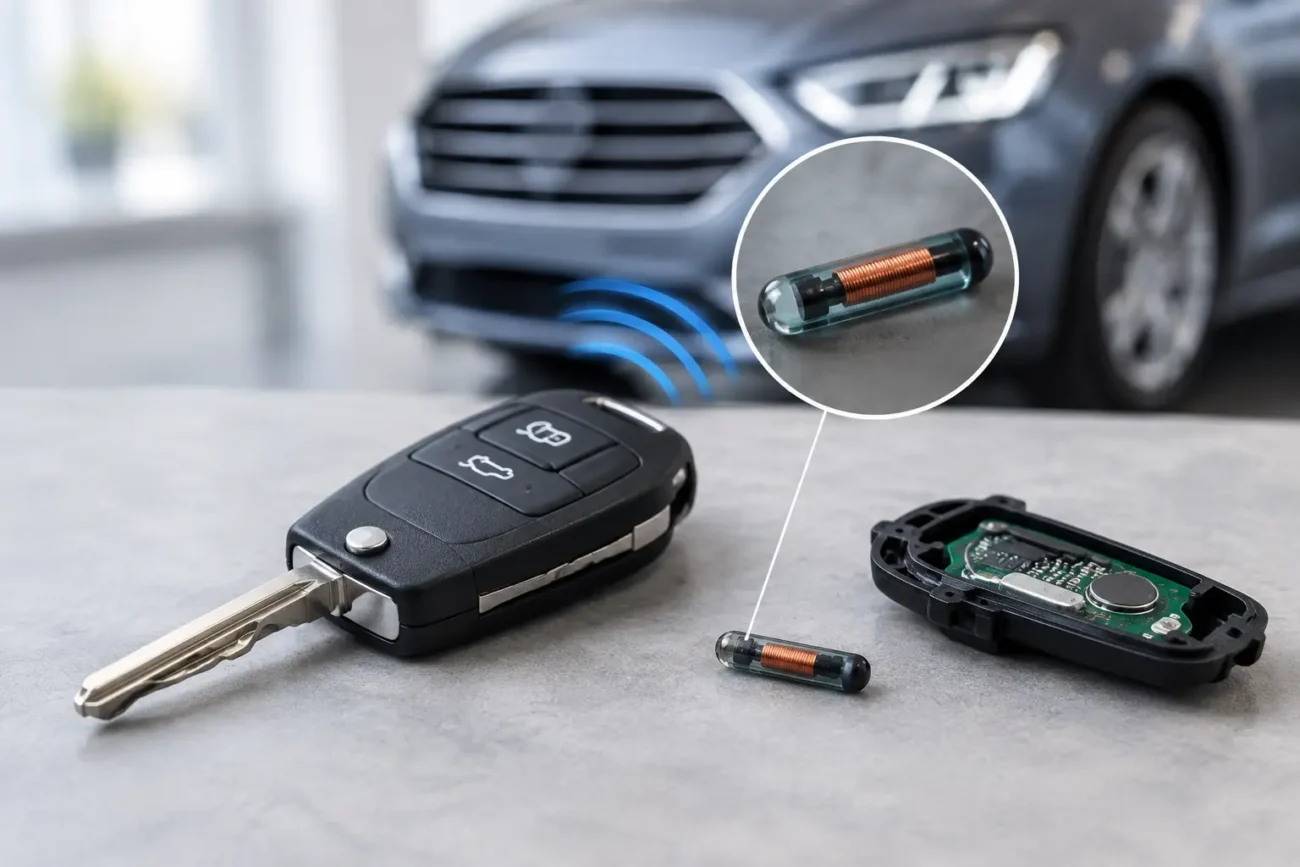
- transponder chip type and whether the key is supplied with one;
- whether the product is a shell only, a remote only, or a complete key requiring cutting and programming.
Do not assume that two keys with the same number of buttons are interchangeable. A Ford, BMW, Toyota or Vauxhall remote may have several visually similar versions across different years and trims. Even within one model range, frequency and electronics can differ.
For a shell replacement, confirm that the existing board, transponder and blade can be moved across. For a complete key, establish who will cut the blade and programme the remote and immobiliser functions. Programming should be carried out only by a suitably equipped professional and with appropriate proof of vehicle ownership where required.
Think beyond the purchase price
The cheapest key is not always the lowest-cost repair. A shell can be excellent value if it solves the actual problem. A complete aftermarket remote can be the better investment when buttons, board and transponder are all compromised. A dealer key may be the most efficient answer if the car’s security system leaves little room for alternatives.
Choose based on verified compatibility, the condition of the original key and the programming route available to you. For most routine replacement work, a quality aftermarket option offers practical savings and fast access to the parts needed. For restricted or highly specialised systems, the dealer route remains a valid part of the solution – and knowing the difference before ordering keeps a simple key job from becoming an expensive delay.
Add a review
Your email address will not be published. Required fields are marked *