
Can a Locksmith Program Car Keys?
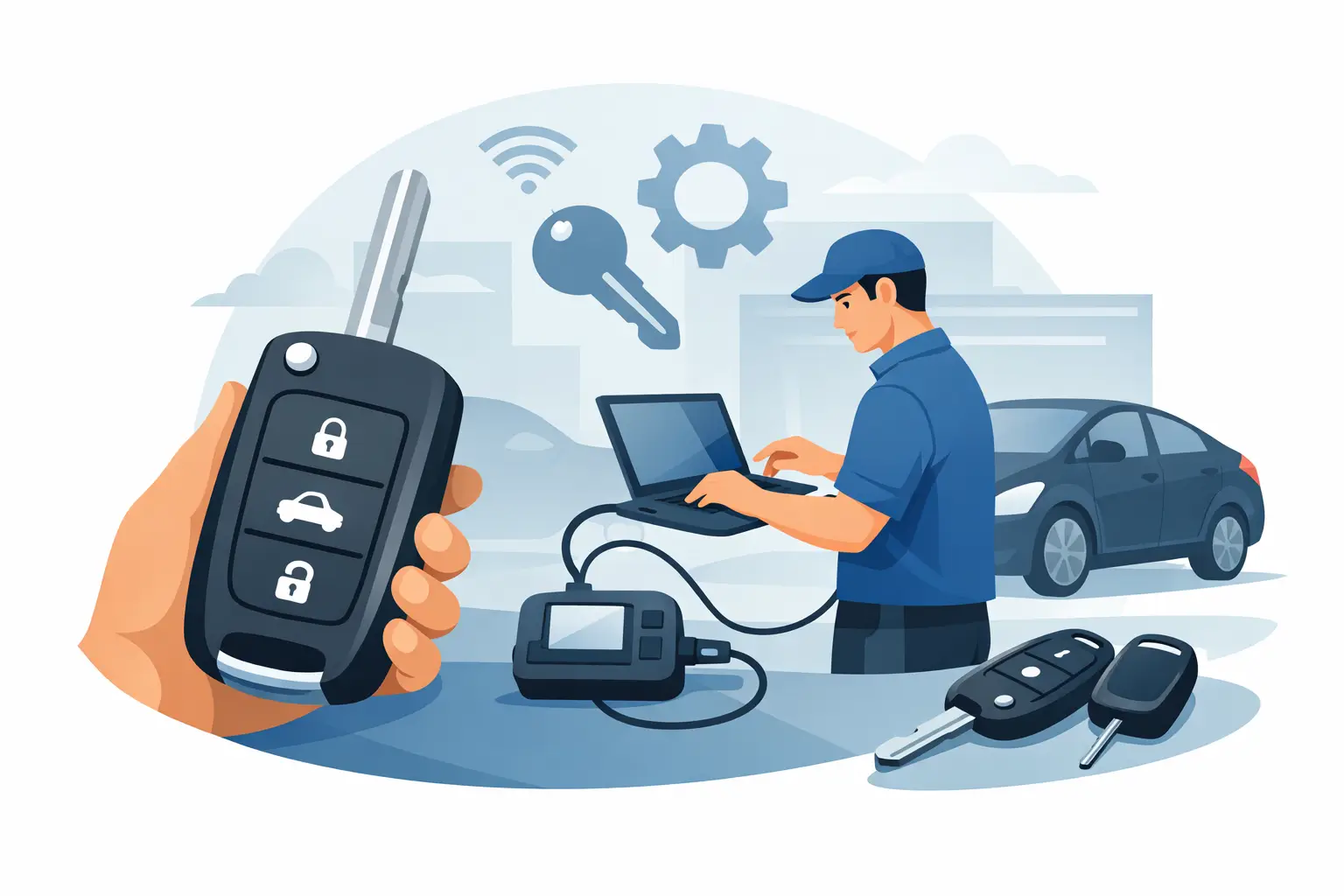
Standing next to a car that will not recognise your key is when this question gets very real: can a locksmith program car keys? In many cases, yes. A qualified auto locksmith can often cut, code and program replacement car keys, remote fobs and smart keys for a wide range of vehicles, usually at a lower cost and with a faster turnaround than a main dealer.
That said, not every key is the same, and not every vehicle uses the same system. Some jobs are straightforward. Others depend on the car’s immobiliser, the chip type, whether all keys are lost, and whether the replacement key is genuine, aftermarket or board-specific. If you want the short answer, a locksmith can often do the job. If you want the useful answer, it depends on the vehicle, the key technology and the tools available.
Can a locksmith program car keys for all vehicles?
Not all vehicles, and not all keys, but many of them. Modern auto locksmiths now work with a wide spread of systems across brands such as Ford, BMW, Audi, Toyota, Hyundai, Kia, Peugeot, Vauxhall and Mercedes. For common remote keys and many proximity smart keys, programming is part of routine automotive key work.
The main limit is not whether the locksmith is skilled enough in general terms. It is whether they have the right equipment, software coverage and compatible key for that exact make, model and year. Some vehicles accept aftermarket or OEM-style replacement keys without issue. Others are more restrictive and may require dealer-level access, online coding, security PIN retrieval or specialist EEPROM and bench work.
This is why compatibility matters so much. A key that looks correct from the outside can still be wrong if the frequency, transponder type, emergency blade profile or circuit board specification does not match the vehicle.
What a locksmith can usually program
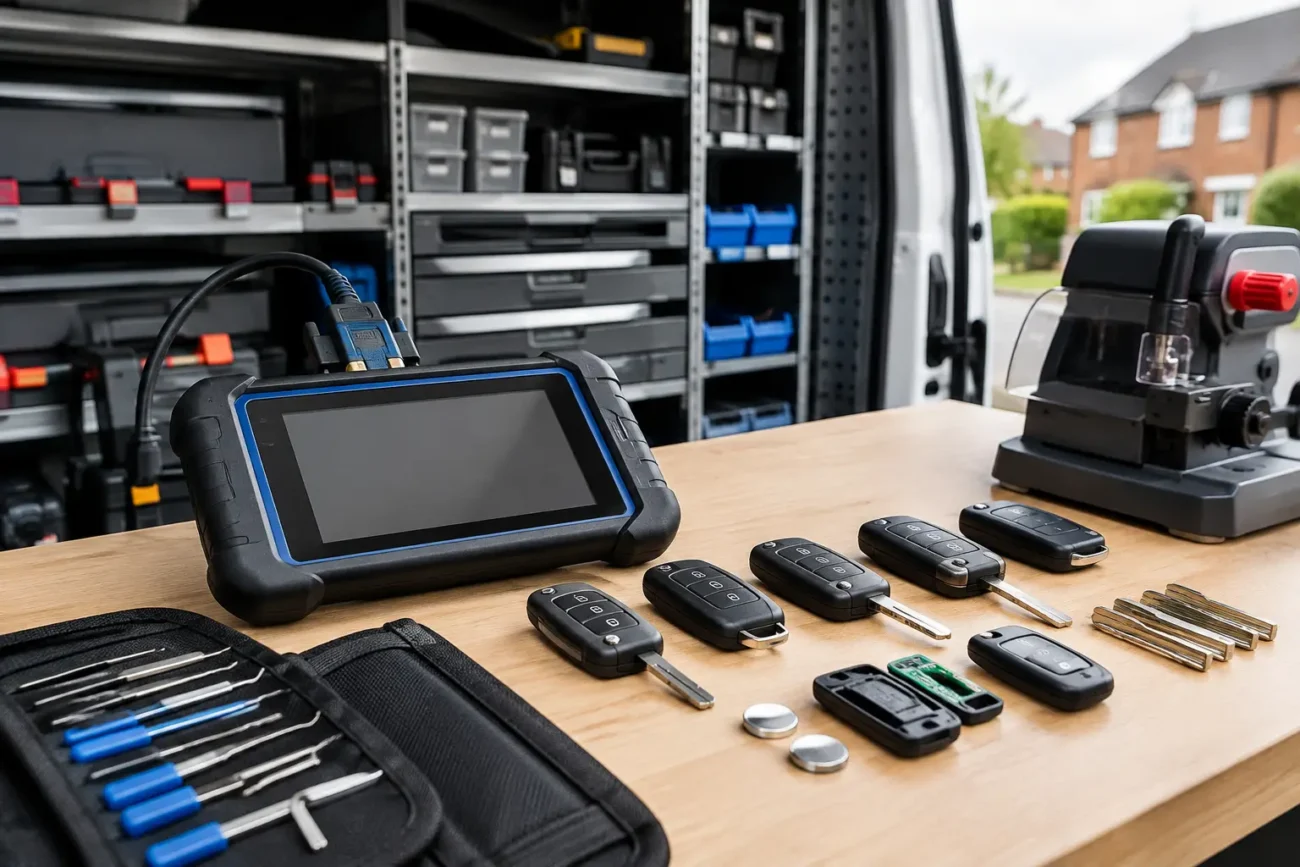
For most UK drivers, the answer covers more than they expect. A properly equipped locksmith can often program transponder keys, remote locking fobs, flip keys and many smart proximity keys. They may also clone certain chips, add a spare key when one working key is still available, or program all keys from scratch after key loss.
In practice, the easiest jobs tend to be basic transponder and remote key additions on mainstream vehicles. The more complex jobs usually involve encrypted transponders, keyless entry systems, push-button start vehicles and high-security European marques.
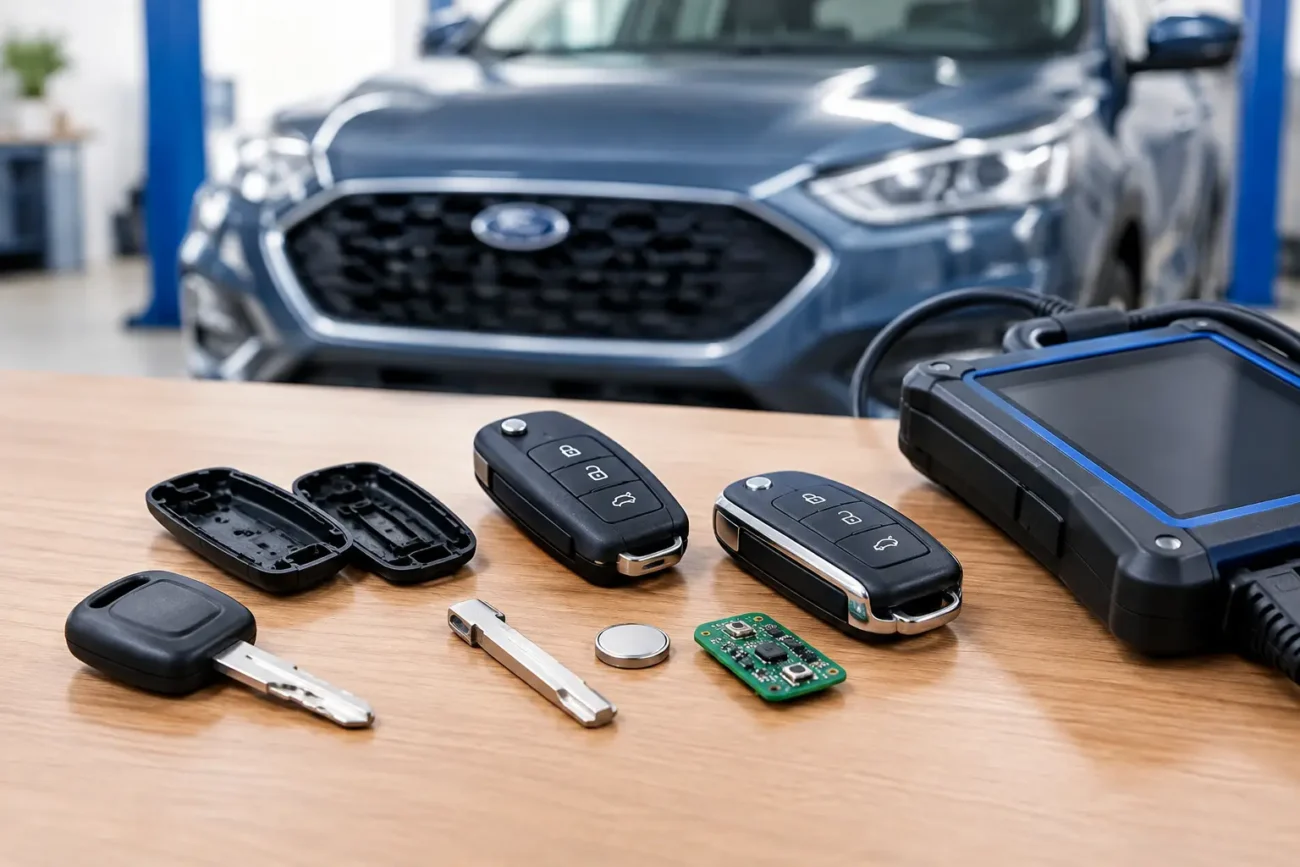
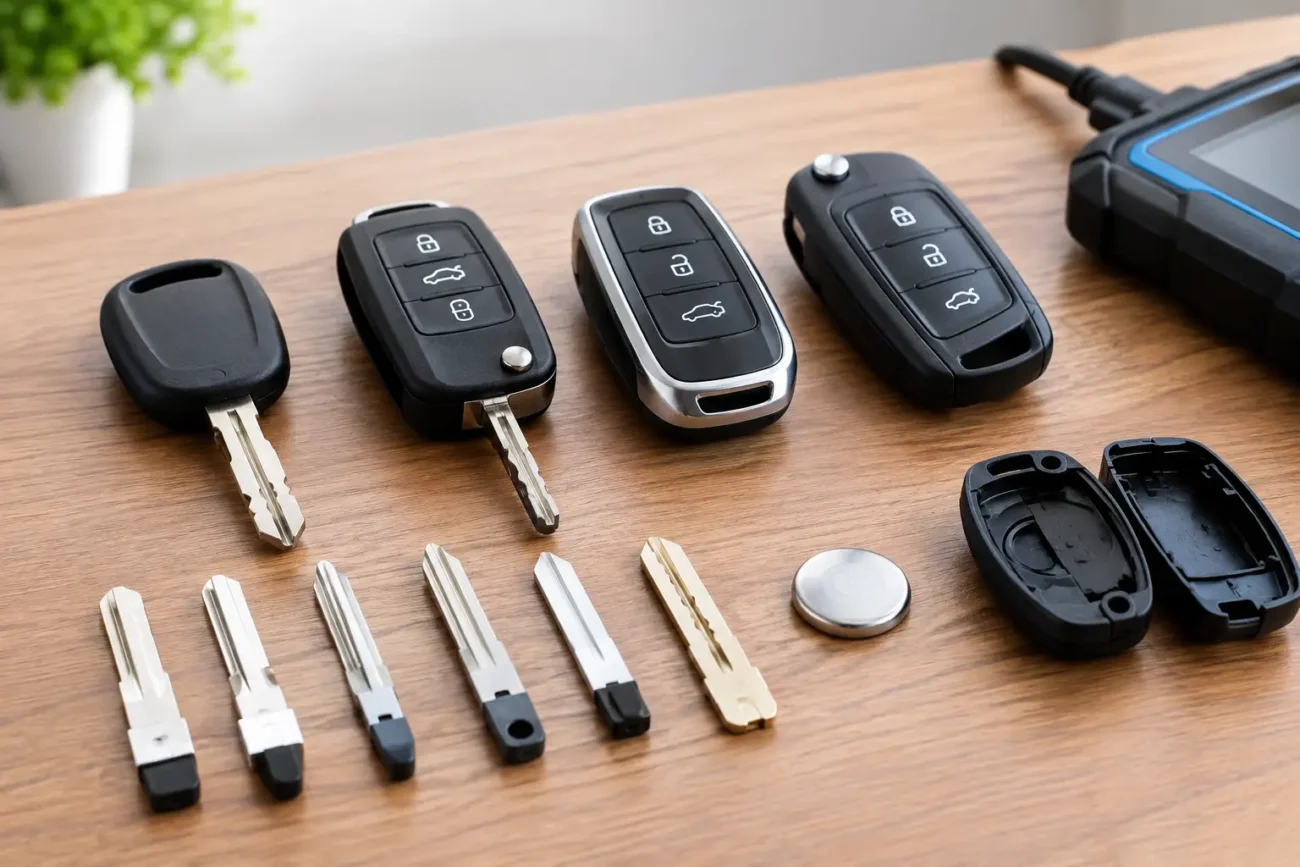
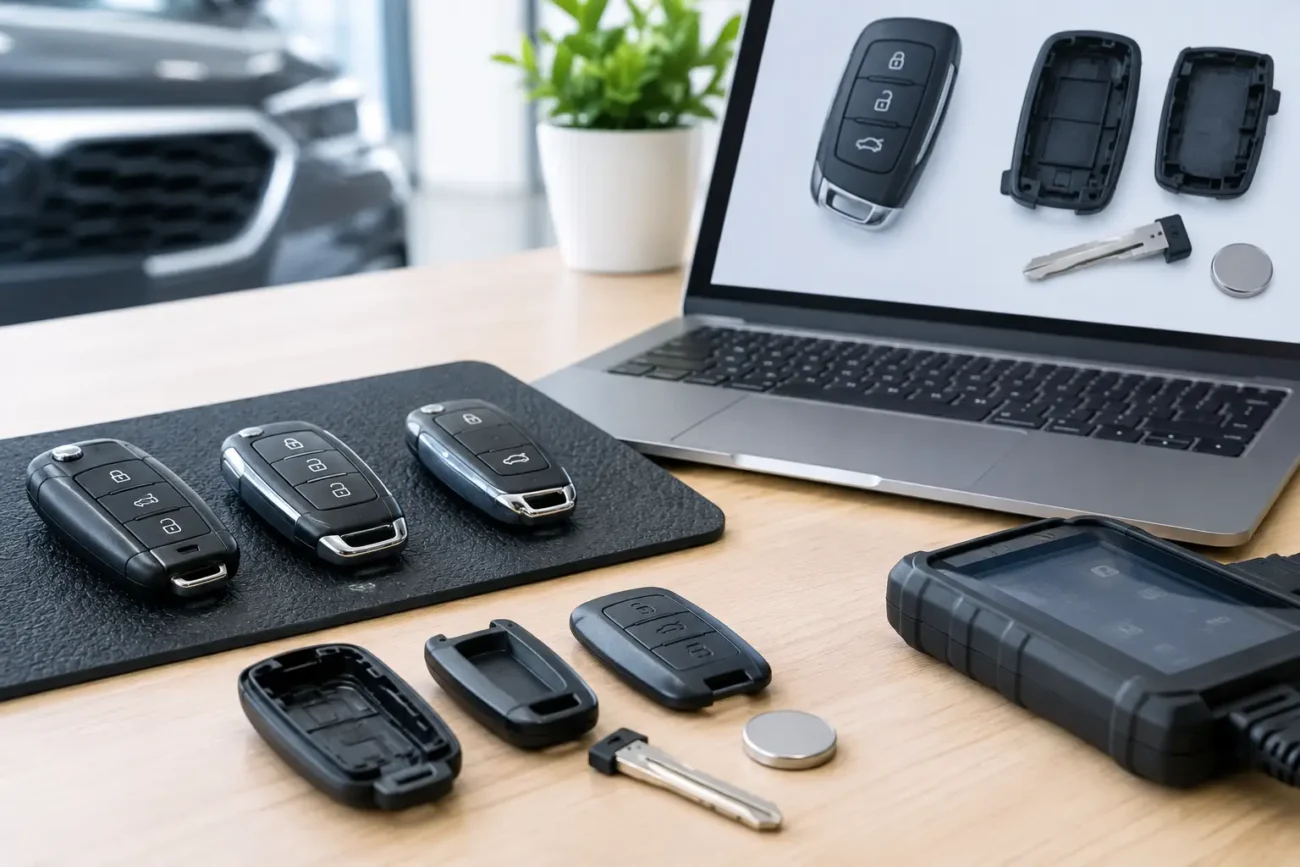
A locksmith may also be able to pair a replacement remote circuit board into an existing shell if the board is correct for the vehicle. This is where product accuracy matters. Frequency, chip presence, button layout and board design all have to line up with what the vehicle expects.
How car key programming actually works
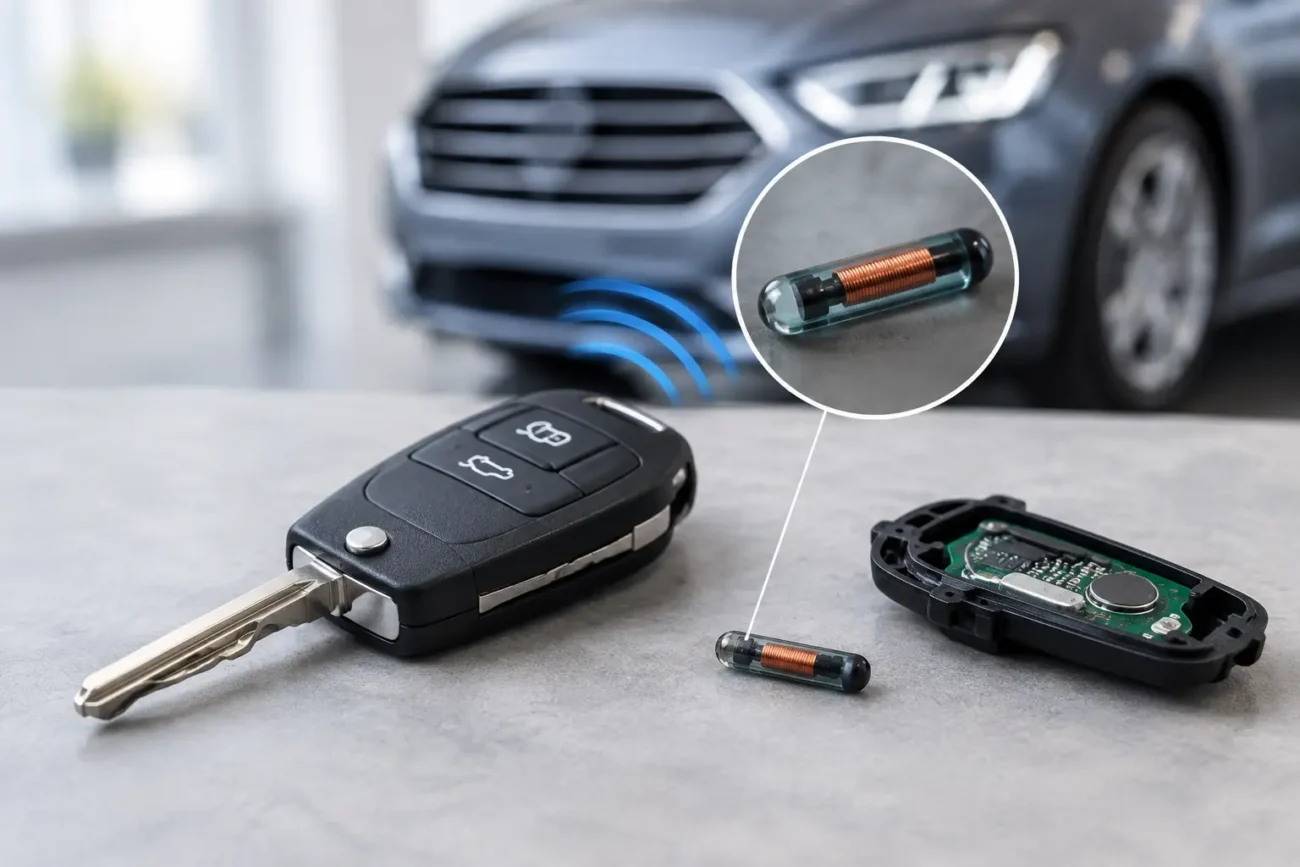
A modern car key is usually doing at least two separate jobs. One part operates the physical lock and ignition, if the vehicle still uses one. The other part communicates electronically with the vehicle’s immobiliser and, in many cases, the central locking system.
Programming normally means introducing the vehicle to a new electronic key identity so the immobiliser will authorise starting. Remote locking may be programmed at the same time or through a separate procedure, depending on the system.
Immobiliser programming
The immobiliser is the critical piece. If the transponder chip inside the key is not recognised, the engine may crank and not start, or not crank at all. Programming links that chip to the car’s security system.
Remote central locking pairing
This controls the lock, unlock, boot release and panic functions. On some vehicles, remote pairing is quick. On others, it is tied into full immobiliser programming or body control module coding.
Key cutting and emergency blade setup
If the key includes a blade, it also needs to be cut correctly. Smart keys often still contain an emergency blade, which is easy to overlook until the battery fails or the car needs manual entry.
When a locksmith may be a better option than a dealer
If speed and cost matter, locksmiths are often the practical choice. A mobile auto locksmith can usually come to the vehicle, which is useful if all keys are lost or the car is immobilised on a driveway, at work or in a car park. Dealers often require more lead time, and in some cases the vehicle may need recovery to site.
There is also more flexibility in parts options. A dealer will generally supply its own route of key replacement. A locksmith may be able to offer genuine, aftermarket or model-compatible solutions depending on the vehicle and the customer’s budget.
For trade buyers, the advantage is even clearer. Garages and independent workshops regularly need reliable supply of shells, remotes, blades, chips and programming tools to complete jobs without dealer delays. Stock breadth and exact compatibility become commercial advantages, not just technical details.
When a locksmith might not be able to program the key
This is where the honest answer matters. Some vehicles have security systems that are deliberately hard to access outside the dealer network. Newer models may require online authentication, coded data direct from the manufacturer or secure gateway access.
There are also cases where the issue is not programming at all. A damaged ignition barrel, failed antenna coil, faulty body module, corrupted immobiliser data or water-damaged key can all mimic a programming fault. In those cases, programming a fresh key may not solve the problem.
If you are sourcing the key yourself, the wrong part is another common reason a job stalls. The board may be incorrect, the transponder may be missing, or the frequency may not match the original. This is particularly common with visually similar smart keys across different model years.
Can a locksmith program car keys if all keys are lost?
Often yes, but the process is usually more involved. When at least one working key is available, adding a spare is generally simpler. When all keys are lost, the locksmith may need to generate a new key from lock data or vehicle records, then carry out full immobiliser programming.
On some vehicles this is routine. On others it can require PIN code reading, module access or bench programming. That affects both labour time and cost. It is one reason all-keys-lost jobs are nearly always priced higher than spare key duplication.
For the customer, the key point is that all-keys-lost does not automatically mean dealer only. It just means the job needs the right tools, the right key and the right level of system access.
What affects the cost?
The vehicle make and model is the biggest factor, followed by the key type. A basic manual transponder key will usually cost less than a multi-button flip remote, and a proximity smart key will usually cost less than nothing only in theory – in reality, it is normally the most expensive option because the electronics are more complex.
Whether the key is genuine, aftermarket or refurbished can also affect price. So can the programming method. OBD programming is generally simpler than EEPROM or module-based work. If the blade needs cutting, that is another step. If all keys are lost, expect more labour.
There is also a difference between buying the cheapest available key and buying the correct one. For car keys, those are not always the same thing. A low-cost remote that does not match the board type or chip specification can waste both time and money.
Choosing the right replacement key matters as much as the programming
This is the part many buyers underestimate. Programming can only succeed if the replacement key is actually compatible. That means checking frequency, transponder chip, PCB layout, button count, blade type and model-year fitment.
For example, two three-button remotes for the same brand may look near-identical but use different frequencies or immobiliser chips. Smart keys are even less forgiving. A mismatch in board reference or proximity system can leave you with a key that cuts correctly and still does not work.
That is why specialist suppliers matter. A trade-focused source such as Global Keys Direct helps reduce failed jobs by making compatibility clearer at product level, especially for buyers comparing aftermarket, OEM-board and shell-only options.
What to ask before booking a locksmith
Before you commit, ask whether they cover your exact make, model and year, whether they can program all-keys-lost vehicles, and whether they supply the key or will work with a customer-supplied one. It is also worth asking whether the quote includes cutting, programming and remote pairing, because those are not always bundled together.
If you already have a replacement key, confirm the frequency, chip type and part reference where possible. A good locksmith will usually want this information up front because it saves wasted callouts and avoids fitting the wrong key to the wrong system.
The practical answer
So, can a locksmith program car keys? Yes, very often they can, and for many UK drivers it is the quickest and most cost-effective route. The real question is whether the locksmith has the right system coverage and whether the replacement key is truly compatible with the vehicle.
If you are replacing a lost or damaged key, or adding a spare, treat compatibility as the first step rather than an afterthought. The right key, correctly matched to the car, gives the locksmith the best chance of turning an urgent problem into a straightforward fix.
Add a review
Your email address will not be published. Required fields are marked *