
Ford Key Repairs: Fix, Replace or Reprogramme?
A Ford key that has split at the hinge, stopped locking the doors or become unreliable at the ignition is not always a full replacement job. Many Ford key repairs come down to a worn remote shell, flat battery, damaged blade or failed button contacts. Knowing which part has failed can save time, reduce cost and keep the original electronics in service where appropriate.
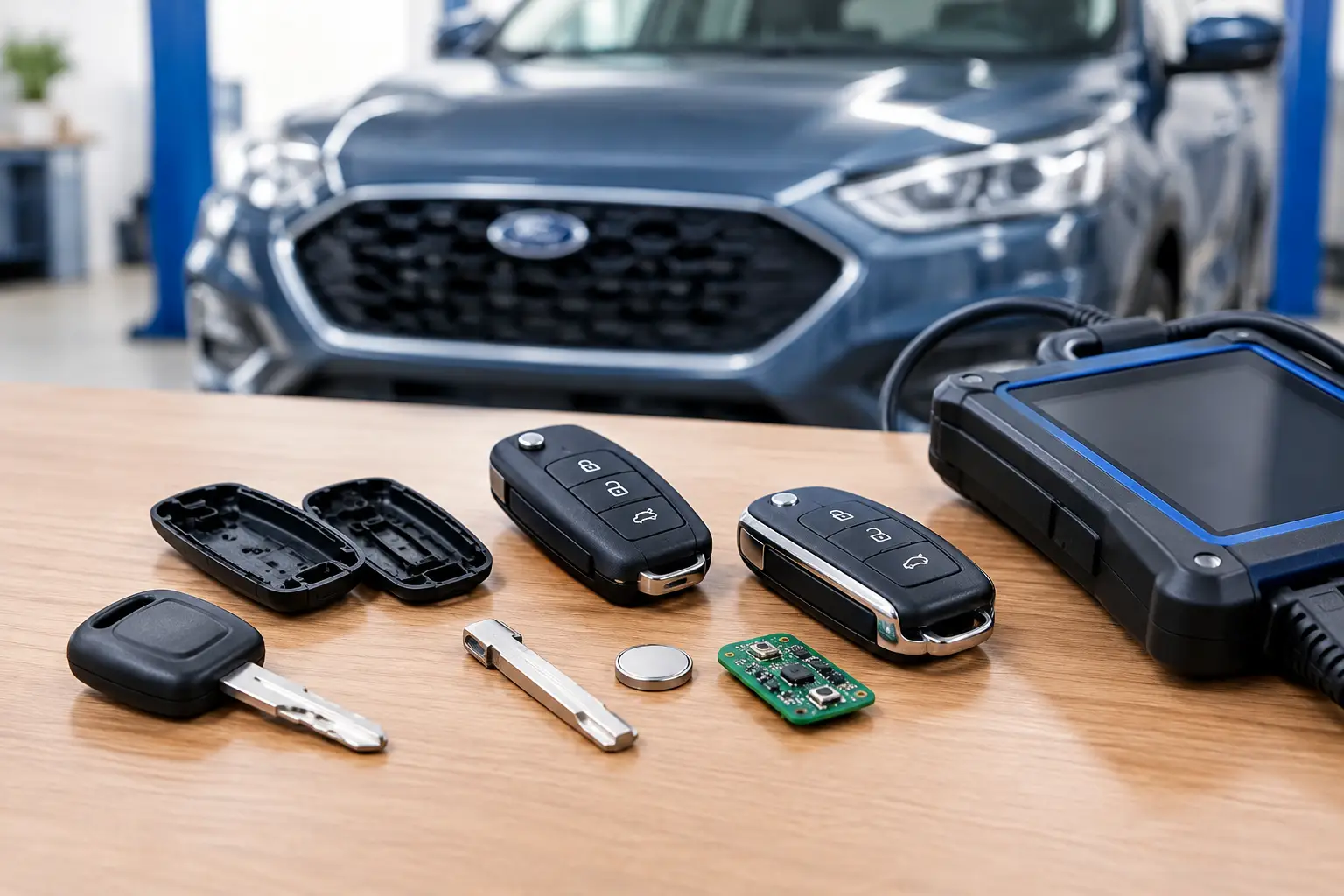
The right repair depends on the key type and the actual fault. A traditional Ford remote key, flip key and proximity smart key may all look like a single unit, but they combine several separate components. The mechanical blade, remote circuit board, battery, transponder chip and casing do different jobs. Replacing the wrong one will not resolve the problem.
Start by identifying the Ford key fault
Before ordering parts, separate the locking issue from the starting issue. If the vehicle starts normally but the remote buttons do nothing, the fault may be the battery, button pad, circuit board or remote synchronisation. If the remote works but the vehicle will not start, attention turns to the transponder or smart-key recognition system. If neither function works, there may be more than one fault.
Physical damage is usually easy to spot. Common signs include a cracked shell, loose flip-blade pivot, missing buttons, a blade that will not fold correctly, or a key ring loop that has broken away. These are often casing problems rather than electronic failures, particularly where the remote still operates normally.
Water damage is less straightforward. Condensation, rain exposure or a trip through the washing machine can corrode the board and battery contacts. A key may work intermittently for days before failing completely. If moisture is suspected, do not assume that fitting a new shell will restore the remote. The internal board should be assessed for corrosion or damaged components by a suitably equipped automotive key professional.
Ford key repairs that usually do not need programming
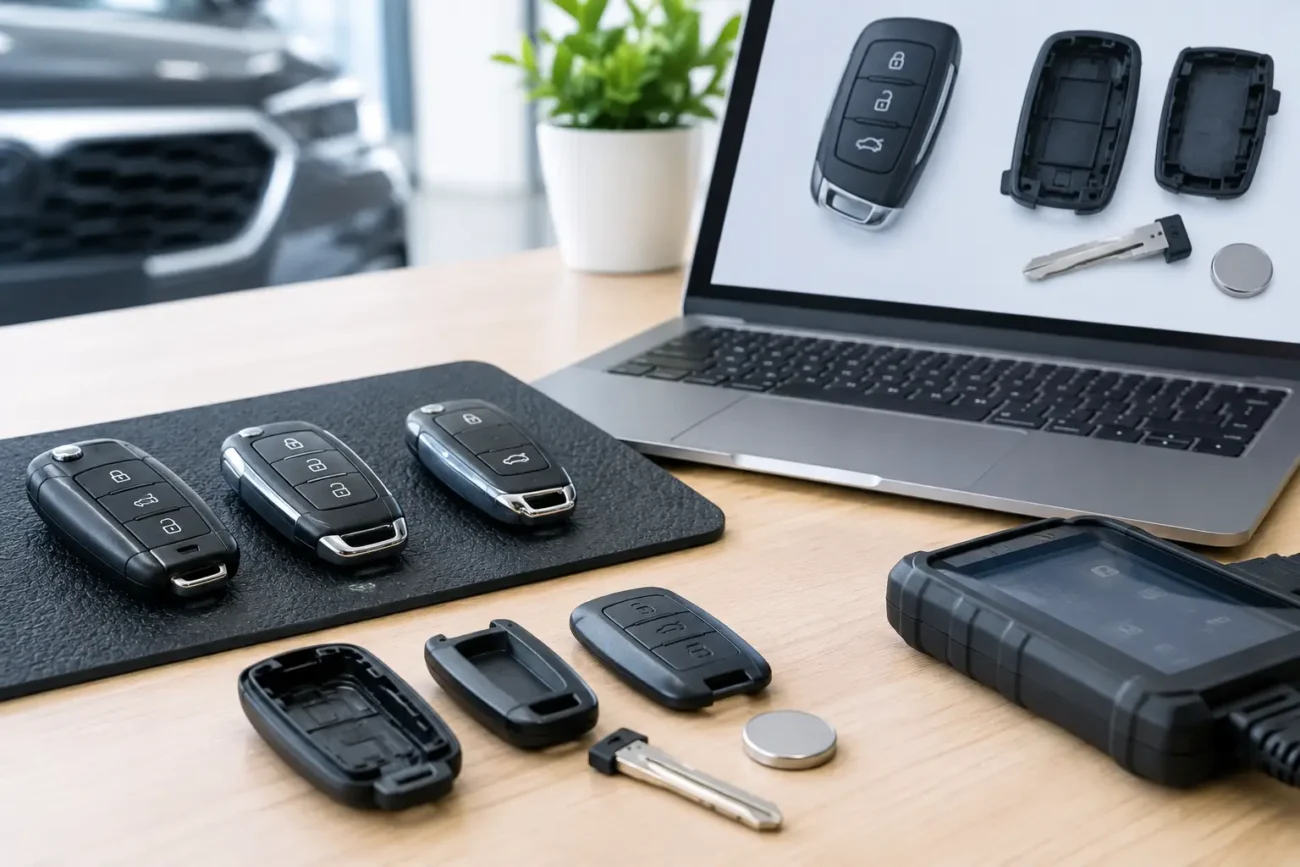
A replacement key shell is one of the most practical repairs for an otherwise working Ford remote. It allows the original electronic board and, where fitted separately, the existing transponder chip to be transferred into a new housing. Because the vehicle-recognised electronics remain the same, programming is generally not required for a shell-only repair.
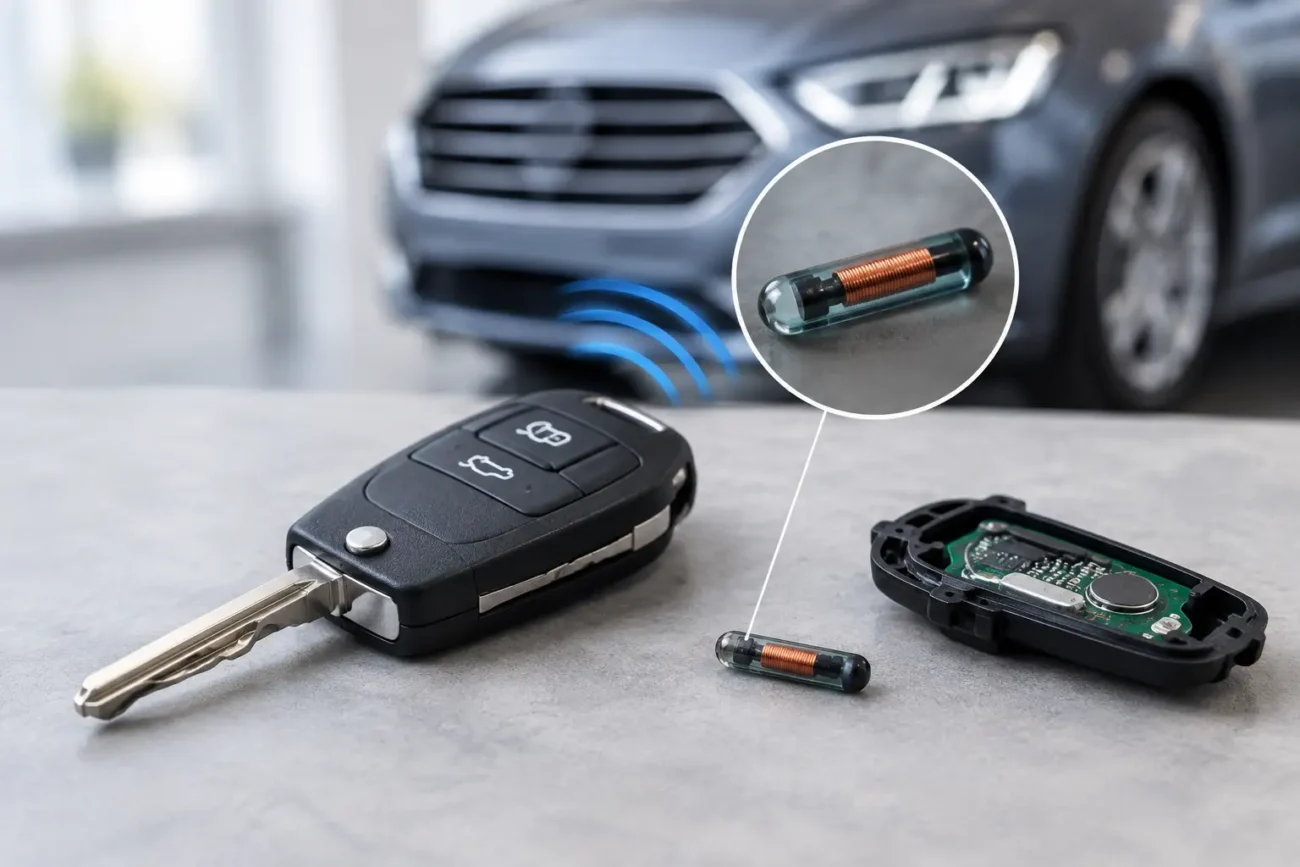
The transfer needs care. Ford keys vary by generation, button layout and blade arrangement. Some use a removable chip in a dedicated slot, while others have a transponder integrated into the circuit board. Losing, cracking or omitting a separate chip can leave a key able to unlock the car but unable to start it.
A worn or bent mechanical blade can also be replaced in some cases. The correct blank must match the original blade profile and be cut accurately from the working key. This is a mechanical repair, not necessarily an immobiliser programming job, but the blade type still needs checking carefully before purchase.
Battery replacement is another common fix. A weak battery may reduce remote range before the buttons stop responding altogether. Use the battery reference specified for the key, fit it with the correct polarity and check the battery contacts are clean and making firm contact. A new battery will not repair a damaged board, worn microswitch or failed transponder, so it is best treated as an early diagnostic step rather than a cure-all.
When a replacement Ford key needs programming
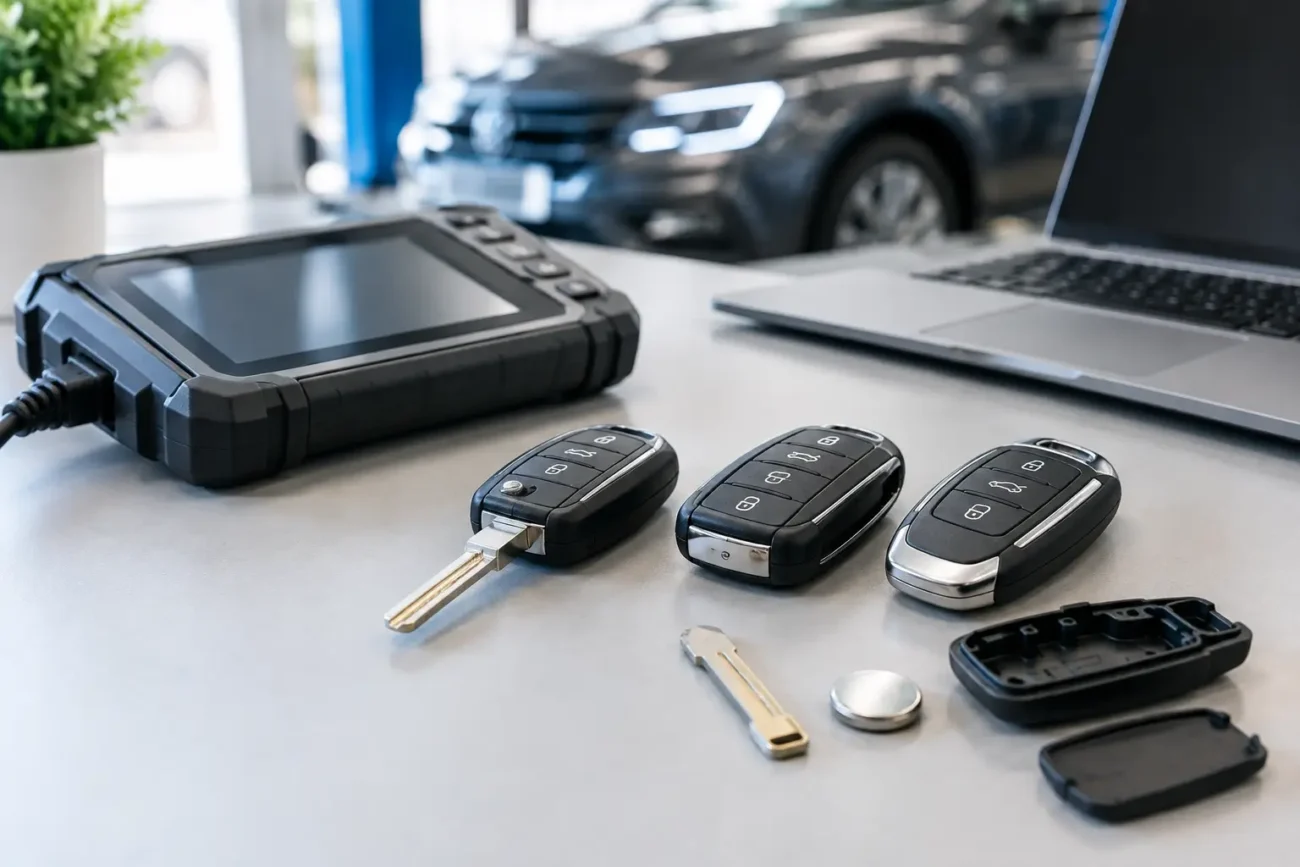
Programming is normally needed when you are introducing a new transponder, remote board or smart key to the vehicle. The vehicle must recognise the key’s immobiliser credentials before it will authorise starting. Depending on the Ford model, year and key system, this may require suitable diagnostic equipment, correct key data and a professional programming process.
Modern Ford proximity keys add another layer of complexity. They may control keyless entry, passive start, remote locking and other functions from one unit. A compatible smart key must be selected by its relevant details, which can include frequency, button configuration, board reference, chip type and vehicle application. Similar-looking fobs are not automatically interchangeable.
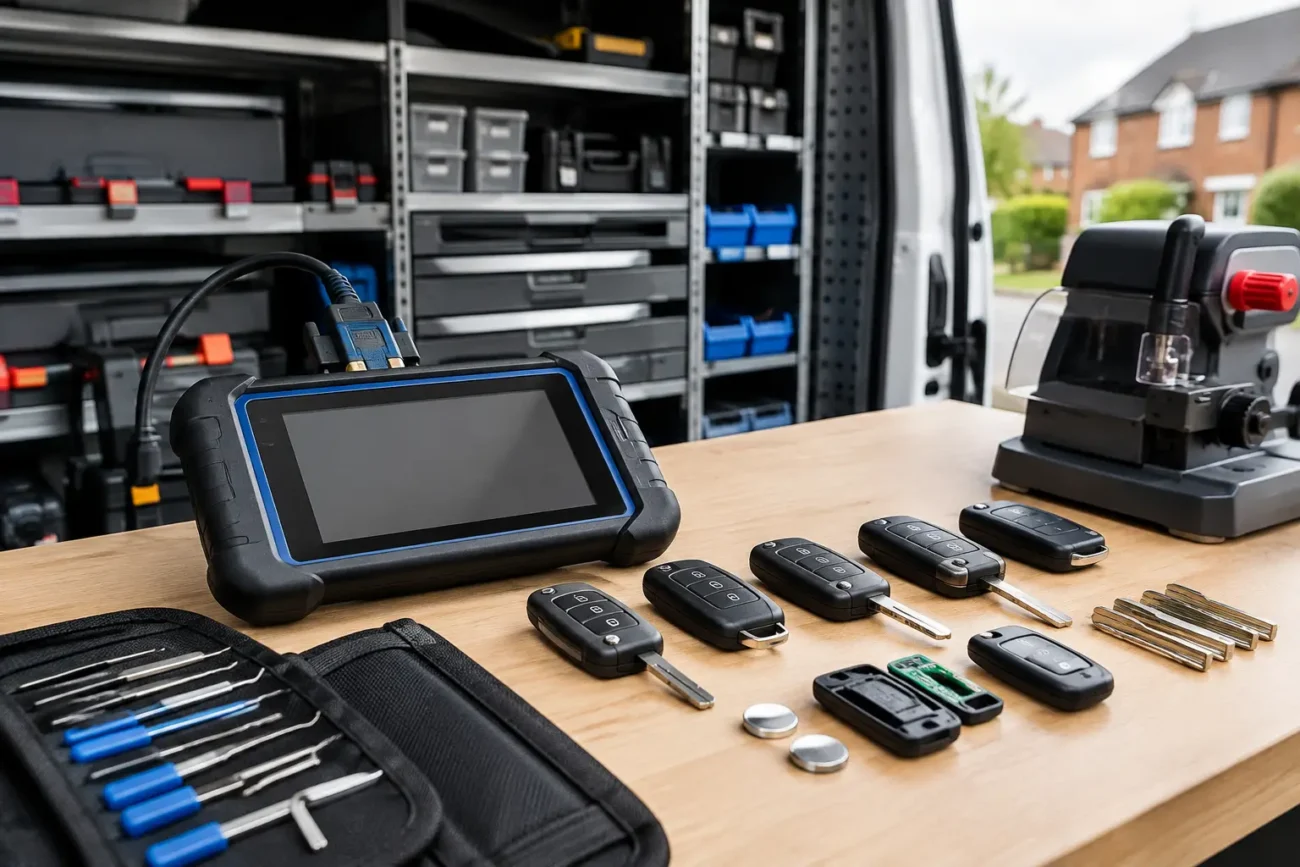
For garages, locksmiths and key programmers, a replacement remote or smart key should be treated as part of a controlled job process: identify the vehicle correctly, inspect the original key where available, confirm the relevant technical references and use appropriate equipment. For vehicle owners, the sensible route is to source the correctly specified part and arrange programming with a qualified automotive key specialist if required.
Check compatibility before ordering Ford key parts
Ford has used a wide range of key systems across Fiesta, Focus, Mondeo, Kuga, Transit, Ranger and other models. Year alone is not enough to identify the correct part. Mid-generation changes can affect the blade, remote frequency, board layout and transponder specification.
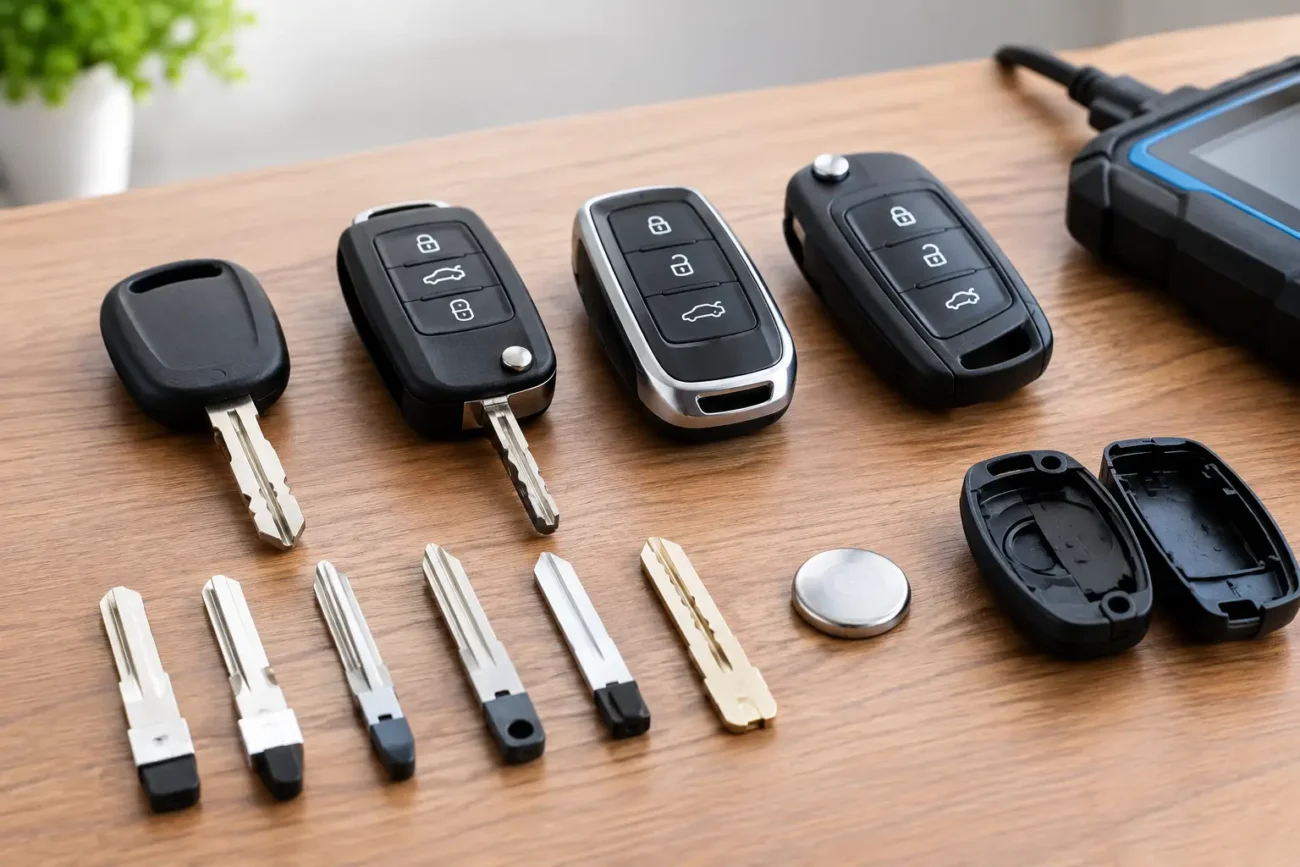
Compare the old key with the replacement listing and check the number of buttons, blade style, battery position and casing shape. Where a part number or circuit-board reference is visible, it is one of the most useful identifiers. For remote and smart keys, confirm the stated frequency and chip information as well. Product fitment details should support the decision, but checking the original key remains the safest way to avoid ordering a near-match that cannot be used.
A replacement shell may be supplied with an uncut blade. That is normal. It is intended to accept a transferred original blade where the design permits, or to be cut by a key-cutting service. Do not force a blade or circuit board into a shell that does not match its layout. Broken retaining clips, misplaced chip locations and poorly fitting button pads can turn a simple repair into a replacement-key job.
Repair, replacement or professional diagnosis?
Repair is usually the best-value option when the original Ford key starts the vehicle and the electronic board remains sound. A new shell, button pad, battery or blade can restore day-to-day usability without changing the vehicle’s recognised key credentials.
A replacement remote is more appropriate when the original circuit board has failed but the vehicle’s key system can be programmed for a new unit. It can also make sense to add a spare working key before the only existing key becomes damaged or lost. Smart keys and all-keys-lost situations are typically professional programming jobs, particularly on newer vehicles.
There is a trade-off between the lowest-cost part and the time spent diagnosing an uncertain fault. If the battery has been changed, the shell is intact and the remote still fails intermittently, a professional test may be more economical than buying several possible parts. Equally, replacing a badly worn casing early can protect a working board from further damage and prevent the inconvenience of a key failing at the worst moment.
A practical approach for trade and retail buyers
For a single owner repair, retain every part removed from the old key until the repaired key has been tested. That includes small screws, blade pins, battery retainers and any separate transponder chip. Test the remote locking functions and vehicle starting function before relying on the repaired key away from home.
For trade buyers, keeping common Ford shells, blades, batteries and remote options available can reduce turnaround on routine jobs. However, stock breadth should never replace verification. Recording the customer vehicle details and checking physical references on the original key helps prevent incorrect supply and unnecessary return visits.
Global Keys Direct supplies Ford-compatible replacement key components and remote options for both vehicle owners and automotive professionals, with product information designed to support accurate matching. The most reliable repair begins with the original key in hand, a clear diagnosis and a close check of every compatibility detail.
A damaged Ford key is frustrating, but it does not automatically mean dealership-level replacement costs. Protect the working electronics where possible, replace only the failed component, and use professional programming support when the vehicle needs to recognise a new key.
Add a review
Your email address will not be published. Required fields are marked *