
Car Key Blade Replacement Explained
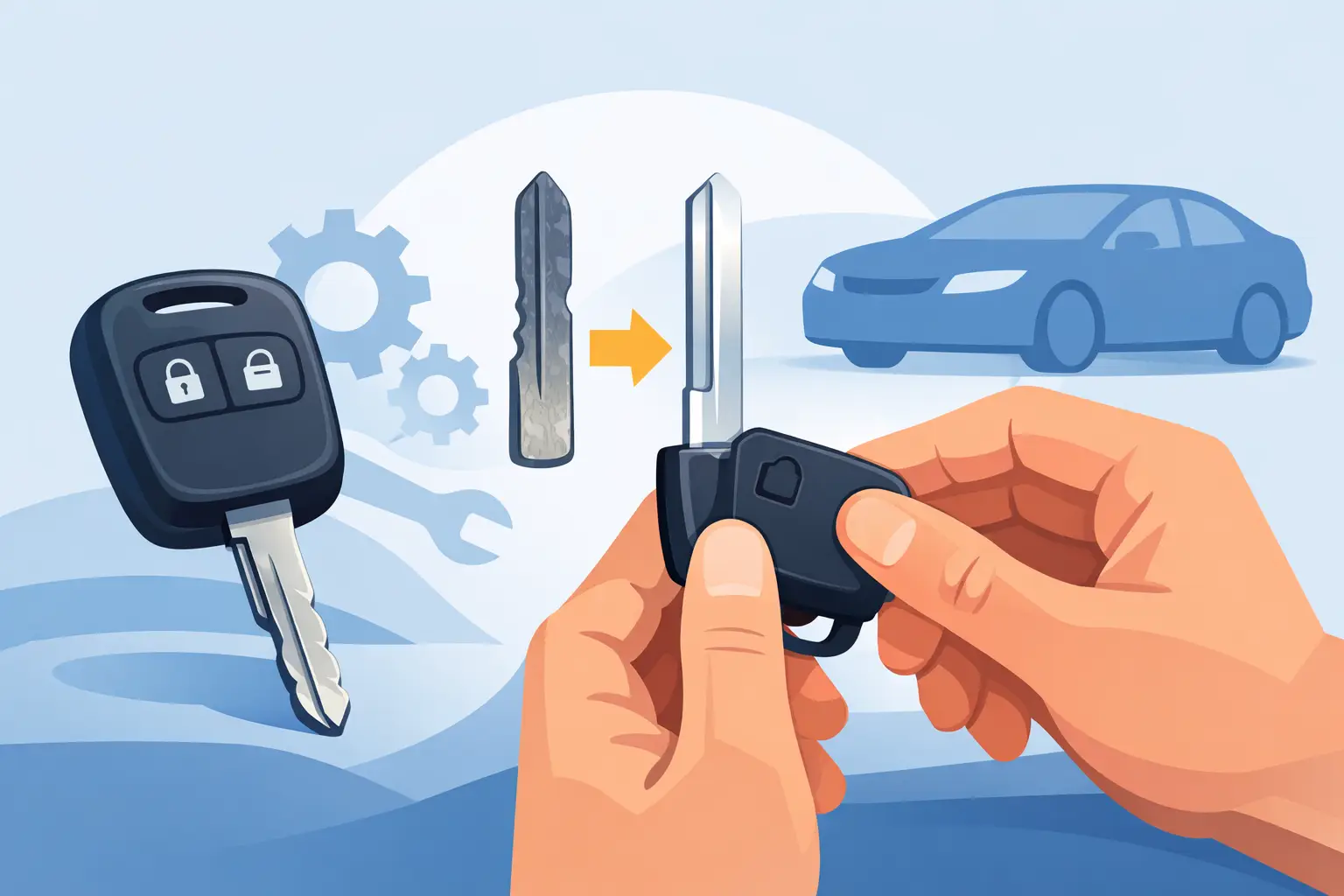
A key that turns badly, sticks in the ignition, or has started to wobble in the flip mechanism is usually on borrowed time. In many cases, car key blade replacement is the quickest and most cost-effective fix, especially when the remote buttons, transponder chip, or electronics are still working properly.
For both vehicle owners and trade buyers, the main question is not whether the blade can be replaced, but which type is needed and what else has to happen alongside it. Some blades only need cutting. Others need swapping into a remote shell. On certain keys, the blade issue is separate from programming, while on others the full key setup needs checking before parts are ordered.
When car key blade replacement makes sense
A worn key blade often gives warning signs before it fails completely. The edges may look rounded, the key may need jiggling to turn, or it may start working in one lock but not another. If the blade snaps at the hinge of a flip key or cracks near the shoulder, replacement is usually far cheaper than buying a complete new key from a dealer.
This is especially true where the remote board still locks and unlocks the car, and the immobiliser chip is intact. In that situation, replacing the blade or the outer shell can restore full everyday use without paying for components you do not need.
For trade customers, this is a common repair category because it solves a practical problem fast. A customer may arrive with a damaged flip key, but the board, battery contacts, and transponder remain serviceable. Replacing the blade and housing is often the sensible route, provided the correct profile and fitting style are matched.
Not all key blades are the same
The phrase car key blade replacement sounds simple, but compatibility is where most mistakes happen. Two keys can look almost identical from the front and still use different blade profiles, hinge pins, groove positions, or retention methods.
Blade profile and keyway matter
The cut pattern has to match the vehicle’s lock profile. A blade that physically fits the shell may still be wrong for the door or ignition if the milling pattern differs. This is why model, year range, and sometimes specific part style all matter when selecting a replacement.
Flip key blades and fixed blades differ
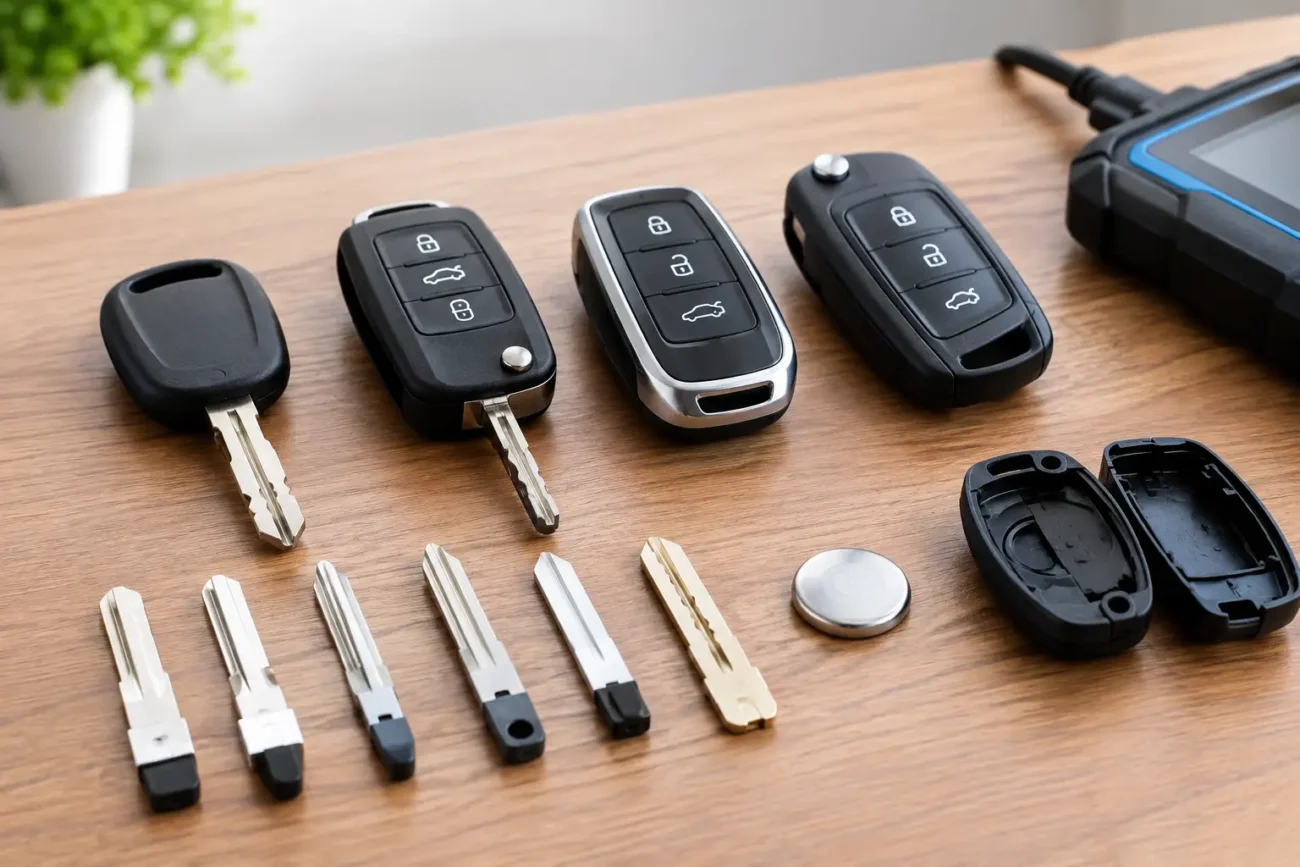
Many modern remotes use a flip-out emergency or ignition blade. These can vary by length, thickness, pivot design, and whether the blade is secured by a roll pin, screw fitting, or clipped insert. Fixed blades on older remote keys are generally simpler, but they still need the right shape and head fitment.
HU, VA and laser styles are not interchangeable
Across brands such as Ford, Vauxhall, Peugeot, Audi, BMW, Hyundai, Kia and Mercedes, there are multiple blade families. Some are traditional edge-cut designs, while others are laser or sidewinder types. Even where the remote shell looks right, the wrong blade family will stop the job immediately.
What needs replacing – just the blade or the whole shell?
This depends on where the damage sits. If the blade alone is bent, worn, or snapped and the remote casing is sound, a blade-only replacement may be enough. If the flip mechanism is loose, the button pad is torn, or the case has split around the hinge, replacing the shell and blade together is often the better long-term fix.
That distinction matters on cost and labour. A simple blade swap is quick if the part is right and the original electronics can be transferred without risk. A full shell replacement takes longer but gives a cleaner result when the old casing is badly worn.
For a retail customer, this usually comes down to condition. For a locksmith or garage, it is also about comeback risk. Reusing a tired shell with a fresh blade can save money, but if the spring mechanism is failing, the repair may not last.
Does a replacement blade need programming?
Usually, the blade itself does not need programming. The metal part is a mechanical component and simply needs cutting to match the vehicle. What confuses buyers is that the blade often sits inside a remote or transponder key, and those electronic elements may have separate requirements.
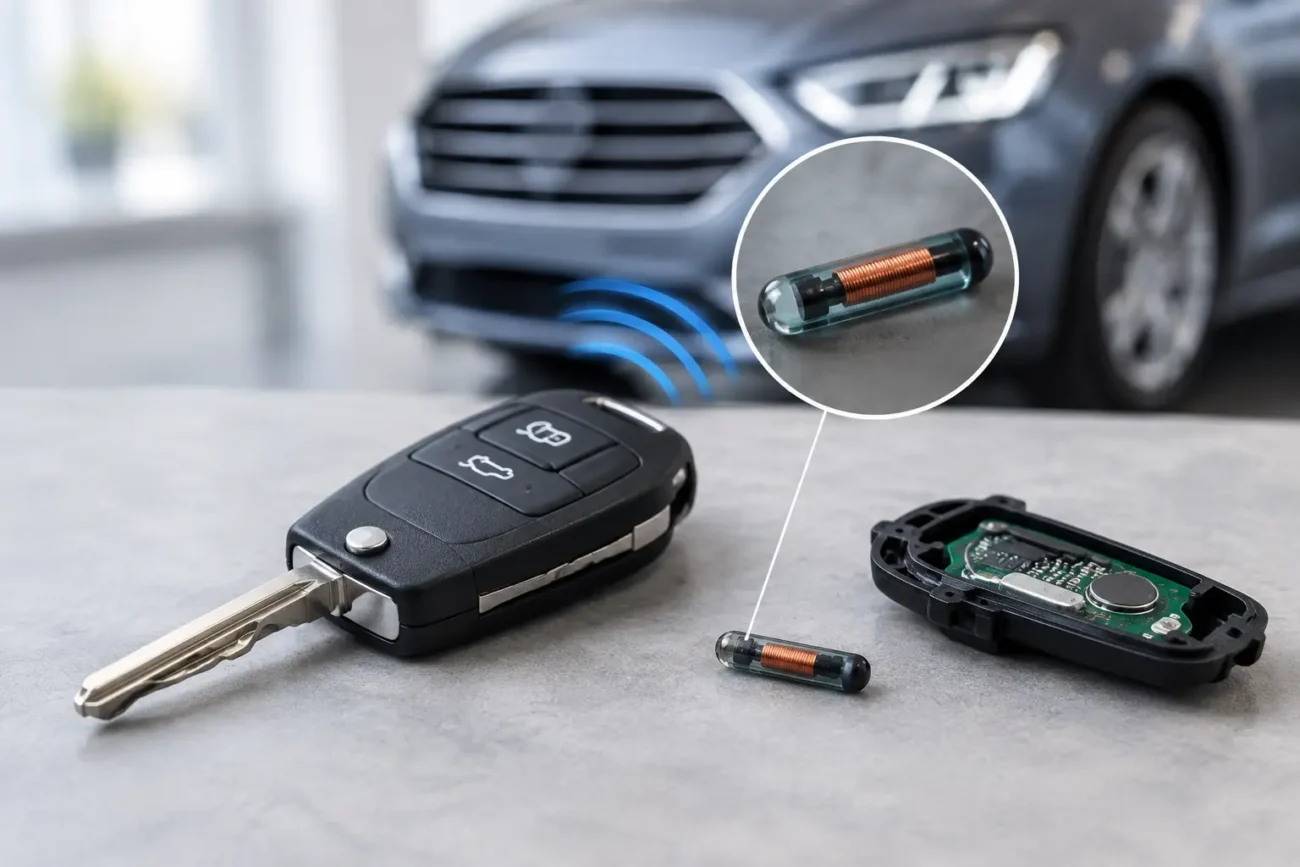
If you are reusing the original transponder chip and remote board, programming may not be necessary at all. You are effectively restoring the physical part of the key while keeping the coded electronics already paired to the car.
If the original chip is lost, damaged, or unavailable, that is a different job. In that case, the replacement may involve a new chip, remote synchronisation, or full key programming depending on vehicle make and system type.
Emergency blades for smart keys
Smart keys often include an emergency insert blade hidden inside the fob. These are easy to overlook, but they still need exact compatibility. Replacing one is usually straightforward, yet cutting remains essential if the vehicle owner wants manual door access when the battery fails.
Cutting the blade is a separate step
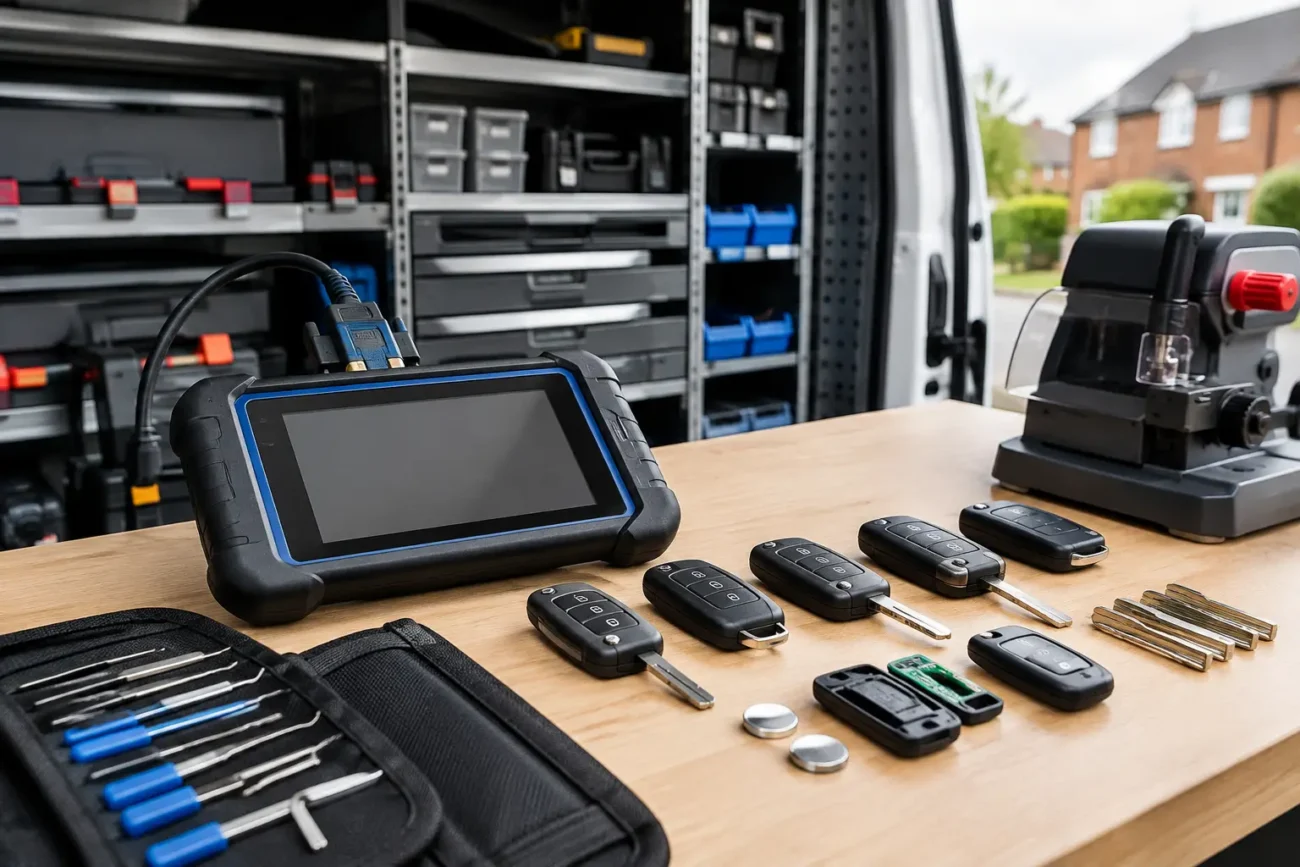
A blank blade is only half the job. Once the correct replacement part is selected, it must be cut to match the original key or vehicle lock code. That is where buyers need to be realistic. Ordering the right blank solves compatibility, but the key will not turn the lock until it has been properly cut.
For trade users with the right machinery, that is routine. For retail customers, it usually means taking the blank to a locksmith or key cutting specialist. Not every high street cutter handles automotive laser or sidewinder blades, so it is worth checking before purchase.
Accuracy matters here. A poorly cut blade can feel close to correct but still bind in the ignition or fail intermittently in the door. That can be mistaken for a wrong part when the issue is actually the cutting quality.
Common mistakes when ordering a replacement blade
The biggest error is buying by appearance alone. Photos are useful, but dimensions, groove placement, profile type, and vehicle compatibility are what decide whether a blade will work. Another common issue is assuming all keys for one manufacturer share the same blade. They do not.
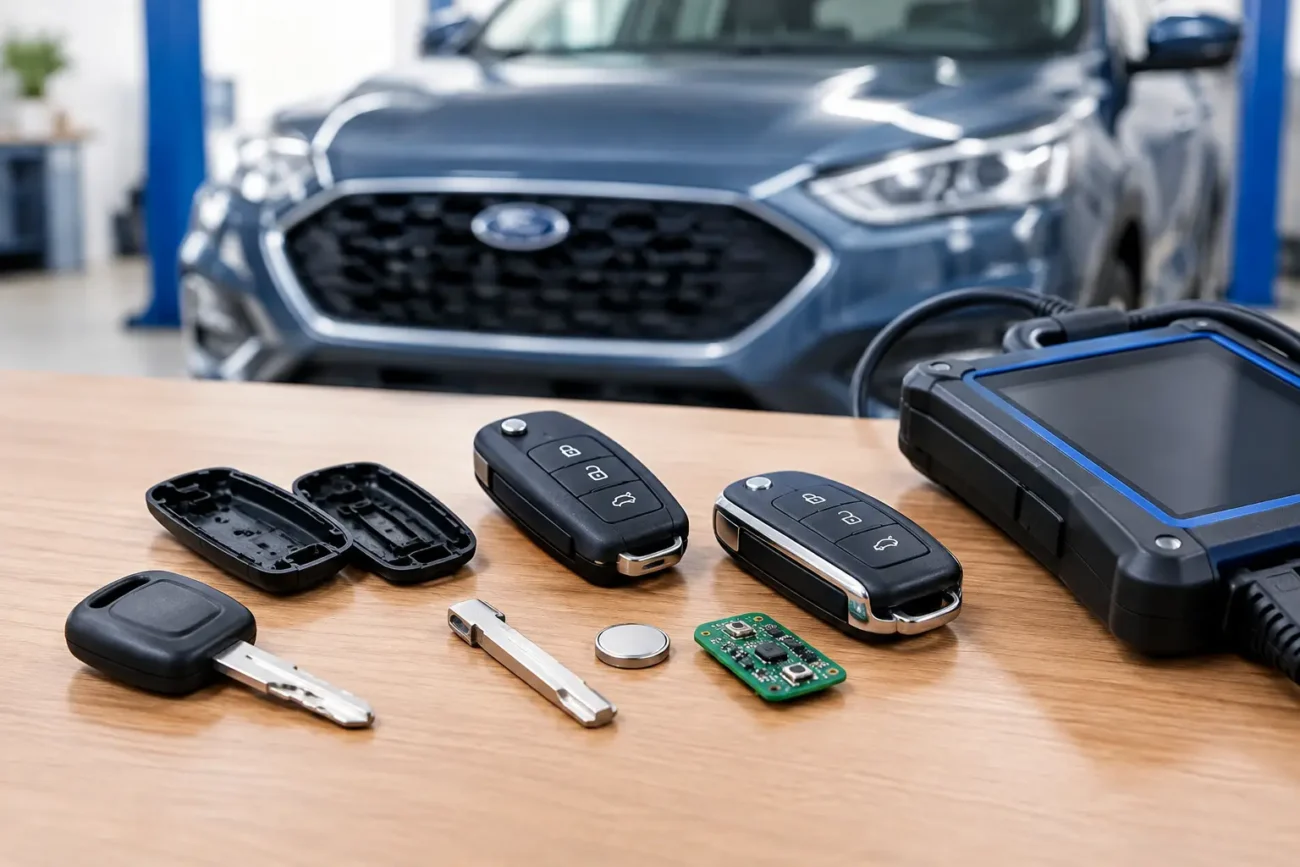
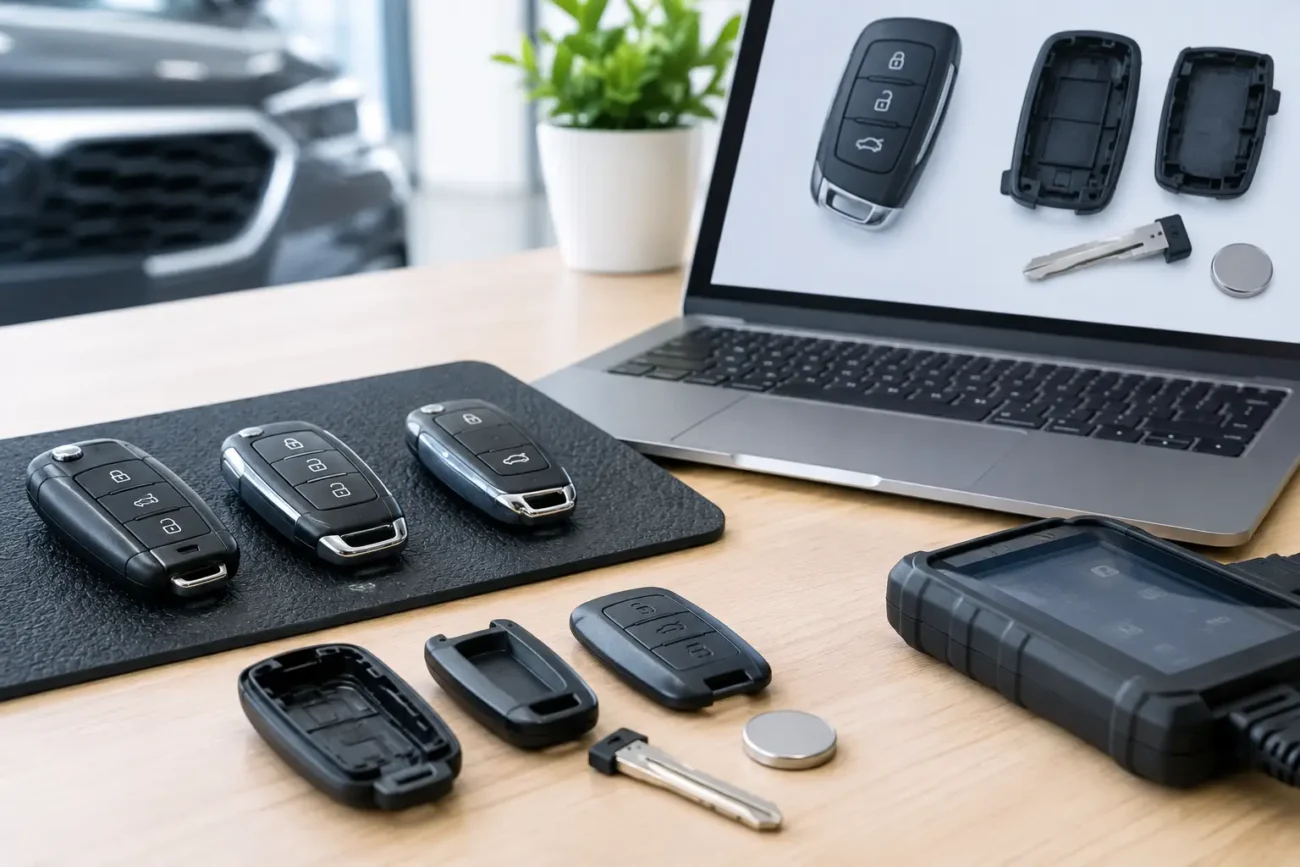
There is also confusion between shell products and complete keys. Some items are supplied as replacement casings with uncut blades, intended for reuse of the original electronics. Others are complete remote keys or smart keys that may need programming. Mixing those categories leads to delays and unnecessary cost.
For trade customers, one more pitfall is overlooking the condition of the original transponder during a shell transfer. If the chip is cracked or missing, replacing only the blade and shell will not start the car, however well cut the blade is.
How to choose the right car key blade replacement
Start with the vehicle details – make, model, and year. Then compare the existing key carefully. Button layout can help identify the family, but it should never be the only check. Blade shape, flip mechanism type, and internal shell design are just as important.
If there is a part number on the original key, shell, or remote board, that can narrow it down quickly. For professionals, this is usually the fastest route to the correct fitment. For retail buyers, clear product compatibility information is essential because one wrong detail can turn a simple repair into a wasted order.
It is also worth deciding whether the goal is a cosmetic refresh, a functional repair, or a complete spare key setup. A tidy shell-and-blade replacement is ideal when the original electronics still work. If reliability is already questionable, moving to a full replacement key may be more sensible.
Suppliers such as Global Keys Direct tend to be strongest when the job needs exact matching rather than guesswork, particularly across the wider mix of aftermarket shells, blades, remotes, and trade key products.
Why this repair is often better value than dealer replacement
Dealer-supplied keys have their place, especially on newer or tightly controlled systems, but a worn or broken blade does not always justify a full dealer key price. If the original remote and chip are serviceable, replacing the damaged mechanical parts can restore daily use for a fraction of the cost.
That is the practical appeal of the aftermarket. You can target the failed component rather than replacing an entire assembly. For garages and locksmiths, this also means faster turnaround and better margin control. For drivers, it means getting back on the road without overpaying for parts they do not need.
The key is accuracy. A cheap blade that does not match properly is no bargain. A well-matched replacement, correctly cut and fitted, is where the value sits.
If your key is showing signs of wear, do not wait for it to snap in the door or fail at the ignition on a wet morning. Sorting the blade early is usually simpler, cheaper, and far less disruptive than dealing with a complete key failure later.
Pingback: Key Shell Versus Complete Remote: Which Fits? - GLOBAL KEYS DIRECT LTD
Pingback: Dealer Key Versus Aftermarket Key Compared - GLOBAL KEYS DIRECT LTD
Pingback: Complete Guide to Car Key Shells for UK Drivers - GLOBAL KEYS DIRECT LTD