
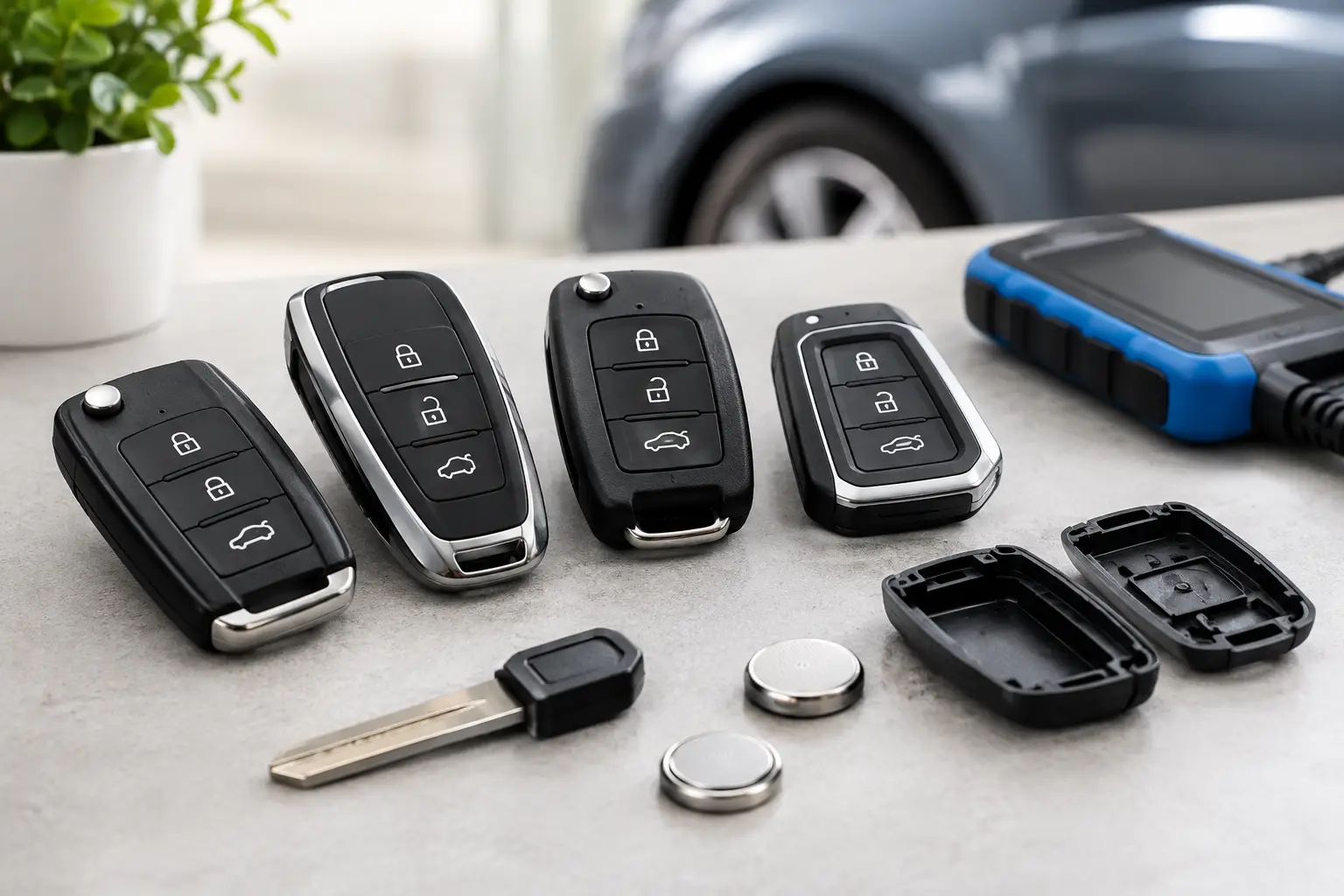
Key Fobs: How to Choose the Right Replacement
A damaged button, cracked case or lost spare can turn a small car-key problem into an urgent job. The right key fobs can restore everyday convenience at a fraction of typical main-dealer replacement costs, but only when the replacement matches the vehicle’s existing specification.
For drivers, that means checking more than the badge on the bonnet. For locksmiths, garages and key professionals, it means confirming the electronic and physical details before stock is fitted, programmed or passed on to a customer. A remote that looks right is not necessarily the correct remote.
What are key fobs and what do they do?
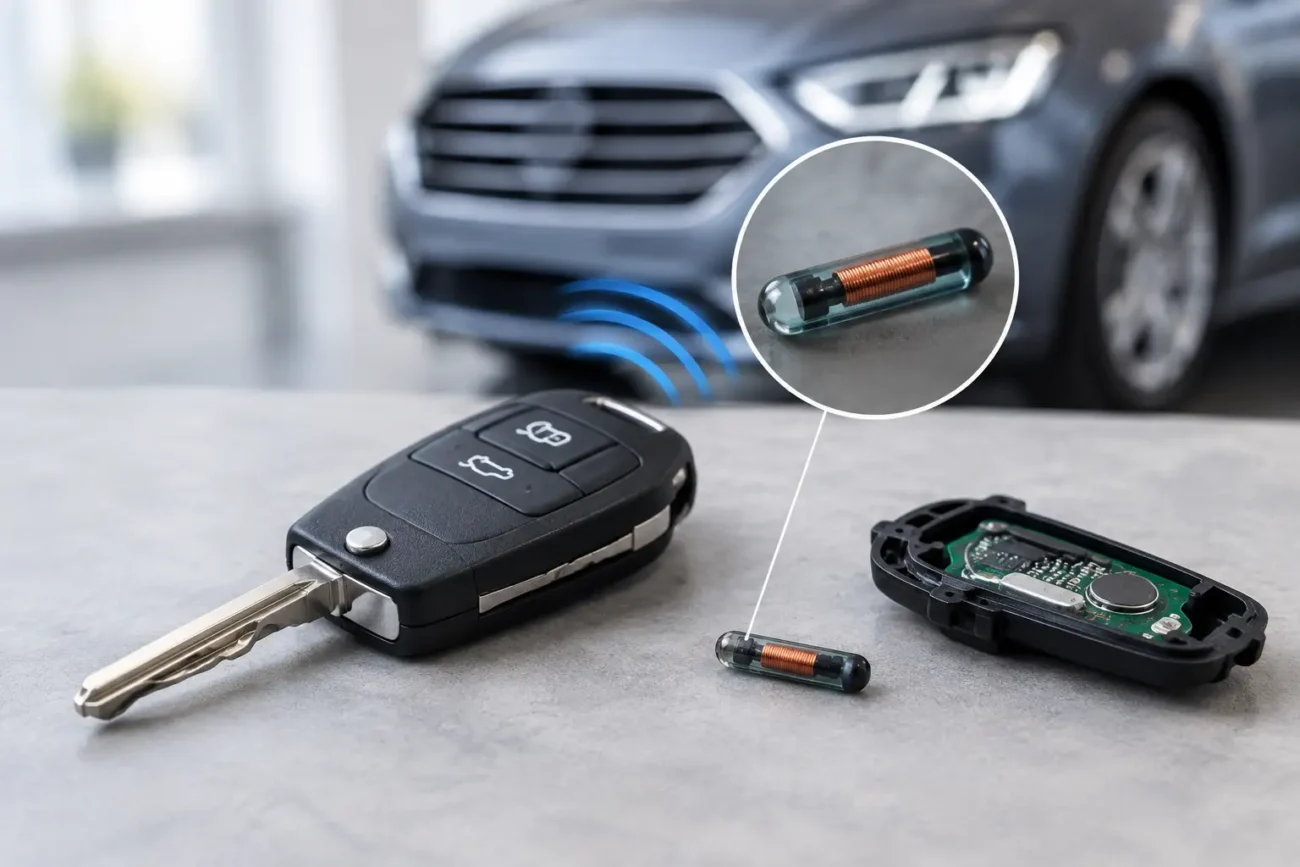
A key fob is the handheld remote section of a vehicle key. Depending on the car, it may operate central locking, the boot release, alarm functions, keyless entry or remote start functions where fitted. Many modern units also contain an immobiliser transponder chip, allowing the vehicle to recognise an authorised key when it is used to start the engine.
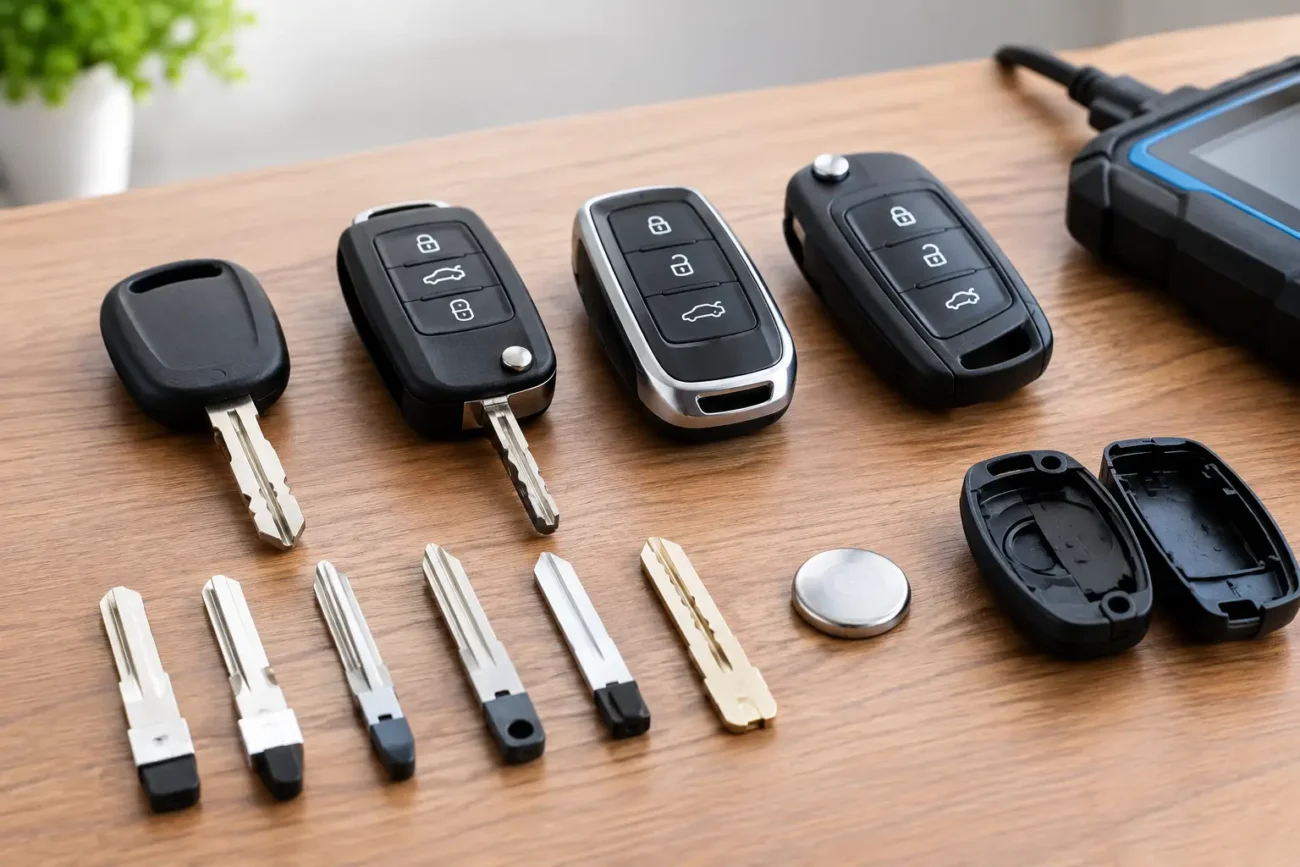
The term is often used broadly, which can cause confusion when ordering. A replacement may be a complete remote key, a smart key, a remote shell, a separate key blade or simply a battery. Each solves a different problem.
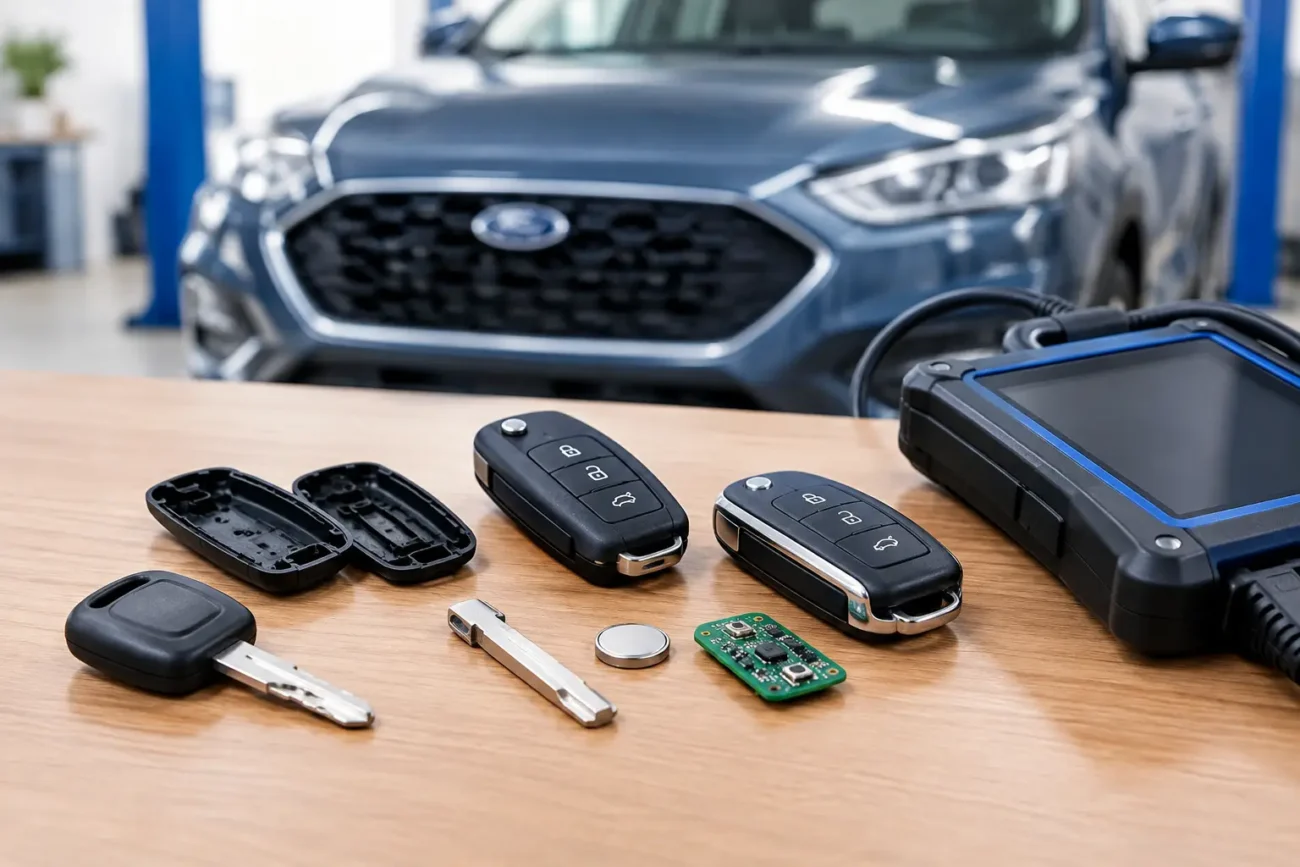
A complete replacement remote is appropriate when the existing electronics have failed, the unit has been lost, or an additional working key is required. A replacement shell is often the more cost-effective answer where the circuit board still works but the outer case, buttons or blade mount is worn. Smart keys are normally proximity-operated units used on push-button-start vehicles, while traditional remote keys usually combine buttons, a blade and transponder in one housing.
When a replacement fob makes sense
Not every fault requires a new key. If remote range has gradually reduced or the buttons have become intermittent, a fresh battery may be all that is needed. Battery condition should be checked before assuming the fob itself has failed, particularly if the vehicle still starts normally.
A shell replacement is worth considering when the buttons are torn, the casing is split, the key-ring loop has broken or the blade has become loose while the remote functions remain reliable. Moving an existing board and transponder into a compatible shell avoids the need to replace functioning electronics. However, the shell must match the button layout, blade arrangement and internal board shape precisely.
A complete key fob may be the better choice if the original has been lost, water damaged, physically crushed, or has an electronic fault confirmed after battery checks. It is also the practical route when adding a spare key for another driver. Most replacement remotes and smart keys will require cutting, programming or both before they can be used with the vehicle.
The details that determine key fob compatibility
Vehicle make, model and year provide a useful starting point, but they are rarely enough on their own. Manufacturers can use different key systems across the same model range, including during the same production year. A mid-cycle change in frequency, chip type or casing design can make a visually similar remote unsuitable.
Before ordering, compare the existing key with the product information and confirm the part number where available. The most useful checks are the number and layout of buttons, the remote frequency, blade profile, transponder or chip type, and the internal circuit board reference. For smart keys, also check whether the unit is designed for keyless entry, keyless start, or both.
Frequency matters because the remote must communicate on the correct radio frequency for the vehicle. Button count matters because a two-button locking remote may not replace a three-button version with a separate boot-release function. The blade type is equally important for conventional keys, as similar-looking blades can have different profiles or mounting points.
For trade users, board reference and chip specification are often the quickest way to narrow the correct option. For retail customers, clear photographs of both sides of the existing fob, including labels and the blade, can prevent an avoidable ordering error. If any detail is uncertain, checking the product fitment information before purchase is the sensible approach.
Match the part, not just the shape
Many replacement cases share a similar outline, particularly across popular Ford, Vauxhall, Peugeot, Toyota, BMW, Audi, Hyundai and Kia applications. That does not make them interchangeable. Internal locating points, battery contacts, blade pivots and circuit-board dimensions differ between versions.
The same principle applies to aftermarket remotes. A suitable replacement must be specified for the intended vehicle system, not chosen solely because the logo position or button symbols appear familiar. Careful matching protects time, reduces returns and gives the finished replacement the best chance of performing as expected.
Programming, cutting and the role of the transponder
A key fob can have two separate functions: remote locking operation and immobiliser authorisation. In many vehicles, both need to be paired correctly before the replacement performs every function expected of it. A newly cut blade alone does not make a key capable of starting the car, and a working remote may still need immobiliser programming.
The work required depends on the vehicle and product type. Some remote shells require no programming because the original electronics are reused. A complete remote key may need a blade cut and transponder programming. Smart keys can require specialised diagnostic equipment, correct software coverage and appropriate procedures for the make and model.
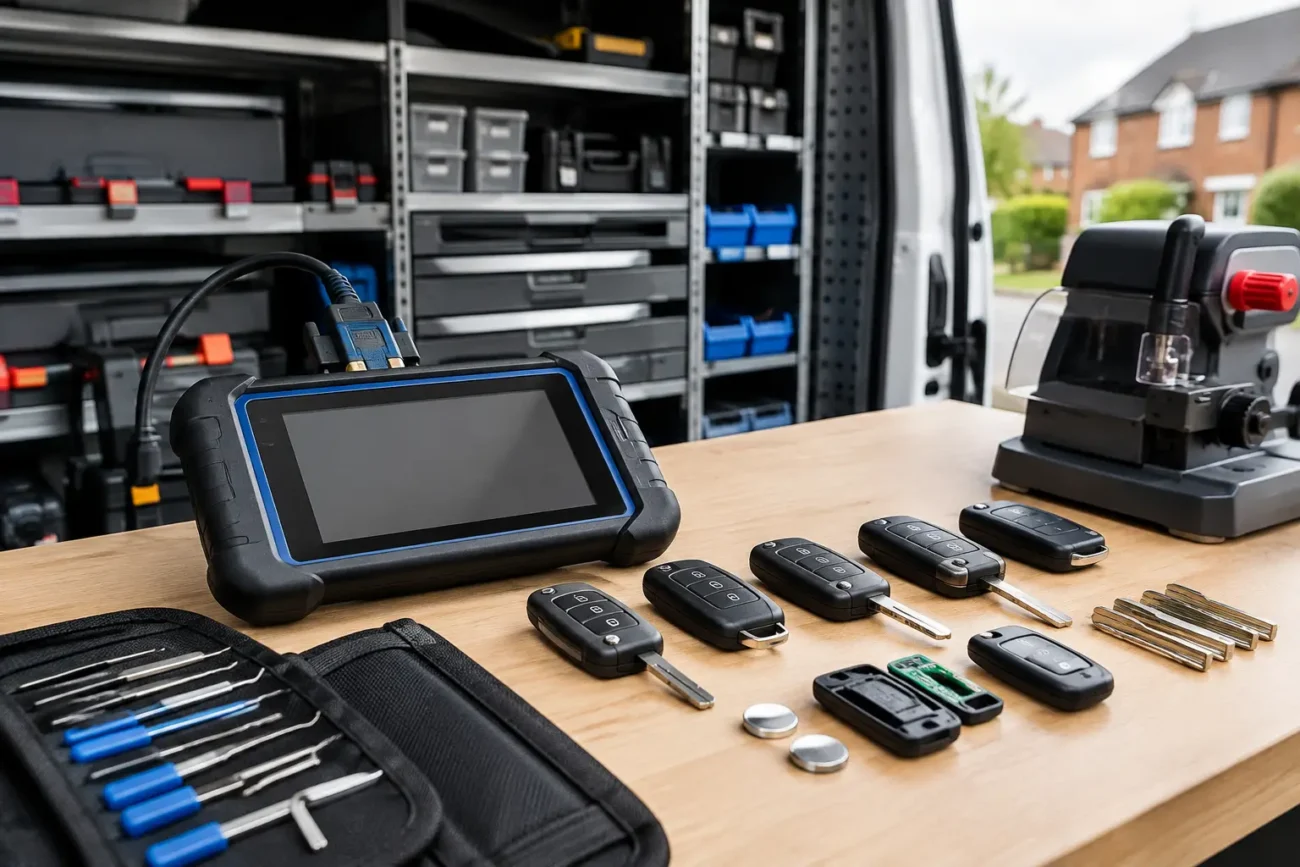
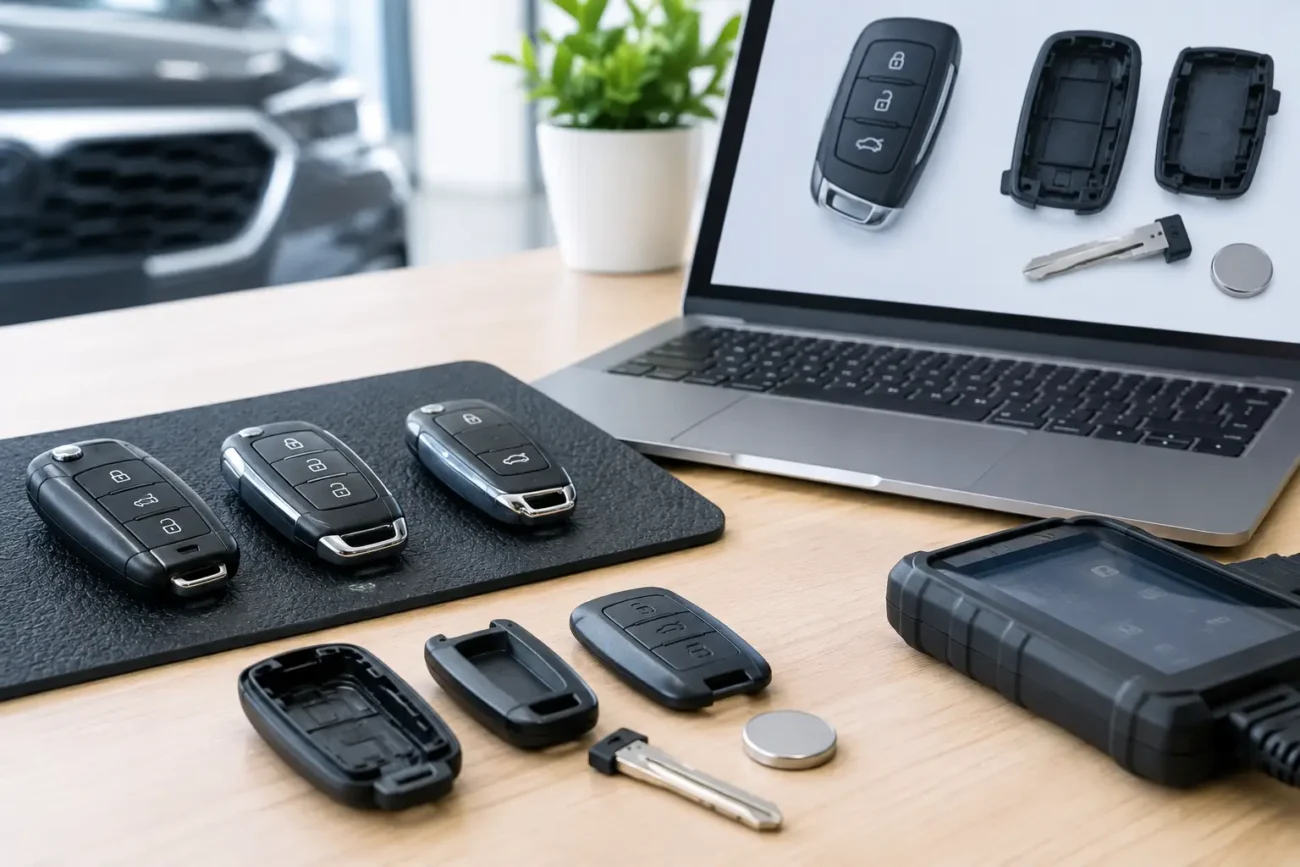
Professional buyers should select the key solution around the equipment and workflow available for the job. Diagnostic programmers, dedicated key tools, transponder equipment and compatible accessories all have their place, but coverage should always be verified against the vehicle before work begins. Vehicle owners who are not equipped for key programming can source the correct replacement product and arrange fitting or programming through a suitably qualified automotive key professional.
Common mistakes when buying replacement key fobs
The most expensive error is ordering by vehicle registration details alone and assuming every key listed for that model will be identical. Registration lookup can support identification, but it should not replace comparison with the original item.
Another common issue is buying a shell when the fault is electronic. A new case will improve the appearance and button feel, but it cannot repair a damaged circuit board, failed microswitch or missing transponder. Equally, replacing a full remote when only the case is cracked can add unnecessary cost and programming work.
Watch for worn buttons that mask an internal switch fault. If the rubber pad is intact but a button only works when pressed at a certain angle, the problem may be on the board rather than in the outer housing. Water exposure also deserves caution: corrosion can continue affecting a board after the fob has dried.
Finally, do not discard the old key too early. It is the best reference for part numbers, blade style, battery orientation, board layout and chip transfer where applicable. Keeping it to hand also helps an automotive key professional confirm the correct route for replacement.
A practical buying checklist
Before placing an order, take a minute to verify the following:
- The vehicle make, model, year and, where relevant, generation or facelift version.
- The original key’s part number, board reference and remote frequency.
- The exact button count and layout, including boot, panic or sliding-door functions.
- Whether you need a complete remote, smart key, replacement shell, blade or battery.
- The blade profile and whether cutting is required.
- The transponder chip type and expected programming requirement.
This short check is particularly useful for busy workshops handling several makes each day. It also gives private buyers a clearer description to use when discussing programming or blade cutting with a local specialist.
Choosing quality replacement key fobs for the job
The lowest-priced option is not always the best value if it has poor button feel, weak case clips or inaccurate internal fitment. A good replacement shell should close securely around the board, hold the battery firmly and align the buttons cleanly with the switches. A replacement remote should be selected for its stated compatibility and technical specification, not just its appearance.
For professional use, consistency across repeat-fit applications matters. Keeping suitable batteries, common shells, compatible remote fobs and blank blades available can reduce delays on routine jobs. For vehicle owners, buying a spare before the only working key is lost can prevent a far more stressful and costly situation later.
Global Keys Direct supplies a broad selection of vehicle-specific key products for both everyday replacements and professional automotive key work, with UK-focused delivery and compatibility-led product information. The best result still starts with the same step: compare every relevant detail against the original key before ordering.
A replacement fob should make owning or servicing a vehicle simpler, not create another fault to diagnose. Take the extra few minutes to check the specification, retain the old key as a reference and choose the product that genuinely matches the work required.
Add a review
Your email address will not be published. Required fields are marked *