
Do Aftermarket Remotes Need Coding? UK Guide
A replacement key can look identical to the one in your hand and still not start the car. That is why the question, do aftermarket remotes need coding, has no one-size-fits-all answer. It depends on whether you are replacing the remote case, the remote-control electronics, the immobiliser transponder or a complete smart key.
For many UK drivers, an aftermarket remote is a practical way to avoid dealership-level replacement costs. For locksmiths and garages, it can be a dependable option for fast turnaround jobs. The key is buying the correct type of replacement and knowing which parts of the job require programming before the order is placed.
Do aftermarket remotes need coding?
Most complete aftermarket car remotes need some form of coding, programming or pairing before they will operate the vehicle. The exact requirement varies by make, model, year and key system.
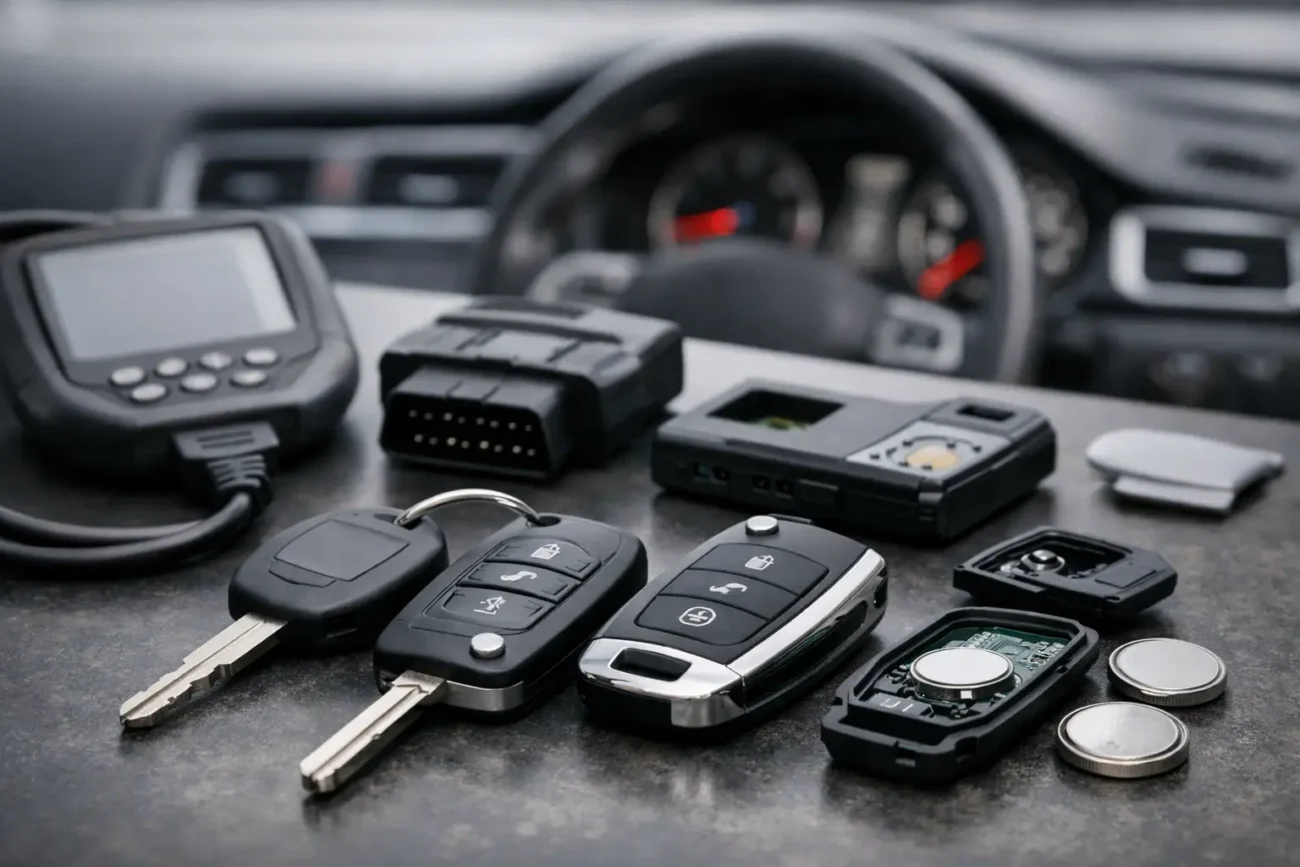
A remote fob has two separate functions on many vehicles. One controls central locking, usually through radio frequency transmission. The other is the immobiliser function, where a transponder chip must be recognised by the vehicle before the engine can start. On keyless-entry and push-button-start cars, those functions are often integrated into one smart key.
A new remote may therefore need remote synchronisation for the lock and unlock buttons, immobiliser programming for starting the vehicle, or both. Some vehicles require specialist diagnostic equipment and security-authorised procedures. Others may accept a compatible remote through a simpler vehicle-specific process. Never assume the method used on one car will apply to another.
The term “coding” is commonly used to describe all of these processes, but it is worth separating them when ordering. A remote can be paired for central locking yet still fail to start the car if the chip has not been programmed. Equally, a correctly programmed transponder will not repair worn buttons or a damaged remote circuit board.
When coding is not normally needed
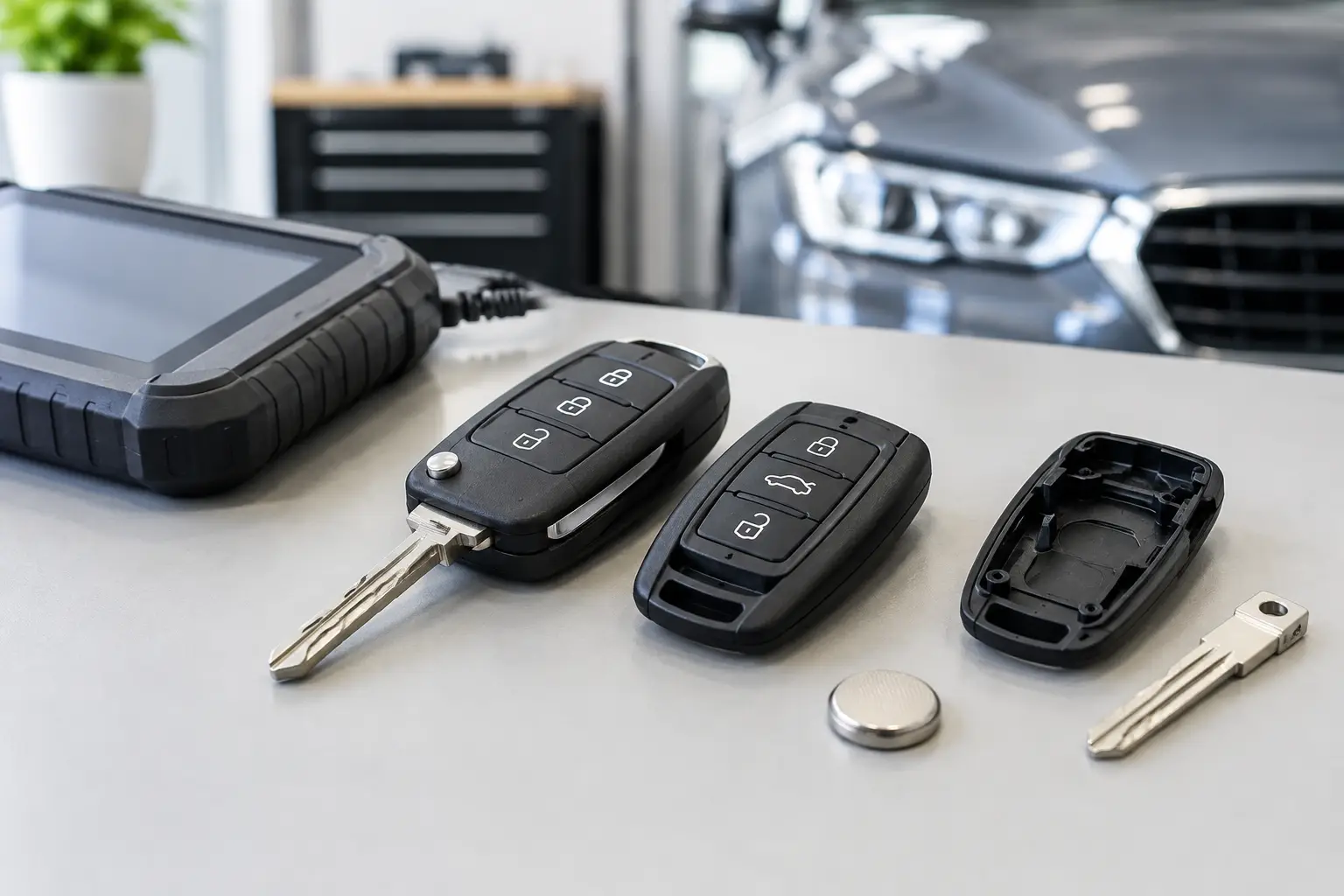
Not every aftermarket key product needs programming. If the electronic components from your original working key are being reused, you may only need a replacement shell or case.
A replacement key shell is the usual answer where the original fob is cracked, the buttons have worn through, the flip mechanism has broken or the key blade is loose, but the circuit board and transponder remain intact. The original electronics are transferred into the new shell, and the blade may be transferred or cut to match. Because the vehicle is still communicating with the original chip and remote board, no new coding is normally required.
This route is often the quickest and most cost-effective option, but it only makes sense when the existing electronics work reliably. A shell will not fix intermittent central locking, water-damaged circuit boards, a missing transponder chip or a remote that has stopped transmitting.
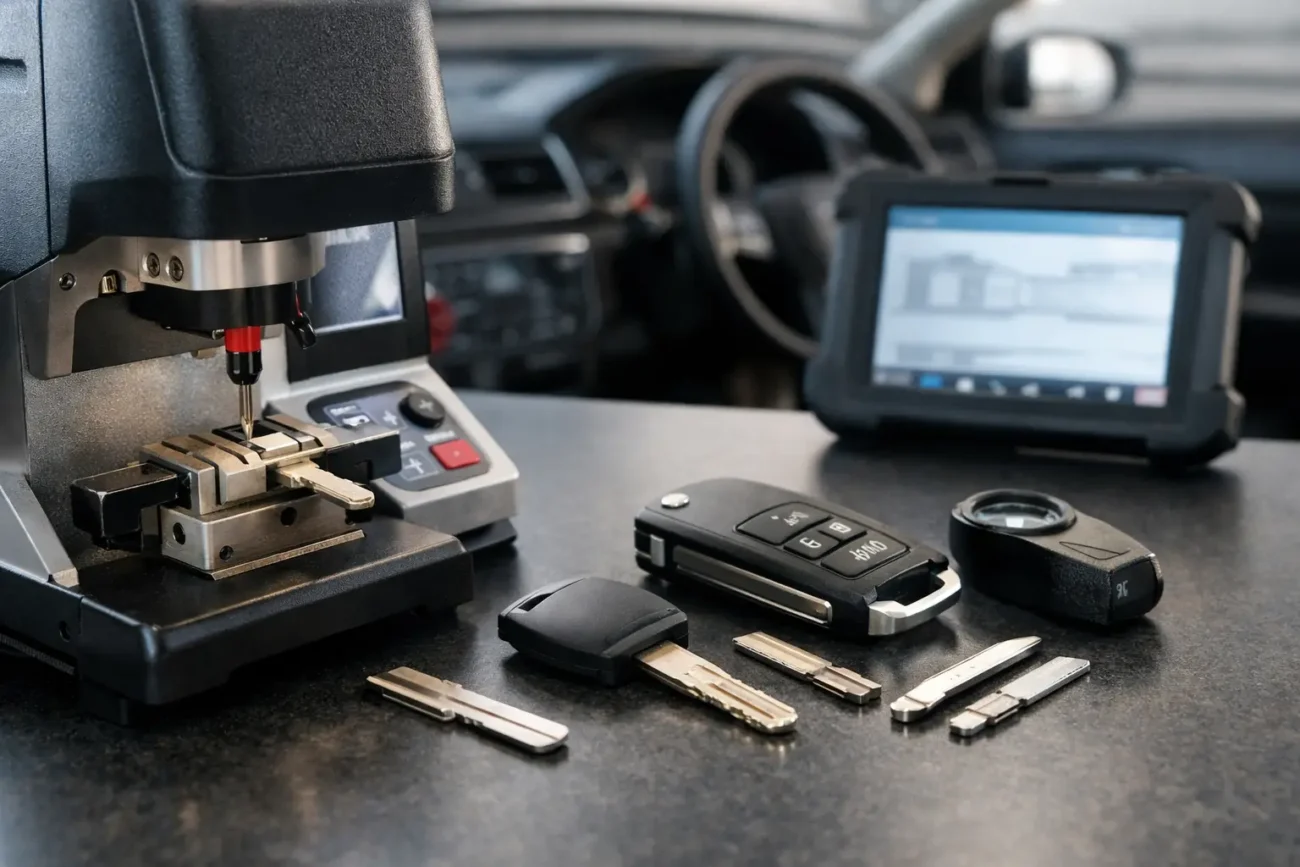
A replacement blade also does not require electronic coding. It does, however, need cutting to the correct profile if it is intended to operate the door lock or ignition. Check the blade type carefully, as visually similar flip-key blades can use different mounting points, grooves and profiles.
Complete remote, transponder key or smart key: what changes?
A complete aftermarket remote contains new electronics. It is not already recognised by your vehicle, so it will usually need to be programmed after the blade has been cut where applicable. The correct procedure depends on the vehicle system and the remote supplied.
Traditional remote keys commonly contain a separate transponder chip, while newer smart keys may use an integrated board and proximity system. In both cases, compatibility is more than a matter of button count. Frequency, board layout, transponder type, keyless-entry specification and vehicle application can all affect whether the key can be programmed successfully.
There is also a difference between a remote that is technically compatible and one that is ready for a particular job. Some aftermarket remotes are supplied as blank programmable units. These may require preparation with compatible key programming equipment before they can be added to a vehicle. This is standard practice for professional users, but retail buyers should factor in the cost and availability of a suitably equipped automotive locksmith or garage.
Used remotes deserve extra caution. Many can remain linked to their original vehicle and may not be suitable for re-use, depending on the make and system. A new compatible aftermarket remote is generally the more predictable choice when a fully functioning spare or replacement key is needed.
Check these details before ordering
The best way to avoid wasted time is to identify the original key accurately. Do not order on vehicle make alone, and do not rely solely on an image from a listing. Manufacturers can use several key systems across the same model range, sometimes even within the same registration year.
Start with the part number printed on the original remote casing or circuit board where available. Then compare the number of buttons, their layout and the blade type. Confirm the remote frequency and transponder or chip specification if these details are listed for your current key. For smart keys, check whether the vehicle uses keyless entry, keyless start or both.
The vehicle’s year, model, body style and market specification also matter. A Ford, BMW, Toyota, Vauxhall, Audi or Land Rover key can differ substantially between generations. If your original remote still works, use it as the reference point rather than guessing from the car badge.
For a clean ordering process, keep the following information to hand:
- the vehicle make, model and registration year
- the part number from the existing key or board, if present
- button layout, blade profile and key type
- frequency and chip details where known
- whether you need a shell, blade, remote key or smart key
Checking these points before purchase is particularly valuable for trade buyers managing several jobs at once. It helps match the right stock to the right vehicle and reduces the risk of a programming appointment being delayed by an incorrect remote.
Programming costs and practical choices
The lowest purchase price is not always the lowest overall cost. A cheap complete remote can become expensive if it is the wrong frequency, lacks the correct transponder specification or needs a programming service that is not available locally. Conversely, a quality-compatible aftermarket key plus professional programming can be considerably better value than a main dealer replacement.
If you have one working key, arranging a spare before the original is lost is usually the sensible option. A spare gives the programmer a working reference and prevents a simple replacement from becoming an urgent all-keys-lost situation. It also means you can choose the right remote, arrange cutting and programming at a convenient time, and keep the original key safely available.
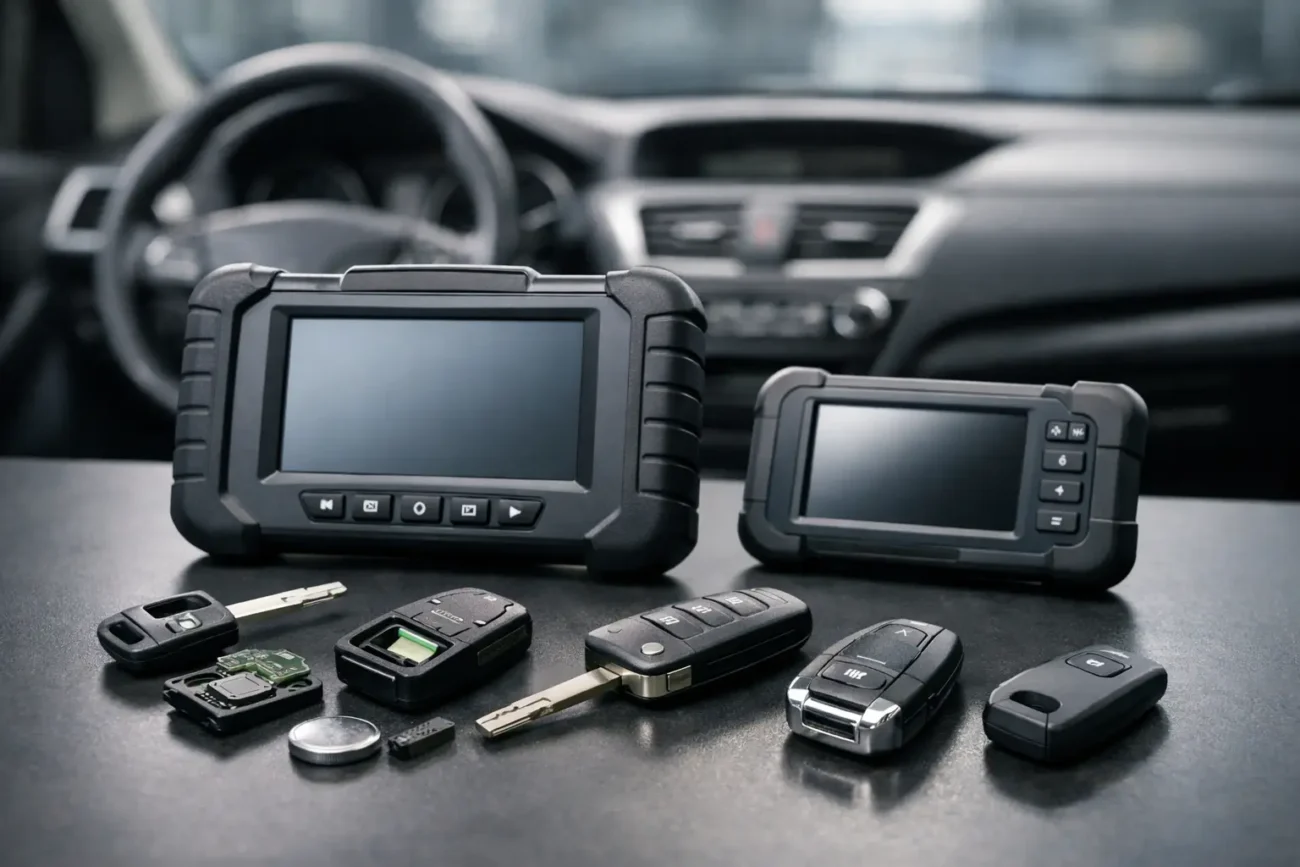
For vehicle owners, the practical choice is often a replacement shell when the electronics are healthy, or a complete compatible remote when the original has failed or is missing. For locksmiths and technicians, programmable aftermarket remotes and suitable diagnostic tools can provide efficient coverage across common vehicle applications, provided the product specification is checked against the job.
Global Keys Direct stocks model-specific replacement options for both everyday drivers and trade professionals, with product details designed to make those compatibility checks clearer before ordering.
Common mistakes that cause avoidable problems
The most frequent mistake is treating central locking and engine starting as the same function. A new remote may lock and unlock the car but not start it, or start it while the remote buttons remain inactive. Both outcomes point to incomplete or incorrect programming, not necessarily a faulty product.
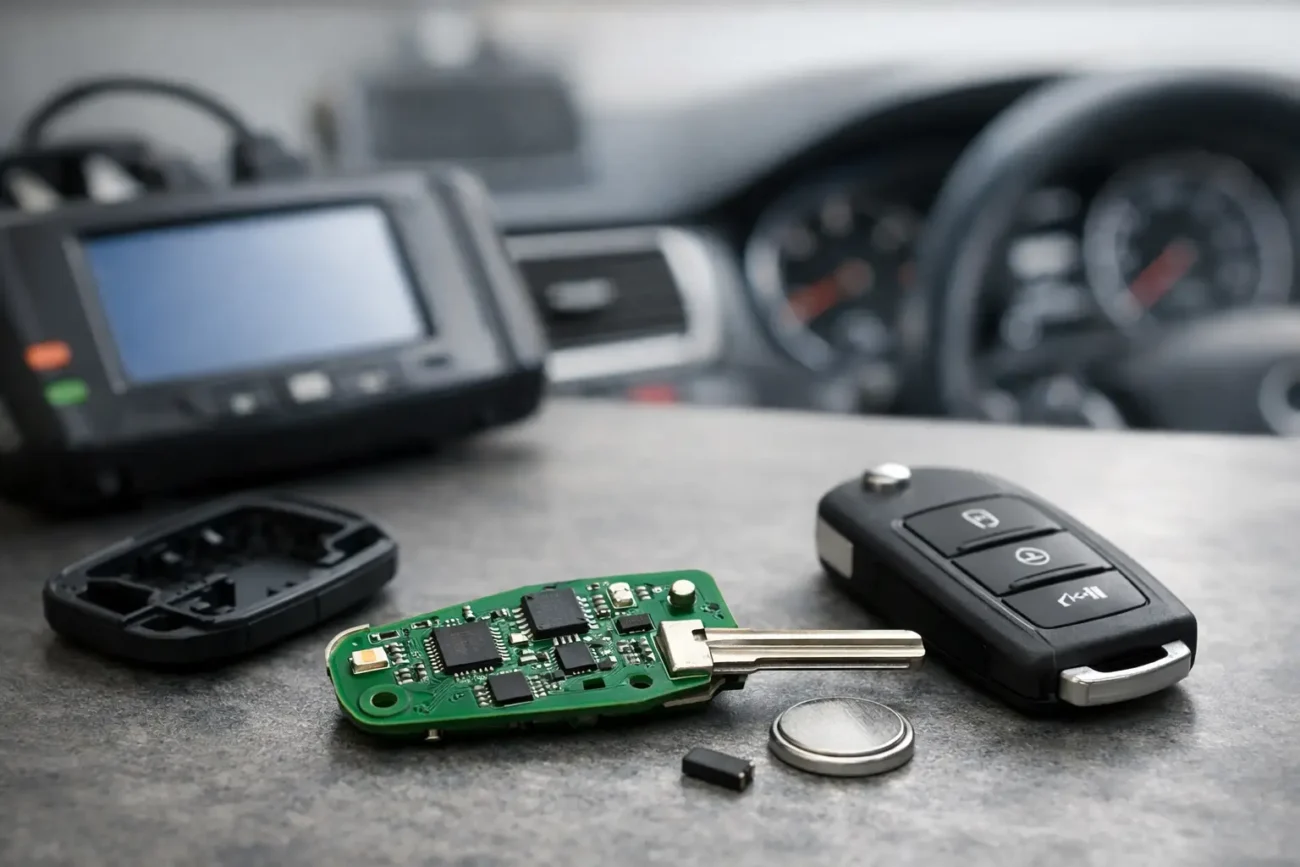
Another common issue is moving the circuit board into a replacement shell but overlooking the small transponder chip. On some keys, that chip is separate from the board and can remain in the broken case. If it is not transferred, the vehicle may not recognise the key for starting.
Battery problems can also be mistaken for coding faults. If an existing remote has become unreliable, fit the correct battery type and check the battery contacts before assuming it needs replacing. A fresh battery will not programme a new key, but it may restore a remote whose electronics are otherwise sound.
Finally, avoid forcing a key blade or remote case that is only “nearly” correct. Minor differences in blade mounting, case dimensions and button alignment can lead to poor fitment or damage. Match the technical specification, not just the general appearance.
Make the replacement route fit the fault
If your original remote still locks, unlocks and starts the vehicle, a new shell may be all that is needed. If the electronics have failed, the key is lost or you want a fully operational spare, plan for a compatible complete remote and the appropriate coding work. Taking a few minutes to confirm the part number, blade, frequency and chip type can turn an urgent key problem into a straightforward replacement.

Add a review
Your email address will not be published. Required fields are marked *