
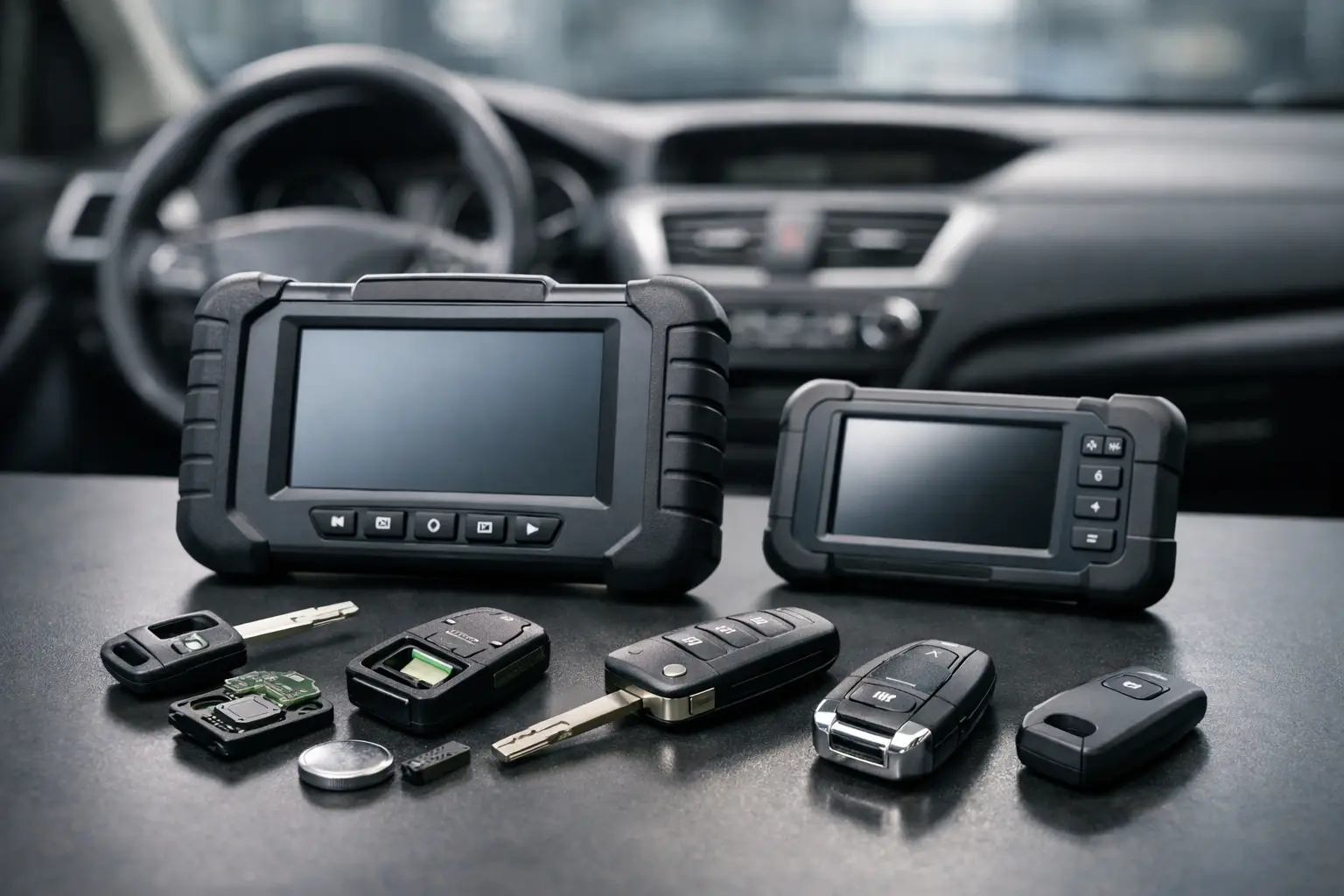
Car Key Programmers: Choosing the Right Tool
A replacement key that looks right but will not start the vehicle is rarely a key-blade problem. It is usually a programming, transponder or compatibility issue. Car key programmers are the tools that connect the physical key, remote or smart fob to the vehicle’s authorised security system, making them essential equipment for professional key work and a subject worth understanding for any driver buying a spare.
The right tool can reduce time on a routine job, widen the vehicles a workshop can support and avoid unnecessary dealership costs. The wrong one can leave a technician with limited coverage, incomplete functions or a key that does not match the car in front of them. Choosing well starts with knowing what the tool is designed to do – and what details must be confirmed before any compatible key is ordered.
What car key programmers actually do
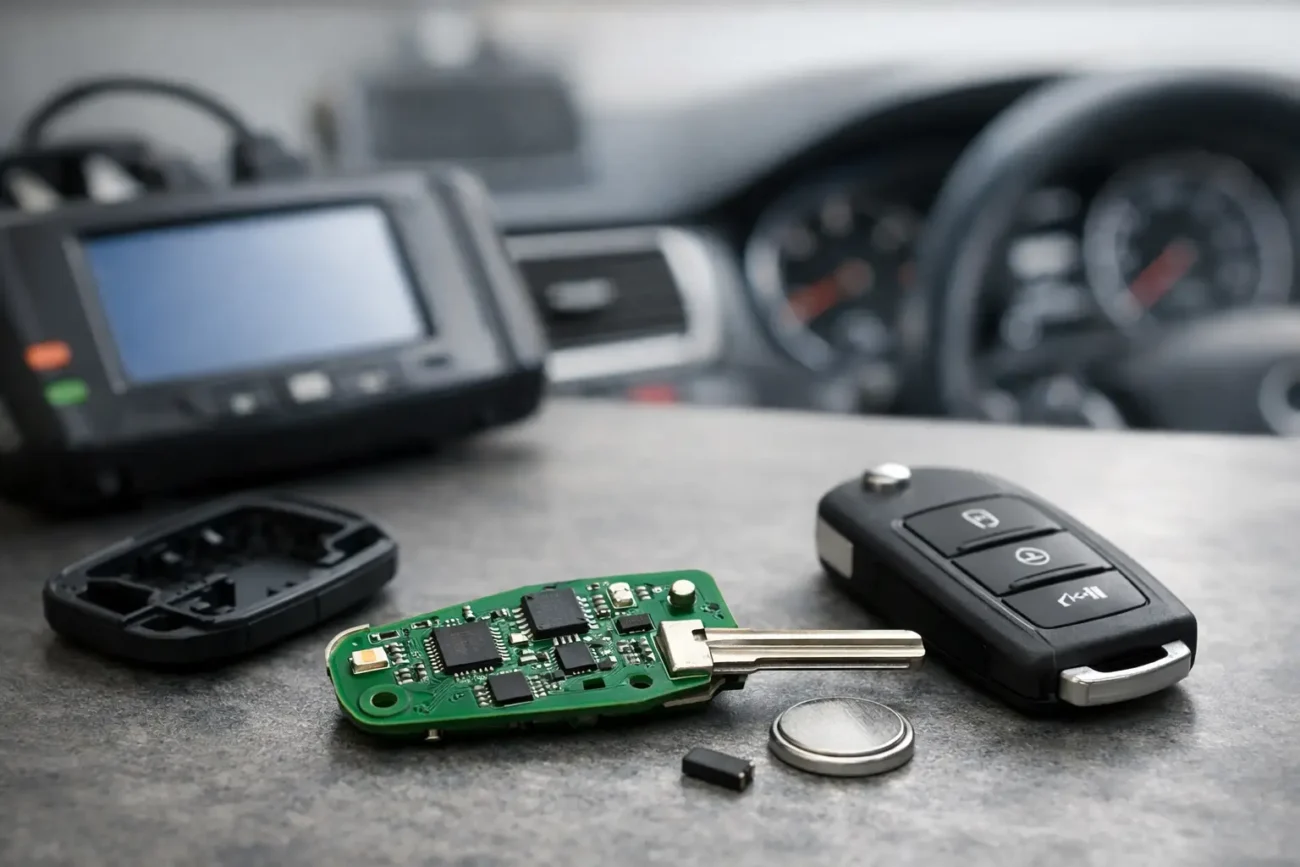
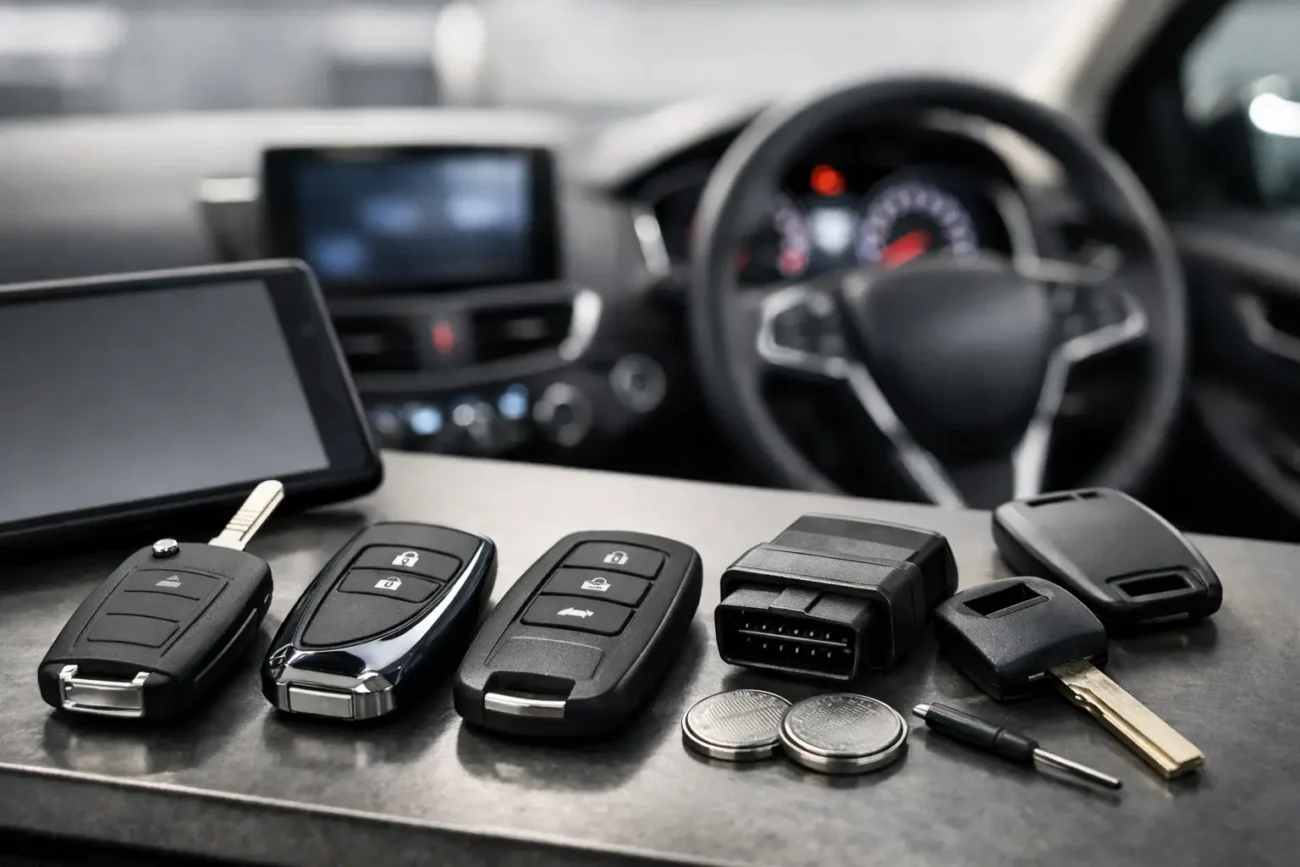
Modern vehicle keys perform more than one job. A traditional remote key may operate central locking, contain a transponder chip for the immobiliser and use a cut metal blade to turn the ignition. A proximity smart key may communicate with the car wirelessly, support keyless entry and require a suitable emergency blade. Each function can involve different data, frequencies and vehicle-specific procedures.
Car key programmers are designed to carry out authorised key-learning and diagnostic functions on supported vehicles. Depending on the tool and vehicle, this may include adding a spare key, reading key information, identifying transponder types, remote control functions or supporting all-keys-lost work for qualified professionals. Coverage is never universal, and a function available on one make, model year or system may not be available on another.
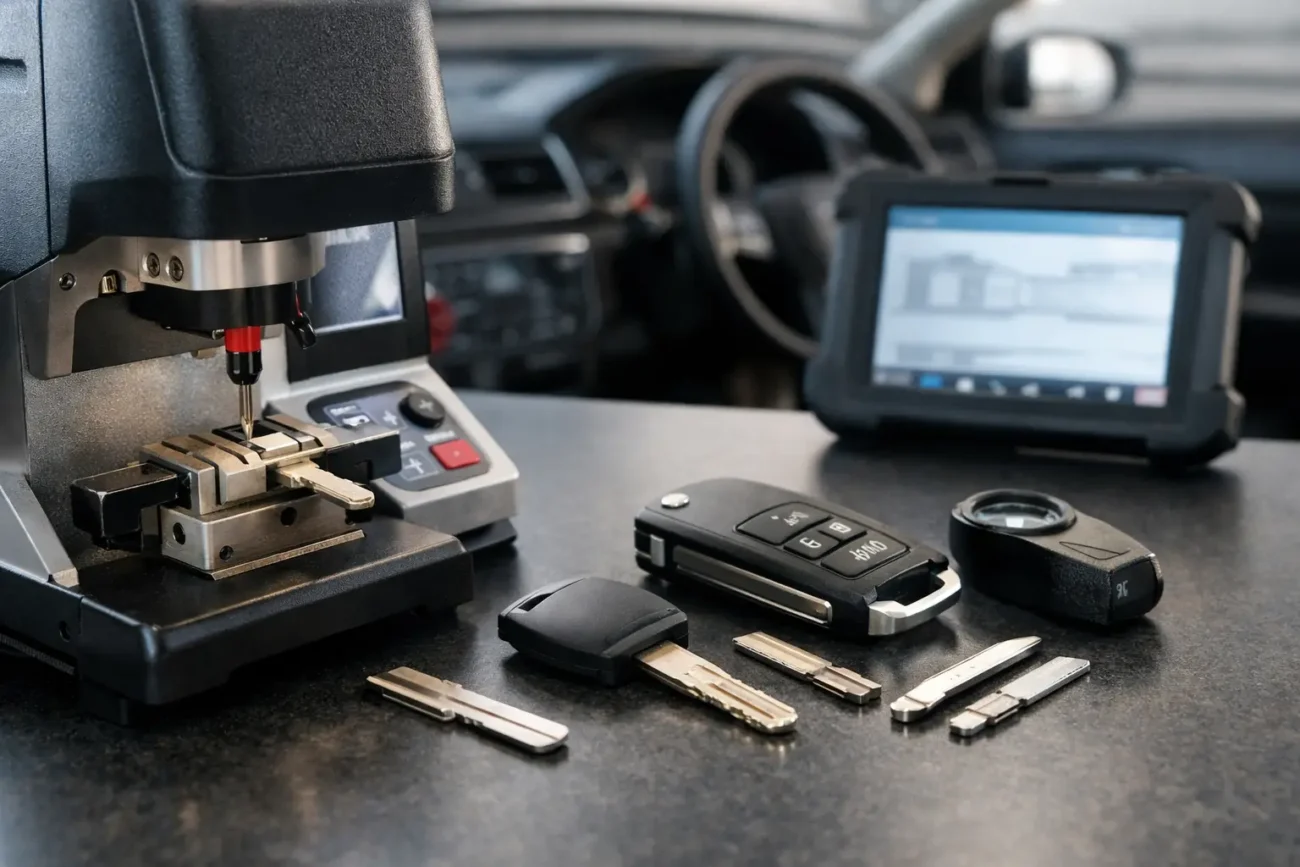
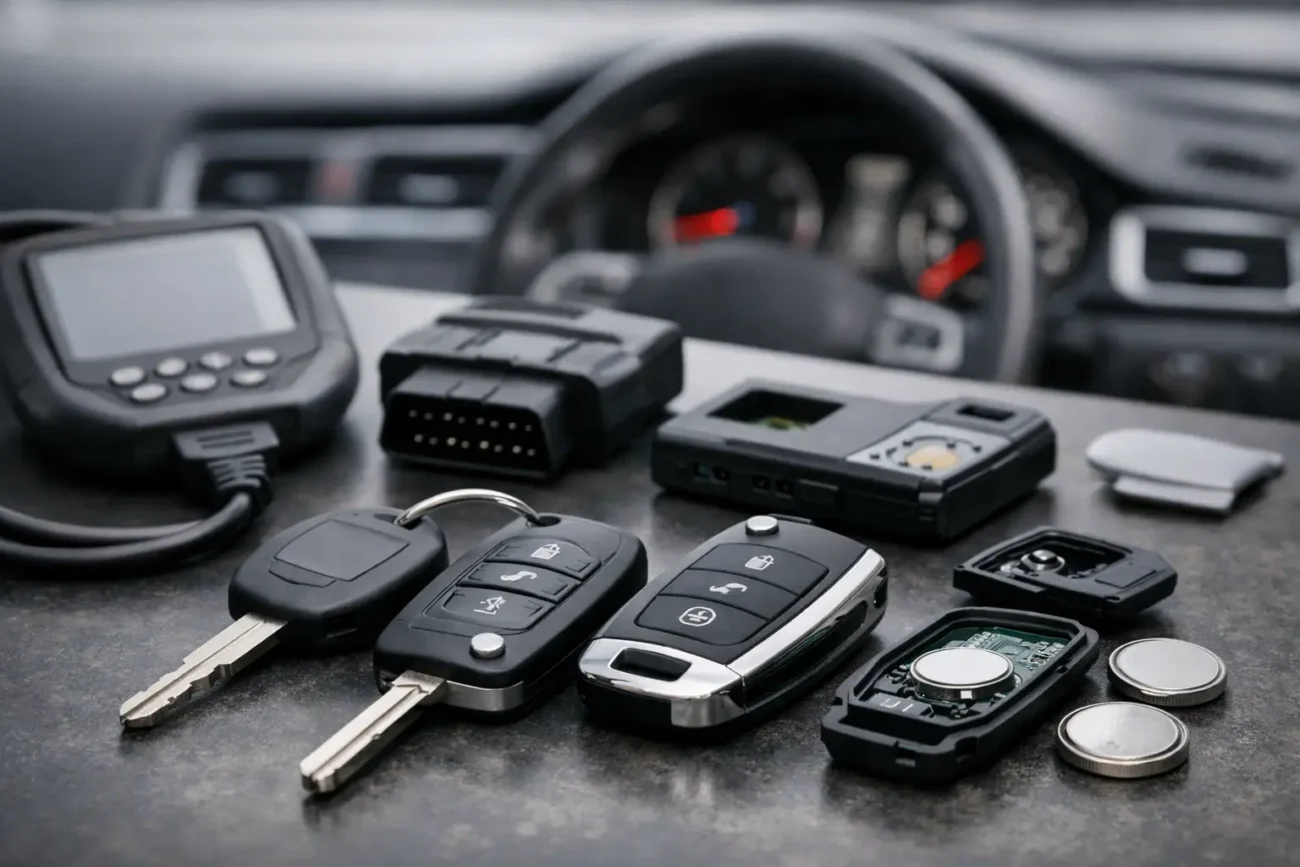
For garages and locksmiths, a programming tool is therefore not simply a one-off purchase. It is part of a working setup that may also include compatible remotes, transponders, key shells, blades, battery stock, diagnostic equipment and cutting equipment. For vehicle owners, the practical lesson is simpler: a replacement fob or smart key usually needs more than the correct outer appearance before it is ready for use.
Match the programmer to the work you take on
The best choice depends on your typical jobs. A workshop mainly dealing with common UK vehicles may prioritise dependable coverage for everyday Ford, Vauxhall, Peugeot, Volkswagen Group, Hyundai, Kia, Toyota and Nissan applications. A specialist working regularly with BMW, Mercedes, Audi, Land Rover or higher-spec smart-key systems may need broader diagnostics, advanced functions and support for more complex key architectures.
Start by reviewing the makes, model years and key types that pass through your premises most often. Then compare a tool’s stated vehicle coverage against those real jobs, not just the longest possible manufacturer list. A programmer can support a vehicle brand but still have limits based on year, immobiliser generation, regional specification or whether the vehicle uses a blade key, remote key or proximity system.
It is also sensible to consider how the tool fits your workflow. Some devices are built around guided diagnostics and a tablet-style interface. Others are designed to work with dedicated accessories, transponder programmers or specialist key-generation equipment. A straightforward spare-key job may require a very different level of equipment from a professional job involving a late-model smart key.
Compatibility checks that prevent costly mistakes
A programmer cannot make an unsuitable key become suitable. Before ordering a replacement remote, smart key or key board, check the information available from the existing key and vehicle carefully. Part numbers are particularly useful, but they should be read alongside the button layout, frequency, blade type, transponder chip and listed vehicle fitment.
Frequency matters because remotes that look identical can transmit differently. Button count and casing shape matter because a three-button unit is not automatically a substitute for a two-button or four-button version. With smart keys, the internal board reference and the emergency blade profile may be just as relevant as the exterior shell.
Model year deserves close attention too. A manufacturer may revise a key system during a production run, so a key listed for a particular model range may not suit every example within it. Where possible, compare the details printed on the original remote or key board. If the original is missing, use the vehicle identification and available technical information to narrow the selection before purchasing.
For trade customers, keeping a record of successful part-number matches is valuable. It speeds up repeat work and creates a more reliable process when customers arrive with similar vehicles. For retail buyers, supplying accurate details to a qualified programmer or automotive key professional helps avoid ordering a remote that is physically similar but electronically incorrect.
New, used and aftermarket key options
Replacement keys are not all supplied in the same condition or format. A complete replacement remote may include the electronics, transponder and housing. A remote shell is a cost-effective repair option when the original electronics still work but the casing is worn, cracked or the buttons have failed. A replacement blade may be required where the existing blade is damaged or unsuitable for transfer.
Aftermarket remotes and smart keys can offer excellent value when selected against the correct specifications. Their suitability depends on matching the required frequency, chip type, board configuration and vehicle application. Quality matters here: a poorly made housing can wear quickly, while inaccurate button membranes or a weak battery connection can create faults that look like programming issues.
Used keys require extra caution. Many vehicle systems are designed so that previously programmed key electronics cannot simply be reused in another vehicle without appropriate professional processes, and some may not be reusable at all. The sensible approach is to select new, compatible key products where required and follow the supported procedure for the exact vehicle. Do not assume that a used remote will programme because it powers up or operates another car’s locking.
Features worth paying for in a professional tool
Tool specifications can be dense, but a few factors have a direct effect on everyday productivity. Clear supported-vehicle information is more useful than vague claims of wide coverage. Regular software support can matter as vehicle systems change. Guided functions and readable reporting can also reduce the chance of entering incorrect details during a busy workshop day.
For a professional setup, look beyond the main programmer itself. Consider whether it supports the key types you regularly stock, whether it works with the accessories needed for your target applications and whether its update model suits your volume of work. A lower initial cost may be attractive, but it can become false economy if the tool does not cover profitable jobs or requires separate equipment for common transponder tasks.
Brands such as Autel and Xhorse are familiar names in professional automotive key programming because their product ranges can support different workshop requirements. Even so, the product specification should be checked against the vehicle and task before committing. No tool should be selected solely because another technician used it on a different model.
Security and responsible programming
Key programming sits within vehicle security, so responsible use is central to the job. A professional should establish the customer’s authority to request work and follow applicable legal, insurance and business procedures. This protects the vehicle owner, the technician and the reputation of the trade.
It also pays to manage expectations. Some vehicles require additional time, specific accessories, stable battery voltage or access to manufacturer-approved information. A customer may see a replacement key as a simple purchase, while the actual work can involve matching several electronic and mechanical components. Explaining that distinction early makes for a smoother transaction and fewer avoidable returns.
Build a more dependable key workflow
The most efficient key work begins before the programmer is connected. Identify the vehicle accurately, inspect the original key where available, confirm the part number and specification, and choose a compatible replacement product. Then select the programming equipment that explicitly supports that application and carry out the work through authorised, vehicle-appropriate processes.
For garages, locksmiths and regular key professionals, keeping popular compatible remotes, shells, blades and batteries on hand shortens turnaround times. For drivers, choosing the correct replacement first can make the difference between a quick spare-key solution and a frustrating second order. Global Keys Direct supports both routes with broad vehicle-compatible key stock, trade-focused tools and fast UK delivery.
A dependable result is rarely about buying the most expensive programmer or the cheapest remote. It comes from matching the vehicle, key specification and programming capability with care – the practical standard that keeps key jobs moving and customers confidently back on the road.

Add a review
Your email address will not be published. Required fields are marked *