
What Is an OEM Board Key? Practical Guide
A replacement key can look correct on the outside yet still be wrong for the vehicle. That is why the question, what is an OEM board key, matters to drivers and trade buyers alike. The board inside a remote key controls functions such as central locking and, on many applications, forms part of the vehicle’s immobiliser system. Choosing the right type of board can make the difference between a sensible repair and an unusable key.
What is an OEM board key?
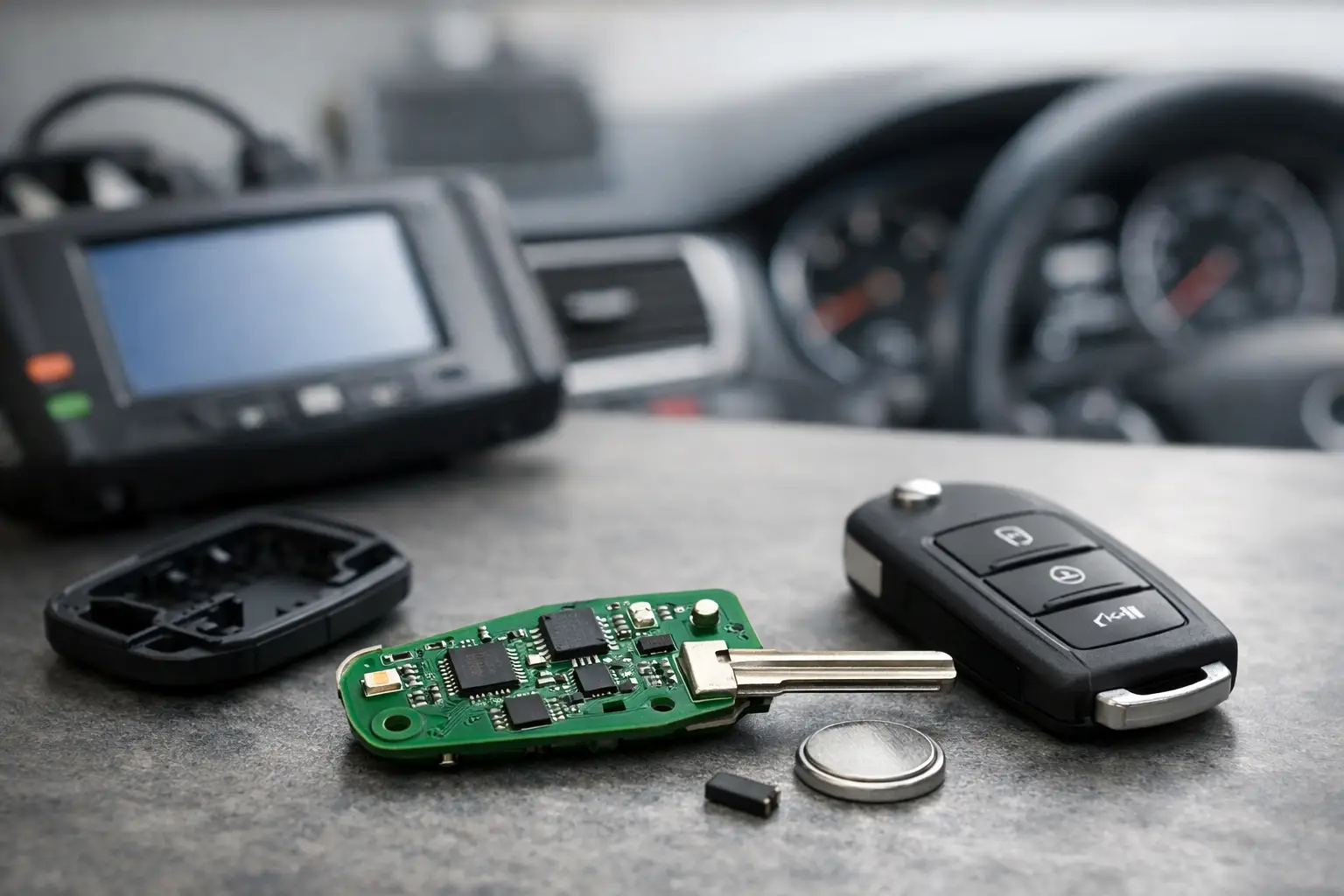
An OEM board key is generally a replacement key supplied with an original-equipment-style electronic circuit board, often referred to as the PCB or remote board. In many listings, it means the electronics originate from an original vehicle key rather than being a newly manufactured aftermarket circuit board.
The exact meaning can vary between suppliers and vehicle applications. An OEM board key may be a complete remote assembled with an original board and a new shell, or it may refer to a board supplied for installation into a compatible key case. It does not automatically mean every component is new, nor does it mean the key will work on every version of a particular model.
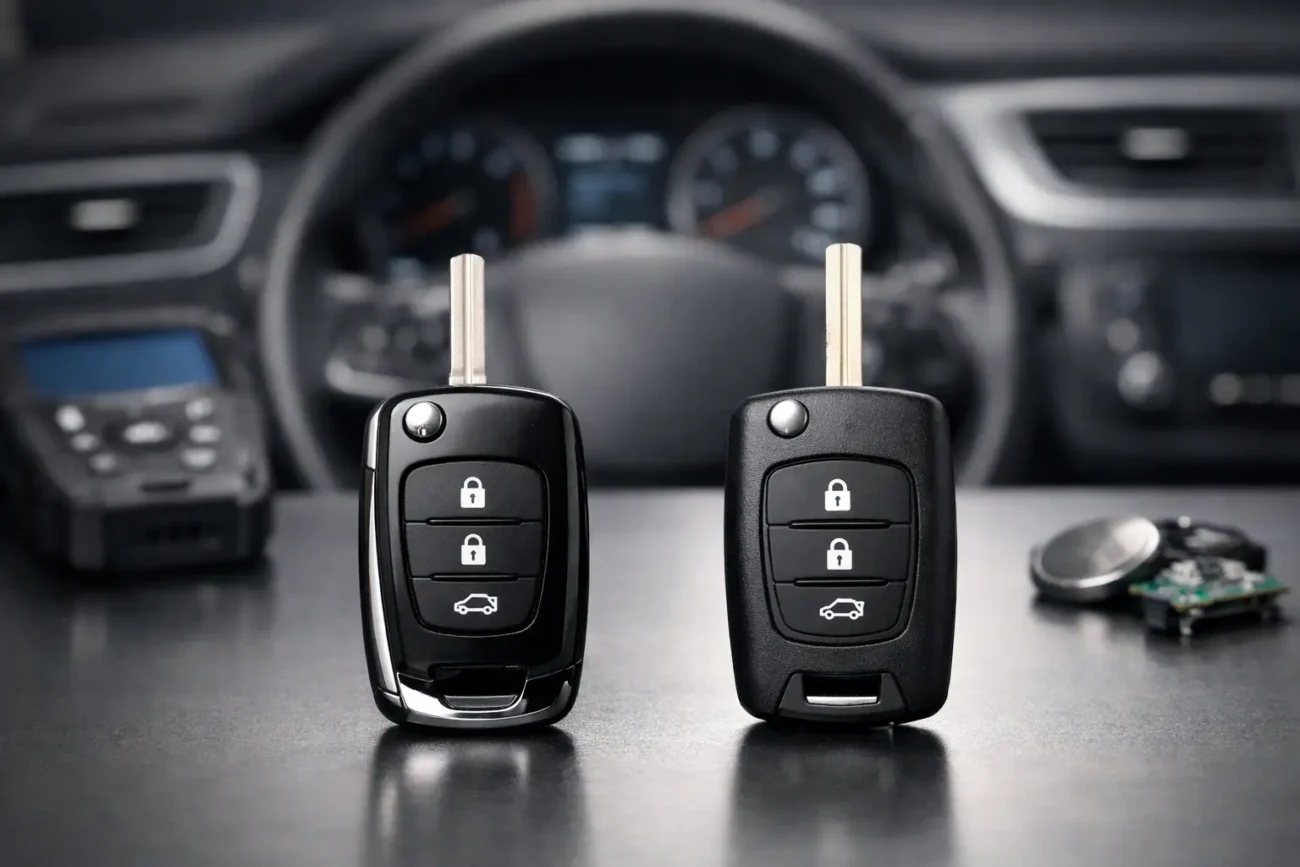
For example, two keys for the same Ford, BMW, Toyota or Vauxhall model range may share a similar case and button layout but use different frequencies, transponder arrangements or board references. The board is the critical part, so matching the visible shell alone is not enough.
What the board does inside a vehicle key
The circuit board is the electronic centre of a remote or smart key. It receives power from the battery, transmits remote-locking signals, and communicates with the vehicle according to the design of that key system. Depending on the application, the key may also contain a separate transponder chip, while other designs integrate key identification functions within the board.
This is why a replacement key is more than a plastic housing and a metal blade. A new shell can restore worn buttons or a damaged case, but it cannot replace failed electronics. Equally, a fresh board may require suitable preparation and programming before it can be paired to the vehicle.
An OEM board is often valued because it follows the construction and component layout of the original key design. For professional key work, this can be useful where button feel, battery contact positioning, radio performance and PCB fit within the shell all matter.
What an OEM board key usually includes
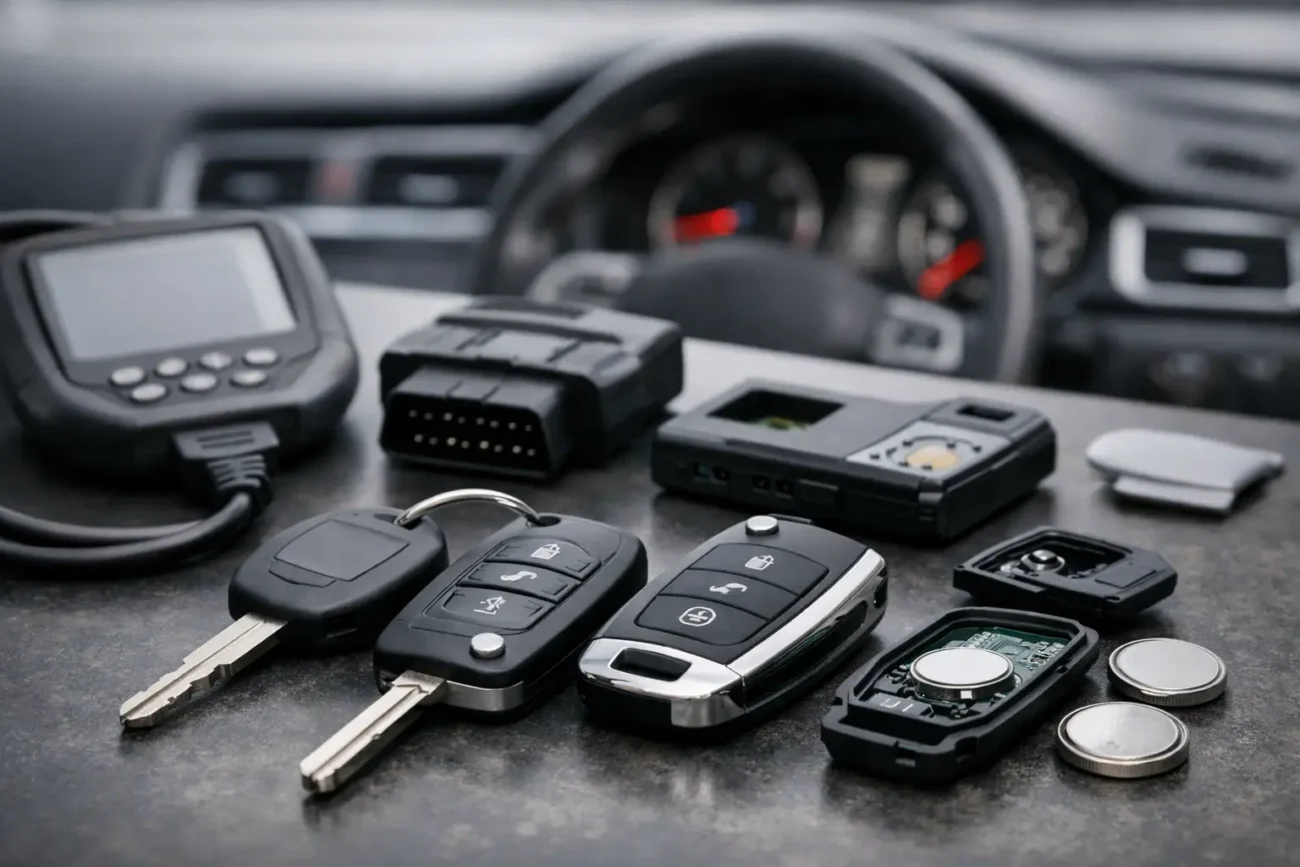
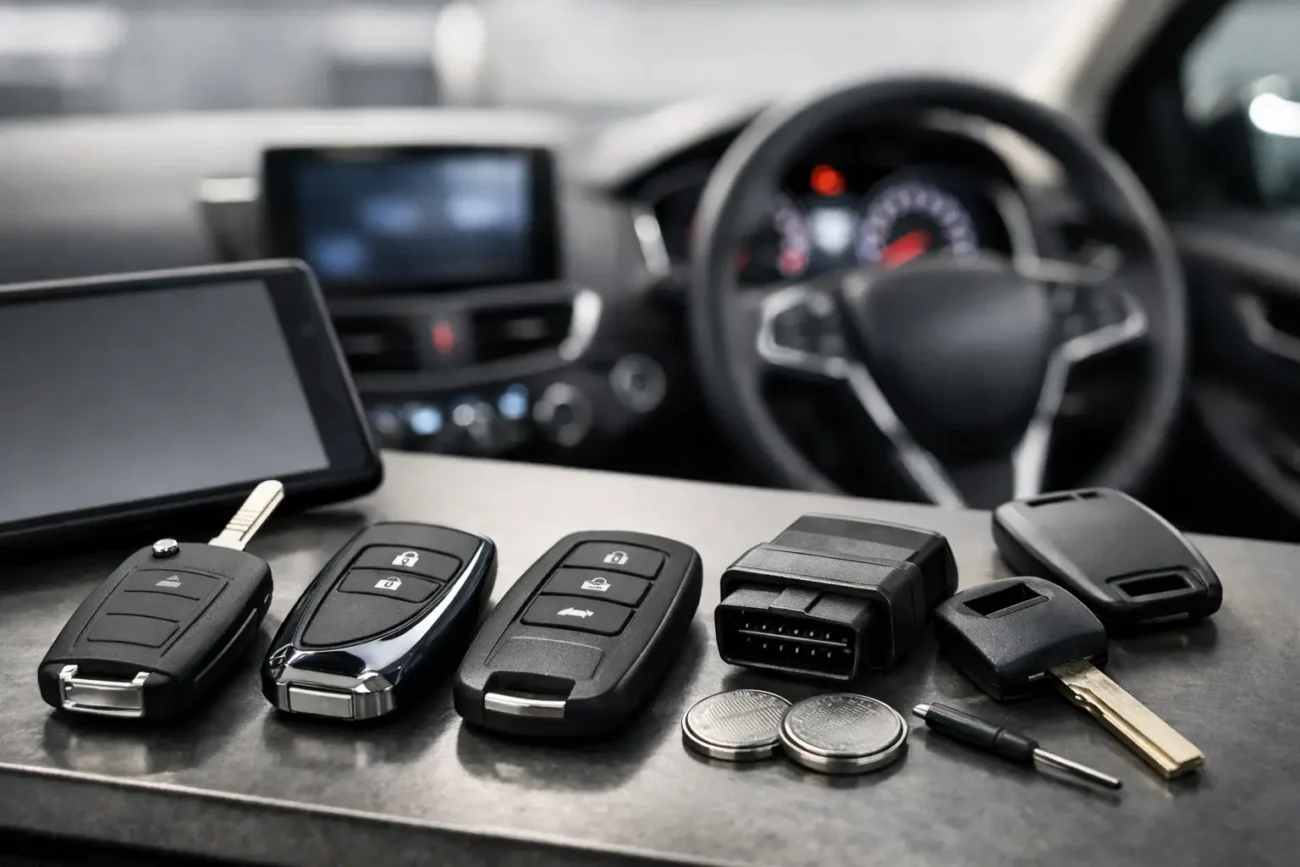
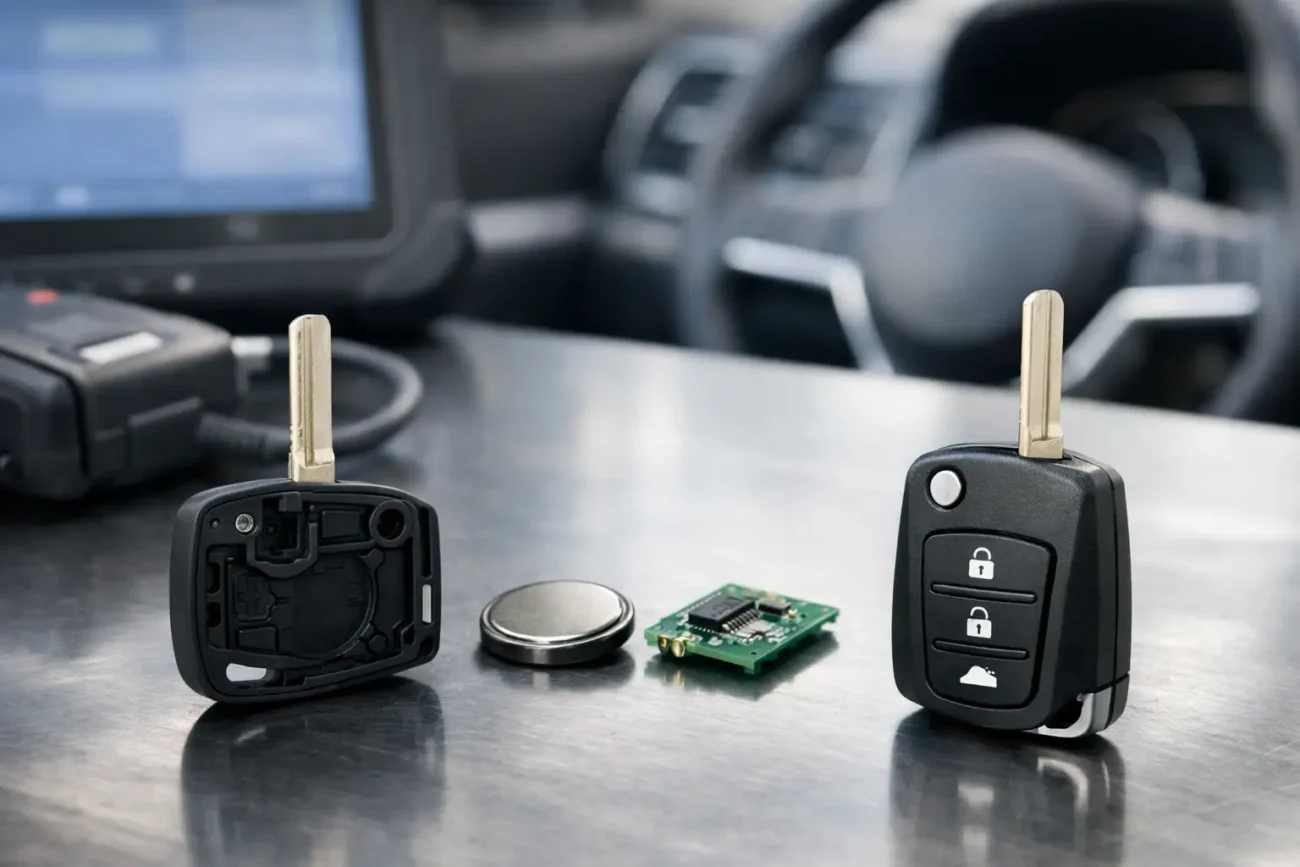
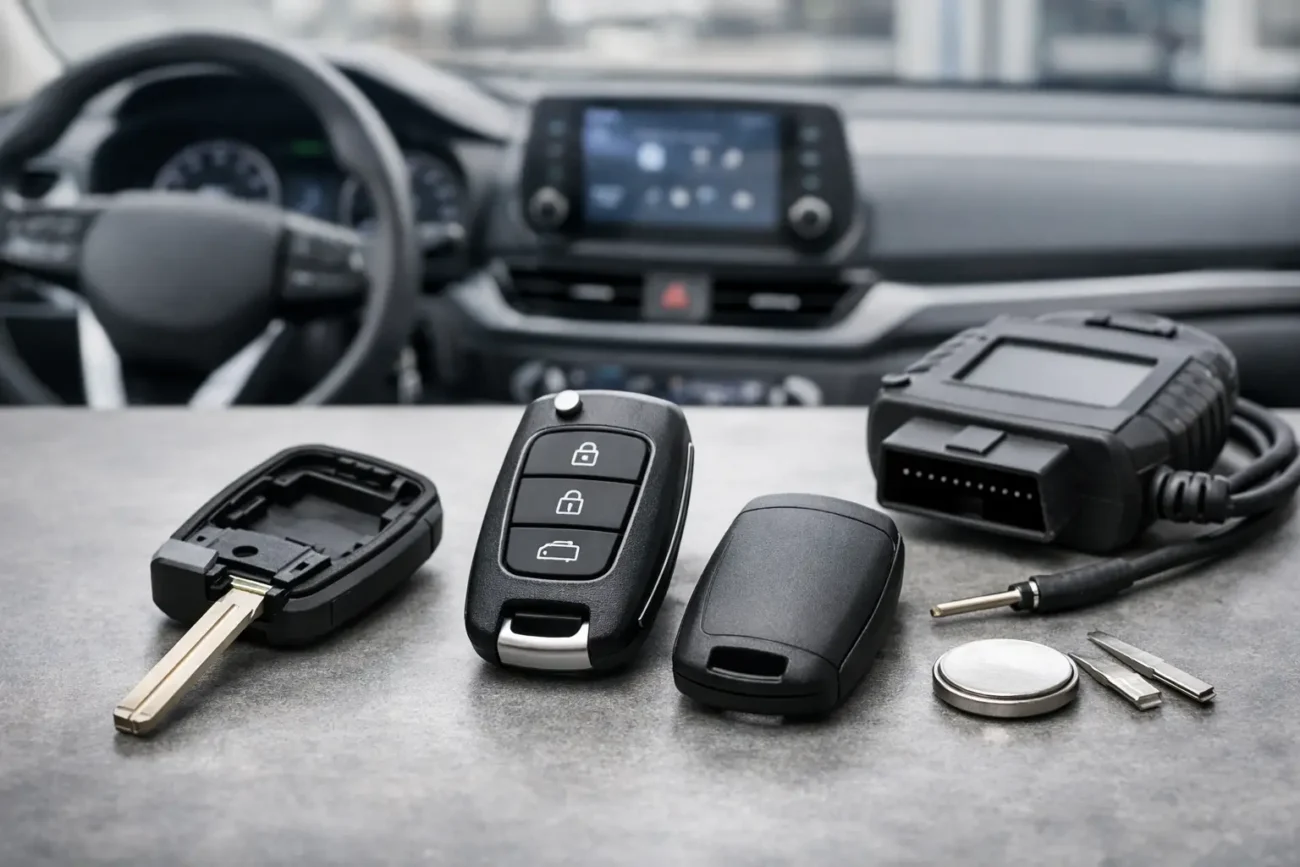
The description varies by product, but an OEM board key can include the circuit board, a compatible replacement shell, buttons, a battery contact assembly and sometimes an uncut emergency blade or key blade. Smart keys may include an emergency insert rather than a conventional flip blade.
Do not assume these components are included just because they appear in product photographs. Check the listing for exactly what is supplied. A board-only product is different from a complete replacement remote, and a complete remote may still require a blade to be cut and the electronics to be programmed.
It is also worth checking whether the battery is included. Even when it is supplied, a flat or poorly fitted battery can produce symptoms that look like a faulty remote, such as weak range or intermittent button operation.
Why buyers choose OEM board key solutions
For vehicle owners, an OEM board key can be a practical route when the original remote has a cracked casing, worn buttons or a damaged blade but the correct electronics are needed for the replacement. It can also be relevant when a spare key is required and a compatible original-style board is preferred.
For locksmiths, garages and automotive technicians, the appeal is usually more technical. Original-board solutions can provide a familiar PCB format for specific vehicle systems, particularly where an aftermarket remote may not be suitable for the job. They may also help retain the correct physical layout for a model-specific shell.
That said, OEM-board keys are not automatically the best choice in every situation. Availability, condition, whether the board can be prepared for the intended vehicle, and the overall cost of the completed job all need consideration. A quality aftermarket remote can be the more efficient option for many applications, provided its specification matches the vehicle exactly.
OEM board key vs aftermarket key
The main distinction is the origin and design of the electronics. An OEM-board key uses an original-equipment-type circuit board, while an aftermarket key uses a board manufactured as a replacement alternative. Both can be viable, but they are not interchangeable simply because the cases look alike.
An OEM-board option may be preferred when a vehicle system is known to be particularly sensitive to board type or when the original design is required for a precise fit. An aftermarket option may offer better availability and can be an economical replacement choice for common applications.
The sensible decision is based on compatibility, not labels alone. A correctly specified aftermarket remote is more useful than an OEM-board key with the wrong part number or frequency. Likewise, a board from the right vehicle family may still be unsuitable if its button configuration, immobiliser type or regional frequency does not match.
Compatibility checks before ordering
A key should be identified by its electronics as well as its appearance. Before purchasing an OEM board key, compare the details from the existing key and vehicle wherever possible. The most useful checks are the part number or board reference, remote frequency, number and layout of buttons, blade profile, transponder type and vehicle year or model variant.
Frequency is especially important. Many UK and European vehicle remotes operate on 433 MHz, but this should never be assumed. Similar versions may use another frequency for a different market, and a remote on the wrong frequency will not communicate correctly with the vehicle.
Look closely at the original board reference. This is normally printed on the circuit board and is often more reliable than comparing external cases. If opening the remote is not appropriate or practical, use the part number on the case, VIN-based fitment information where available, and the full vehicle details to narrow down the correct option.
For trade customers, checking the original key before ordering can prevent unnecessary returns and delays on a customer job. For retail customers, providing clear photos and vehicle information to a qualified key professional can help establish which replacement specification is required.
Programming, preparation and realistic expectations
An OEM board key is not necessarily ready to use straight from the packet. Depending on the vehicle and the condition of the board, it may need remote synchronisation, immobiliser programming or specialist preparation. A replacement blade may also need cutting before the key can operate the door or ignition mechanically.
Used original boards deserve particular care. Some key systems store vehicle-specific information, which may limit whether a board can be reused or require professional assessment before it is fitted. This is not a fault with the board – it is part of how modern vehicle key security is designed.
Avoid buying on the assumption that any key can be programmed to any car of the same make. Vehicle manufacturers use multiple key systems across model years, trims and markets. A qualified automotive locksmith, garage technician or key programming professional can confirm whether the chosen board is suitable for the intended vehicle.
When an OEM board key is the right choice
An OEM-board solution is worth considering when the exact board reference is known, the key specification has been checked, and there is a clear plan for cutting and programming if required. It can be particularly suitable for a professional repair, a correctly specified spare, or a replacement where original-style electronics are preferred.
If the existing board still works and only the outer case is damaged, a replacement key shell may be all that is needed. If the vehicle requires a new functioning spare and a compatible aftermarket remote is available, that may be the more cost-effective route. The right answer depends on the fault, the vehicle system and the product specification.
A key is a small component with a surprisingly large amount of vehicle-specific technology inside it. Taking a few minutes to verify the board reference, frequency and fitment details before ordering will lead to a quicker, more cost-effective replacement – and help ensure the key you receive is the one your vehicle actually needs.
Add a review
Your email address will not be published. Required fields are marked *