
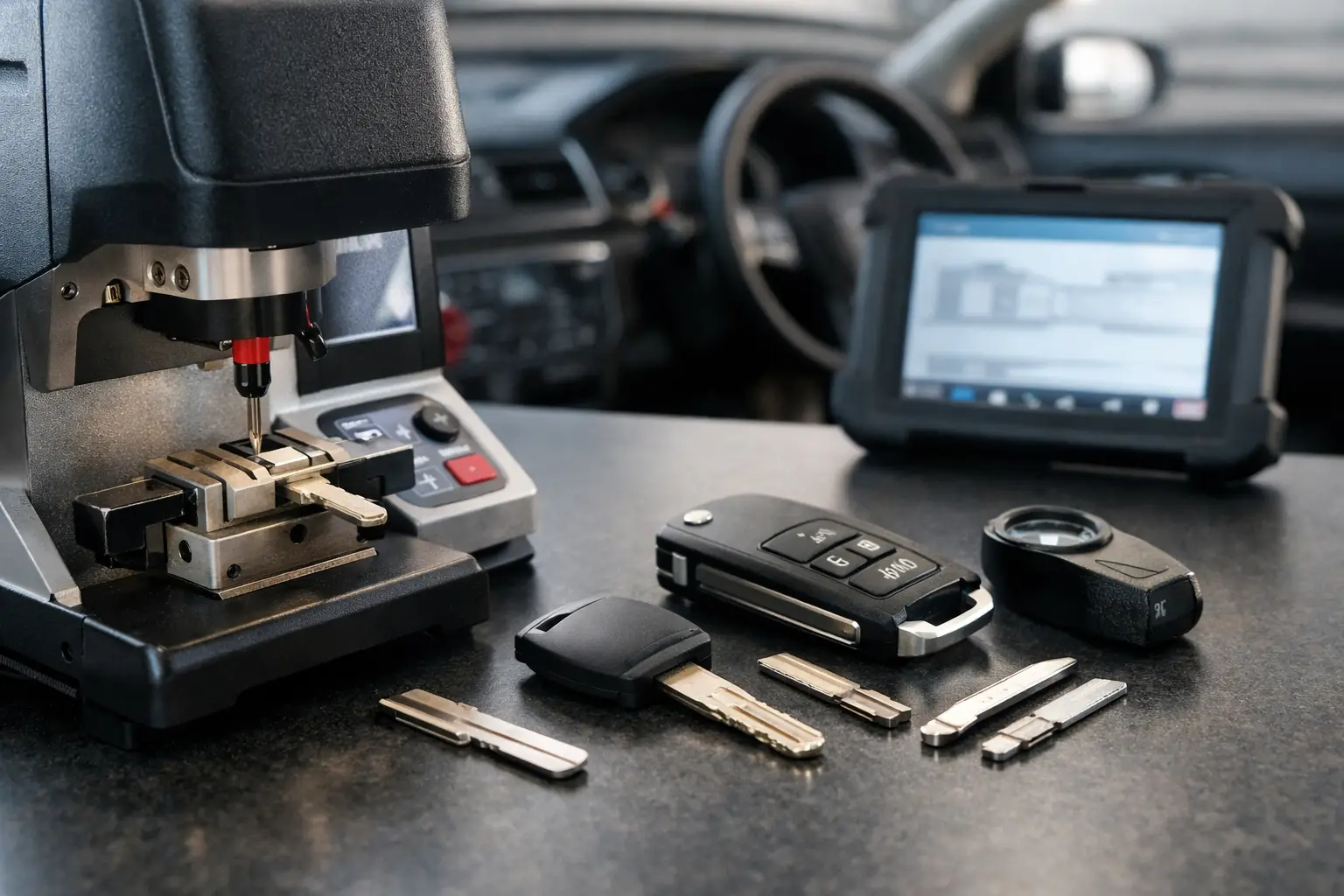
How to Decode Key Blades Safely and Accurately
A replacement car key can look right at first glance and still be completely wrong for the lock. The blade may have a similar length, a similar head shape and even fit into the key shell, yet use a different profile, stop position or cut arrangement. That is why learning how to decode key blades should begin with identification, not guesswork.
For vehicle owners, decoding usually means confirming which replacement blade is required before ordering a shell, remote or spare key. For locksmiths, garages and key professionals, it is part of the wider process of matching the correct blank and arranging authorised cutting. In both cases, accuracy matters: the wrong blade creates delays, wasted stock and an unhappy customer.
What decoding a key blade actually means
The phrase “decode key blade” can mean different things depending on the job. It may refer to identifying the physical blade profile, checking the visible cut pattern against an existing working key, or using an authorised key code to have a new blade cut correctly.
These are related but separate checks. A blade profile tells you whether the blank can physically enter the vehicle’s lock. The cut pattern is what allows a correctly matched key to operate that particular lock. A key code, where legitimately available, is a manufacturer or locksmith reference used by authorised professionals to produce the required cut.
It is not enough to identify only the vehicle make. A Ford, BMW, Toyota, Peugeot or Vauxhall can use several different blade types across model years, trims and key systems. The remote electronics and immobiliser chip may also differ even where two keys appear similar externally.
Start with the blade profile, not the buttons
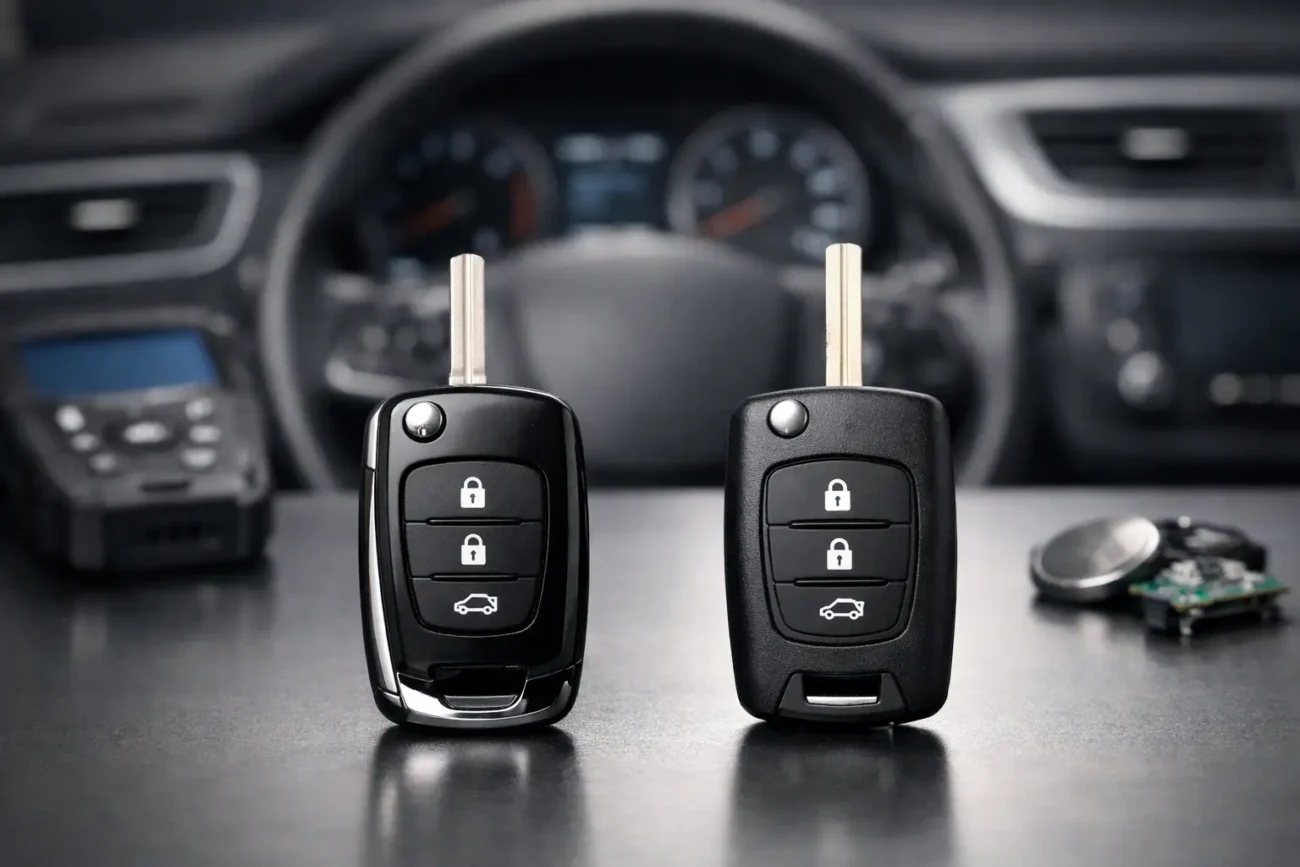
Button layout is useful when replacing a remote fob, but it does not confirm the blade. Begin with the metal blade itself, ideally from a working key. Look at the profile from the side and at the edge, taking note of the groove layout, width, length and where the blade stops against the key head.
Common vehicle key blade designs include traditional edge-cut blades, where the cuts are visible along one or both edges, and milled internal-track blades, sometimes called sidewinder or laser-style blades. The latter are not literally cut with a laser, but the term is widely used in the trade. These blade families require different blanks and cutting equipment.
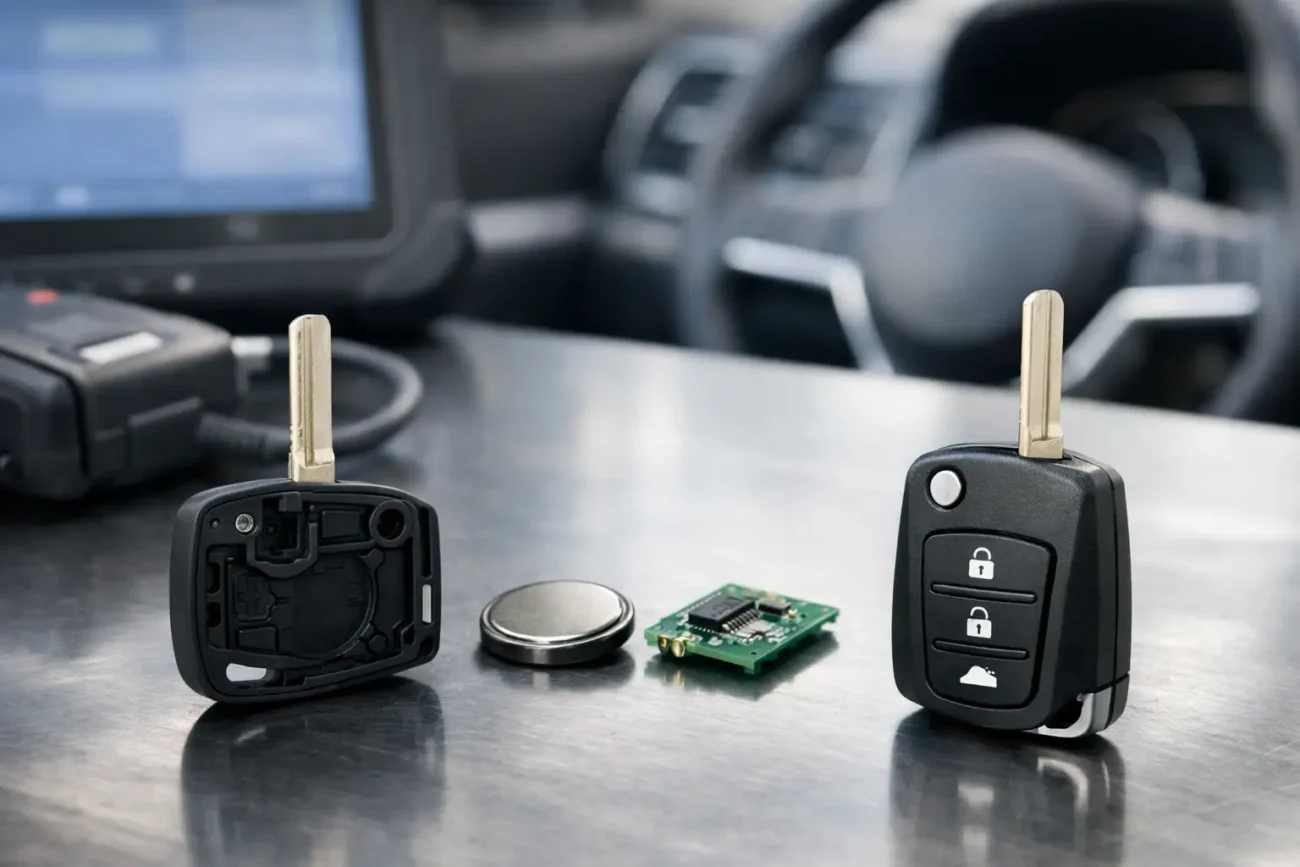
Also check whether the blade is fixed, removable or retractable. Many flip-key remotes use a removable blade held by a pin or retaining mechanism, while some smart keys contain an emergency insert blade. A replacement shell may accept a blade mechanically while still requiring the correct blank style and careful transfer of the existing components.
Check the shoulder, tip and groove pattern
The shoulder is the part of the blade that sets its insertion position in the lock. On some designs, the tip performs this locating function instead. A mismatch here can mean the blade sits too far in or not far enough, even if its main profile looks close.
The grooves are equally significant. They are the raised and recessed tracks running along the blade. Their pattern must match the lock’s keyway. Two blades may share the same basic width but have different groove arrangements that make them incompatible.
For a practical comparison, place the existing blade beside the proposed blank and compare the overall outline in good light. Do not rely on a low-resolution online image alone. Product images are useful for guidance, but product descriptions, blade references and stated vehicle fitment carry more weight.
Identify any numbers and markings carefully
Many blades, key shells and remote housings carry useful identifiers. You may find a blade reference, a manufacturer-style blank code, a part number or a moulding number inside the key case. These references can help narrow down the correct product, particularly for flip-key repairs and replacement shells.
However, a number on the plastic housing is not always the same as the blade reference. Likewise, a remote part number does not automatically confirm the correct frequency, transponder chip or blade. Treat every identifier as one part of the compatibility check rather than a complete answer.
If you are ordering for a customer job, record the make, model, registration year, existing key style, blade marking and the key’s button configuration. For remote and smart keys, add the frequency and chip information where known. This reduces the chance of selecting a visually similar but unsuitable item.
Avoid posting close-up images of key cuts, key codes or vehicle security information publicly. These details should be handled only through an appropriate, verified replacement or cutting process.
Read the cuts as a matching check, not a DIY security shortcut
A working key’s cuts are unique to its lock. Professionals can use authorised equipment, verified key-code information and appropriate training to produce a replacement blade. For most motorists, the sensible use of the visible cuts is simply to confirm that an existing key and a newly cut key correspond after the work has been carried out.
Trying to estimate cut positions or depths by eye is unreliable. Small differences can prevent smooth operation, cause the key to bind, or lead to unnecessary wear in an older lock. This is particularly relevant for modern internal-track blades, where the cut path is more complex than it appears from one angle.
When an original key is badly worn, bent or damaged, copying it can transfer those faults to the new blade. In that situation, an authorised key code route may be more appropriate, subject to proof of ownership and the vehicle’s requirements. A qualified automotive locksmith, dealer or suitably equipped key professional can advise on the right route.
Match the blade to the full key system
Decoding the metal blade solves only one part of a replacement key job. A car may start with a separate transponder chip, an integrated remote board or a proximity smart-key system. The blade might open the door, while the vehicle still requires correctly matched electronics and programming to start.
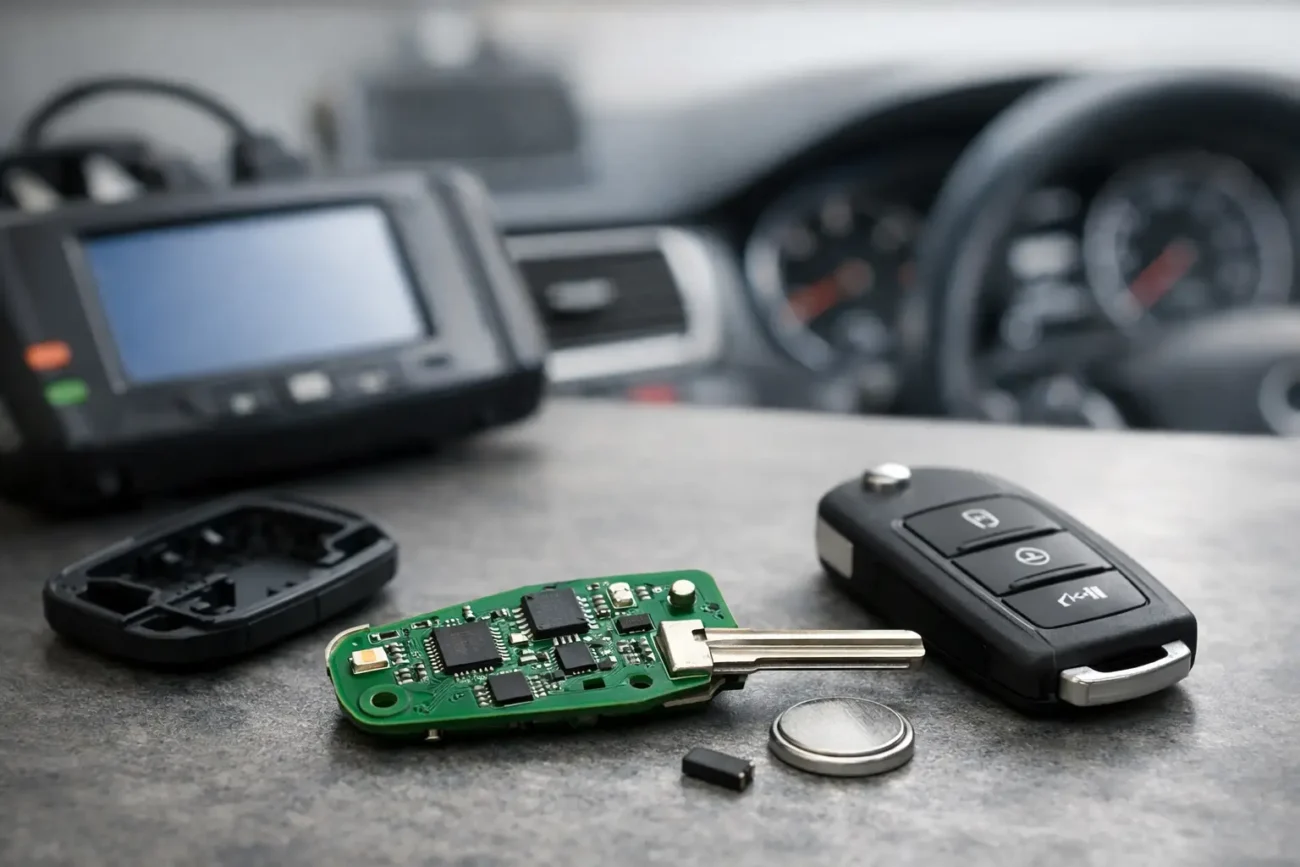
Before purchasing, check the complete specification: blade type, button count, frequency, chip type, printed part number and stated model coverage. If replacing only a broken case, check whether the original remote circuit board and transponder can be transferred into the new shell. In many shell-repair jobs, the existing working electronics are retained, while the blade is cut or transferred as required.
There are trade-offs. A low-cost shell can be an excellent repair option when the original board works perfectly, but it will not resolve water damage, failed buttons on the circuit board or a lost transponder. A complete replacement remote may be the better choice, but it may need programming as well as blade cutting. Choosing the right route at the outset saves time.
A safe, accurate ordering process
For retail buyers, the best approach is to gather clear information before placing an order. Compare the existing key against the product specification and retain the original key until the replacement has been checked. If uncertainty remains, ask for help with identifying the blade or key type rather than ordering several lookalike products.
For trade customers, a consistent intake process protects margins and reduces returns. Verify the vehicle details, inspect the existing blade, establish whether the job is shell-only or a complete key replacement, then confirm the electronic specification separately. This is especially useful for vehicles with model-year changes or several remote variants in circulation.
Global Keys Direct stocks a wide range of replacement shells, remotes, smart keys and compatible key blades for popular vehicle marques. Product compatibility information is designed to support accurate selection, but fitment should always be checked against the vehicle and existing key details before purchase.
When to use a professional cutting service
Professional support is the right choice when the only key is lost, the old blade is too worn to copy reliably, the vehicle uses a complex internal-track blade, or the key code needs to be handled through an authorised route. You should also seek assistance if a replacement blade enters the lock but does not turn freely. Forcing it can damage the blade or lock cylinder.
A legitimate provider will normally require evidence that you are entitled to obtain a key for the vehicle. That is a sensible safeguard, not an inconvenience. It protects vehicle owners and keeps replacement work within a secure, professional process.
The most useful result from decoding is not a set of guessed cuts. It is confidence that you have identified the right blade family, checked the rest of the key specification and chosen the appropriate cutting route. Take a little extra time at that stage, and the replacement key is far more likely to be a quick, cost-effective fix.
Add a review
Your email address will not be published. Required fields are marked *