
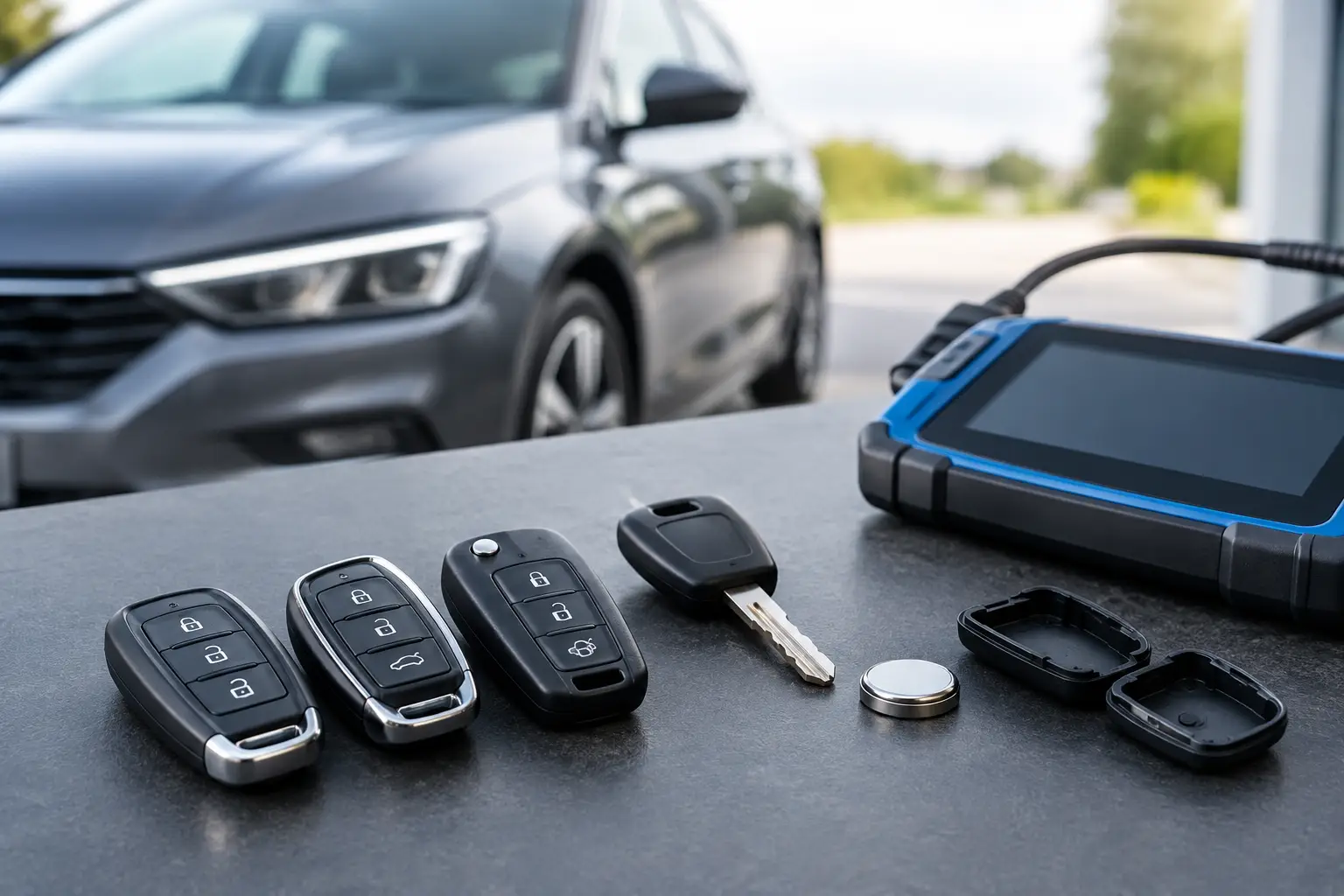
Which Cars Need Key Coding? A UK Driver’s Guide
A replacement key that turns in the ignition but will not start the engine is usually not faulty – it simply has not been introduced to the vehicle’s security system. That is the practical answer behind which cars need key coding: most modern cars with an immobiliser, transponder chip or keyless-start system require some form of programming when adding a new working key.
The confusing part is that “key coding” is often used to describe several different jobs. A remote may need synchronising so its buttons lock and unlock the doors. The transponder chip may need programming to the immobiliser so the engine will start. A proximity smart key can require both functions, plus configuration for keyless entry and push-button start. Knowing which applies to your vehicle prevents an expensive mismatch between the key you buy and the work required to make it usable.
Which cars need key coding?
In broad terms, vehicles made from the late 1990s onwards are increasingly likely to need coding for any additional key that starts the engine. Earlier cars may use a basic metal blade with no electronic security chip, but this is now the exception rather than the rule.
Most Ford, Vauxhall, Peugeot, Citroën, Renault, Volkswagen, Audi, BMW, Mercedes-Benz, Toyota, Nissan, Hyundai, Kia, Land Rover and Jaguar models use an immobiliser system. If a replacement key contains a transponder, that chip normally has to be programmed to the car before the immobiliser will recognise it.
The requirement becomes even more likely where the vehicle has a flip key, remote central locking, a smart key, a proximity fob, keyless entry or push-button start. These systems are designed to recognise authorised electronic credentials, not merely the correct blade shape.
That said, make and age alone cannot confirm the answer. Two versions of the same model can use different key systems depending on registration year, trim level, market specification and whether the car has keyless start. Always check the vehicle application and the technical details of the replacement key before ordering.
Key coding, remote programming and blade cutting are different jobs
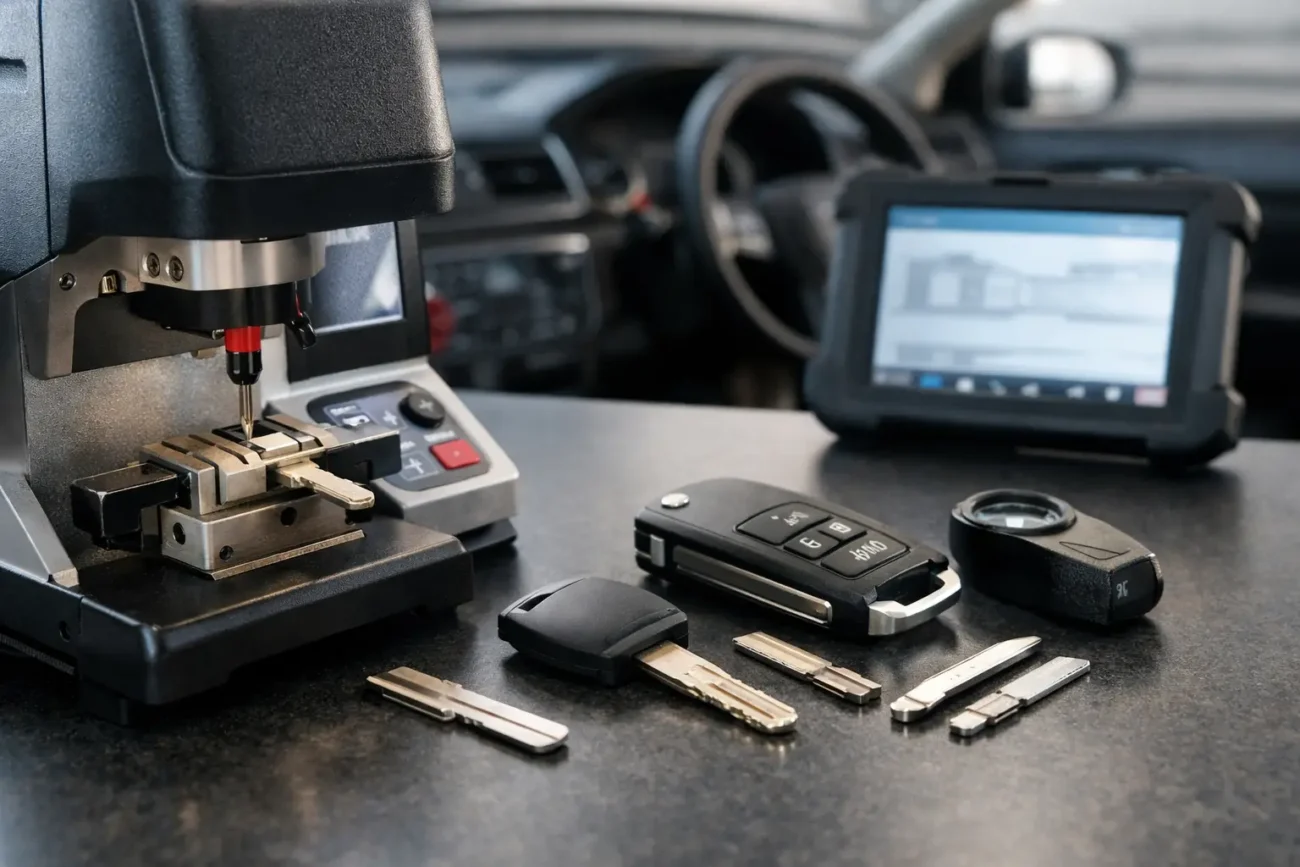
A key can have three separate elements: the metal blade, the remote controls and the immobiliser transponder. Each has its own role.
A blade must be cut to match the vehicle’s locks or emergency key slot. This is a mechanical process. It does not allow the engine to start unless the vehicle has no immobiliser, which is uncommon on later cars.
Remote programming or synchronisation allows the buttons to operate central locking, the boot release, panic function or power tailgate where fitted. On some older vehicles, a remote can be paired without diagnostic equipment. On many newer models, however, specialist tools are needed.
Immobiliser coding is the security-critical part. It stores or registers the transponder or smart key so the vehicle can authorise starting. If the chip is not correctly programmed, the dashboard may show an immobiliser warning and the engine may not crank or may start briefly before cutting out.
This distinction matters when buying a replacement. A new shell is ideal if your electronics still work but the case is cracked, the buttons have worn through or the blade has snapped. Moving the existing circuit board and transponder into the new shell can avoid coding altogether. A complete remote or smart key, on the other hand, will usually need preparation and programming.
Cars that may not need coding
There are a few genuine exceptions. Older vehicles with a plain mechanical key may only require blade cutting. Some classic cars, basic plant equipment and earlier models without a factory immobiliser fall into this category.
A replacement key shell also does not need coding if you are transferring your original working electronics. Likewise, a replacement blade fitted to an existing key may only need cutting, provided the remote board and transponder chip remain unchanged.
Battery replacement is another common source of unnecessary concern. Changing the battery in a working remote does not normally erase its immobiliser programming. Certain vehicles may require the remote to be resynchronised afterwards, but that is different from coding a new transponder key.
Used keys are more complicated. Many are already locked to another vehicle and cannot simply be added to yours. Some professional solutions can renew specific compatible keys, while others cannot. The right route depends on the key type, chip, vehicle system and available equipment. For retail buyers, a new compatible replacement is often the clearer option; for trade users, the feasibility of renewal should be checked against the exact application.
How to tell whether your car has an immobiliser chip
Start with the original key. A large plastic head, remote buttons, a flip mechanism or a smart fob are all strong indicators that it contains electronics. A vehicle built in roughly the last 25 years is also likely to use an immobiliser, even if the key looks fairly simple.
The most reliable check is the key specification. Match the following details against the original key and vehicle information:
- vehicle make, model, year and body variant
- key blade profile and blade style
- number and layout of buttons
- remote frequency, where specified
- transponder chip type
- part number, FCC ID or manufacturer reference
- whether the vehicle uses an ignition barrel, keyless start or proximity entry
Part numbers are especially useful because keys that look identical can use different frequencies, chips or circuit boards. A three-button fob is not automatically interchangeable with another three-button fob from the same manufacturer.
For professional buyers, vehicle identification data, diagnostic coverage and the number of existing working keys can affect the programming route. For vehicle owners, supplying clear photos of both sides of the current key alongside the registration-year and model details makes it much easier to identify a suitable replacement product.
What happens when a coded key is replaced?
The exact process varies by manufacturer and system, but the objective is consistent: the vehicle must store the new key as an authorised key. A suitably equipped automotive locksmith, garage or key programming professional can assess the vehicle and carry out the relevant programming procedure.
On some applications, all keys may need to be present when a new one is added. On others, the technician may need security access information or manufacturer-approved diagnostic capability. Modern keyless vehicles can involve more advanced procedures than a conventional transponder key, which is one reason a cheap-looking universal fob is not always the best value.
There is also a distinction between a key supplied with a pre-coded or precoded chip and one that is ready for final vehicle programming. “Pre-coded” does not necessarily mean ready to start your car straight from the packet. Read the product description closely and confirm what further cutting, chip preparation, remote programming or immobiliser coding is required.
Choosing the right replacement key first time
The cheapest option is not always the lowest-cost repair. Ordering a shell when you actually need a complete key leaves you without a solution; ordering a complete smart key when your original board is fine can add unnecessary programming work.
If the only issue is physical damage, inspect whether the original internals can be reused. Check that the circuit board is dry and undamaged, the transponder chip is present, and the buttons still operate correctly. A quality replacement shell and correctly cut blade may restore the key at a fraction of the cost of a fully coded replacement.
If the key is lost, the electronics have failed, or you want a fully independent spare, choose a complete compatible key and budget for the required coding. Match fitment details carefully rather than relying on appearance. This is particularly relevant for BMW, Mercedes-Benz, VAG-group and keyless systems, where generations of keys can appear similar but are not interchangeable.
Global Keys Direct stocks model-specific replacement shells, remotes, smart keys, blades and professional programming equipment, but compatibility should always be checked against the listing details and your existing key. A clear specification check before ordering is quicker than correcting the wrong frequency, chip or button configuration after delivery.
When to arrange coding
Arrange key coding once you have confirmed the replacement is correct and, where necessary, the blade has been cut. If you still have one working key, do not wait until it is lost or damaged. Having a tested spare gives you a practical fallback and can make the replacement process simpler than dealing with an all-keys-lost situation.
For trade customers, it is worth confirming the key’s status before booking the job: new, pre-coded, unlocked, refurbished or previously used. For drivers, the useful question is simpler: will this item operate the locks, start the vehicle, or both? The product specification and the car’s key system should answer that before you buy.
A properly matched, correctly programmed spare is more than a convenience. It is the sensible way to keep a small key problem from becoming a disrupted journey, a missed appointment or a more complex replacement job later.

Add a review
Your email address will not be published. Required fields are marked *