
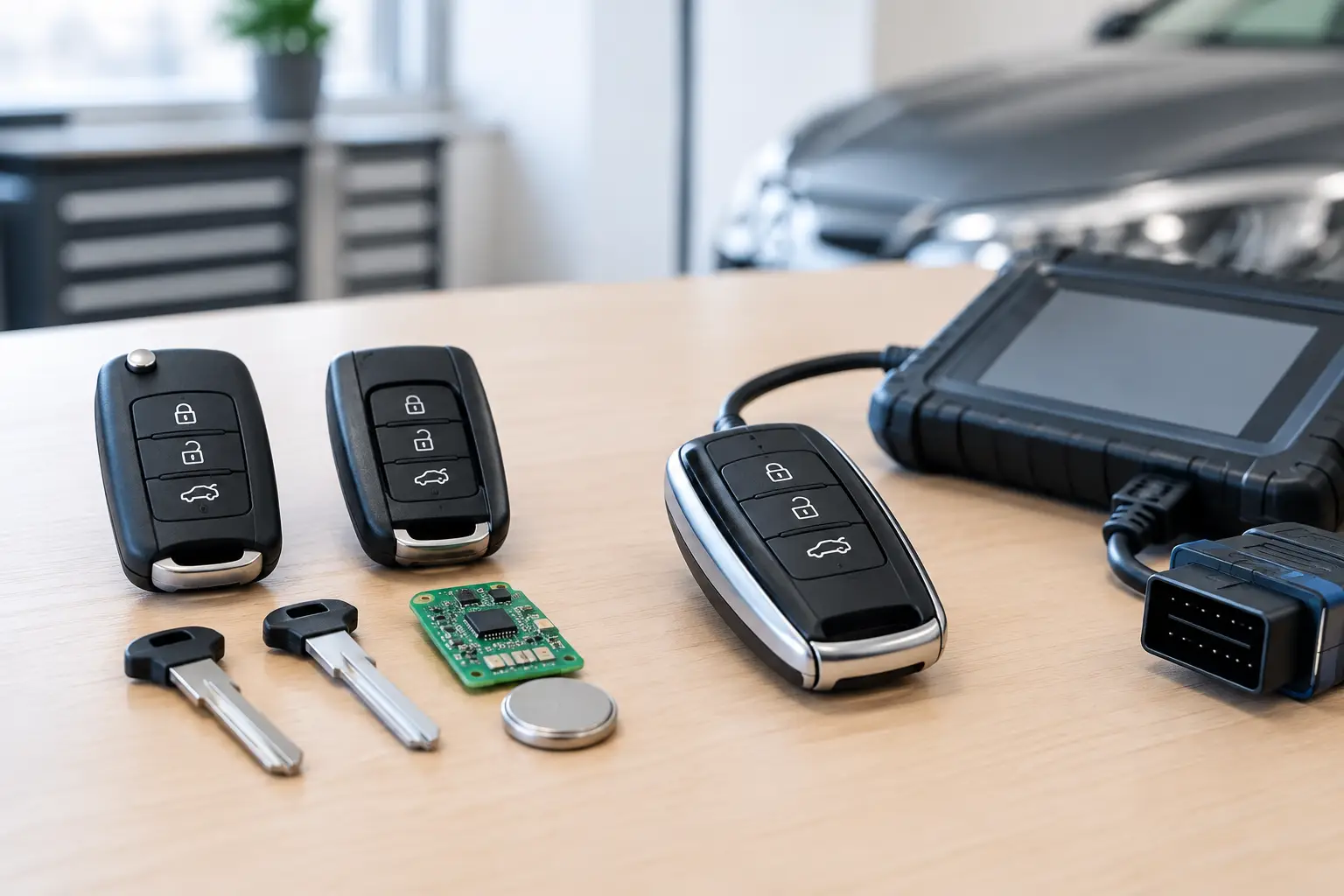
Key Cloning Versus Programming Explained
A spare key can be straightforward, or it can be the point where a simple replacement becomes a technical vehicle-security job. Key cloning versus programming is the distinction that matters most when choosing a replacement car key, remote or smart key. The right route depends on the vehicle, the key technology already in use and whether you have a working original available.
For drivers, understanding the difference helps avoid ordering the wrong type of key or assuming a new remote will work straight out of the packet. For locksmiths, garages and key professionals, it shapes the tools, stock and diagnostic process required for a reliable job. Neither method is automatically better. Each suits particular vehicles and situations.
What is key cloning?
Key cloning copies identifying data from an existing, working transponder key onto a compatible blank transponder or replacement key. The transponder is the small electronic chip that communicates with the vehicle’s immobiliser. When the chip is recognised, the vehicle permits starting.
In the right application, cloning can be an efficient way to create an additional key. Rather than making changes to the vehicle’s memory, the replacement carries a copy of the recognised chip data from the original key. This is especially useful for certain older or simpler transponder systems where a suitable cloneable chip and compatible equipment are available.
Cloning is not the same as cutting the blade. A metal blade must still match the vehicle lock profile, and the remote locking function may be a separate matter. A cloned transponder can allow the engine to start, but it does not necessarily make the lock and unlock buttons operate. That depends on the remote type and vehicle system.
There is also an important limitation: the original key needs to be present and readable. If every working key is lost, there is nothing to duplicate. Some later vehicle systems use encrypted or rolling security data that cannot be copied in this way, or cannot be copied reliably using a universal approach.
What is car key programming?
Car key programming adds, registers or configures a key for the vehicle’s electronic systems. Depending on the vehicle, this may involve the immobiliser, remote central locking, keyless entry or a smart-key system. The process is vehicle-specific and generally requires suitable diagnostic or key-programming equipment, correct software coverage and authorised access to the vehicle.
Unlike cloning, programming communicates with the vehicle rather than simply copying an existing transponder. The vehicle is instructed to recognise a new key, subject to its security requirements. This makes programming the usual route for many modern keys, including a large proportion of proximity smart keys and advanced remote keys.
Programming can also be necessary when no working key remains, although the exact process, required credentials and available options vary widely by manufacturer, model year and immobiliser system. Security procedures are deliberately more involved for these scenarios. The work should only be carried out for a verified vehicle owner or authorised customer.
A programmed key may be individually recognised by the vehicle, which can offer an advantage where key management is required. For example, a professional may need to assess whether previously registered keys remain active after a lost-key situation. The appropriate solution depends on the vehicle’s system and the customer’s security needs.
Key cloning versus programming: the practical differences
The simplest distinction is this: cloning copies an existing key’s transponder identity, while programming registers a key with the vehicle. That difference affects cost, turnaround time, equipment requirements and what can be achieved.
Cloning can be quick for supported transponder types when there is a working source key. It may reduce the need for direct communication with the vehicle, making it useful for compatible spare-key jobs. However, it is restricted by chip technology and does not replace remote or smart-key programming where that function is required.
Programming is generally more flexible for newer vehicles and integrated remote systems, but it is more dependent on vehicle-specific coverage. A tool that handles one model, year or immobiliser generation may not cover another. Software updates, token requirements, security gateways and manufacturer-specific procedures can all affect the job.
For trade users, this is why a varied tool and key inventory matters. A compatible aftermarket remote, an OEM-board solution, a transponder chip or a universal smart key may each be appropriate, but only after the vehicle details have been checked properly. For retail customers, it is often the reason a replacement shell is the most sensible purchase when the original electronics still work.
When cloning is likely to be suitable
Cloning is often worth considering when a customer has a fully working key and wants a spare for a vehicle with a supported transponder system. It can suit conventional bladed keys where the immobiliser chip is separate from the remote electronics, or older remote keys using cloneable chip technology.
It may also be useful where the priority is an additional starting key rather than a complete replacement remote. That is not a compromise if it meets the customer’s needs, but it should be clear from the outset. A key that starts the car but does not operate central locking is not the same product as a fully functioning remote key.
Before selecting a cloneable solution, verify the transponder type and the existing key’s condition. A worn, damaged or intermittently working key may not provide a dependable basis for a duplicate. Confirm the blade profile as well, particularly where a replacement key includes an uncut blade.
When programming is the better route
Programming is usually the more appropriate option for later-model vehicles, smart keys, push-button-start systems and remote fobs that must operate all vehicle functions. It is also commonly required when adding a remote that has never been registered to the vehicle.
If a vehicle has lost-key status, programming assessment becomes particularly important. The correct approach must account for vehicle security, ownership checks and the exact immobiliser generation. Trying to treat every lost-key job as a cloning job is not realistic, because there may be no source key to copy and the system may not support duplication.
Programming is also the preferable route where a customer wants a key recognised individually by the vehicle rather than a duplicate of an existing transponder. This can matter for fleet vehicles, handovers or situations where key records and security status need careful management.
What to check before ordering a replacement key
A key may look correct and still be electronically unsuitable. The button arrangement alone is not enough to confirm fitment. Before ordering, compare the available product details against the existing key and the vehicle specification.
Check these points carefully:
- Vehicle make, model, year and trim level where known.
- Part number printed on the original key, remote or internal circuit board.
- Blade type and profile, including whether the blade is removable, fixed or supplied separately.
- Number and layout of buttons, plus the required functions such as boot release or panic button.
- Frequency, transponder chip type and whether the key is a standard remote, proximity key or smart key.
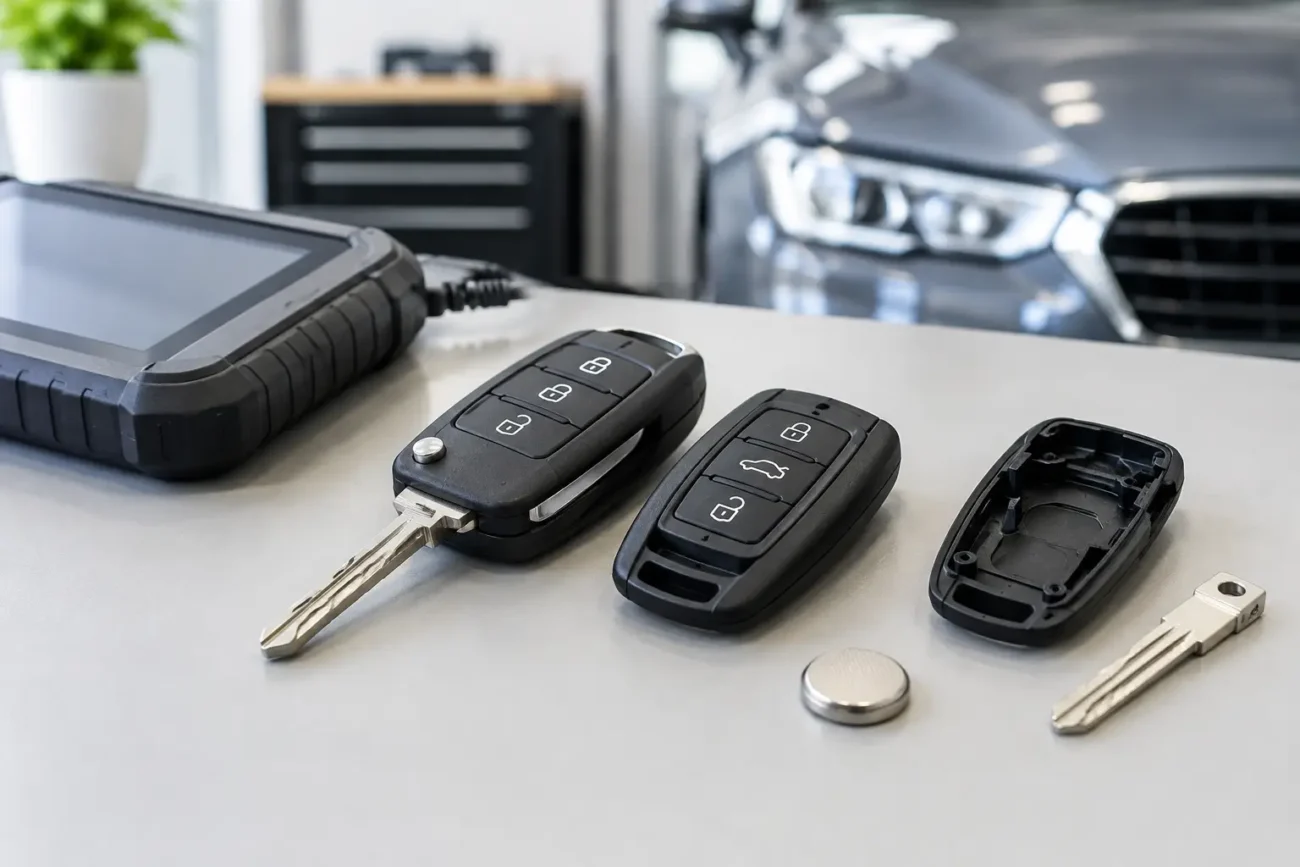
A replacement shell is different again. If the circuit board, transponder and blade from the original key can be transferred, a shell may restore a cracked case or damaged buttons without electronic programming. This can be a cost-effective repair, but the shell must match the original board shape, blade arrangement and button layout.
Choosing stock and tools with fewer surprises
For professionals, the most efficient workflow starts with identification, not assumptions. Read the original key where available, establish the vehicle system and select the replacement route from confirmed data. Keeping compatible transponders, remote keys, blades and programming tools in stock reduces delays, but only accurate matching prevents returns and repeat visits.
For vehicle owners, the same principle applies when buying online. Provide the part number and clear key details where possible, rather than relying only on a photograph. Global Keys Direct stocks a broad range of replacement shells, remotes, blades, smart keys and professional key tools, making it easier to source the correct category once the specification is known.
Quality matters as much as compatibility. A low-cost key that has the wrong frequency, unsuitable chip or incorrect board layout is not a saving. Equally, paying for programming when a correctly matched shell repair would solve the problem is unnecessary. The practical answer comes from identifying what has actually failed: the case, blade, battery, remote board, transponder or the vehicle registration itself.
The best replacement route starts with the key you have
Key cloning can be fast and effective for compatible spare-key work. Programming is essential for many modern remotes, smart keys and vehicle-specific security systems. The decision is not about choosing the more advanced option. It is about matching the method to the vehicle, the key type and the result required.
Check the technical details before you buy, retain every working key where possible, and treat a failing key as an early-warning sign rather than waiting for a complete loss. A properly matched replacement gives you a practical spare now and fewer complications when you need it most.

Add a review
Your email address will not be published. Required fields are marked *