
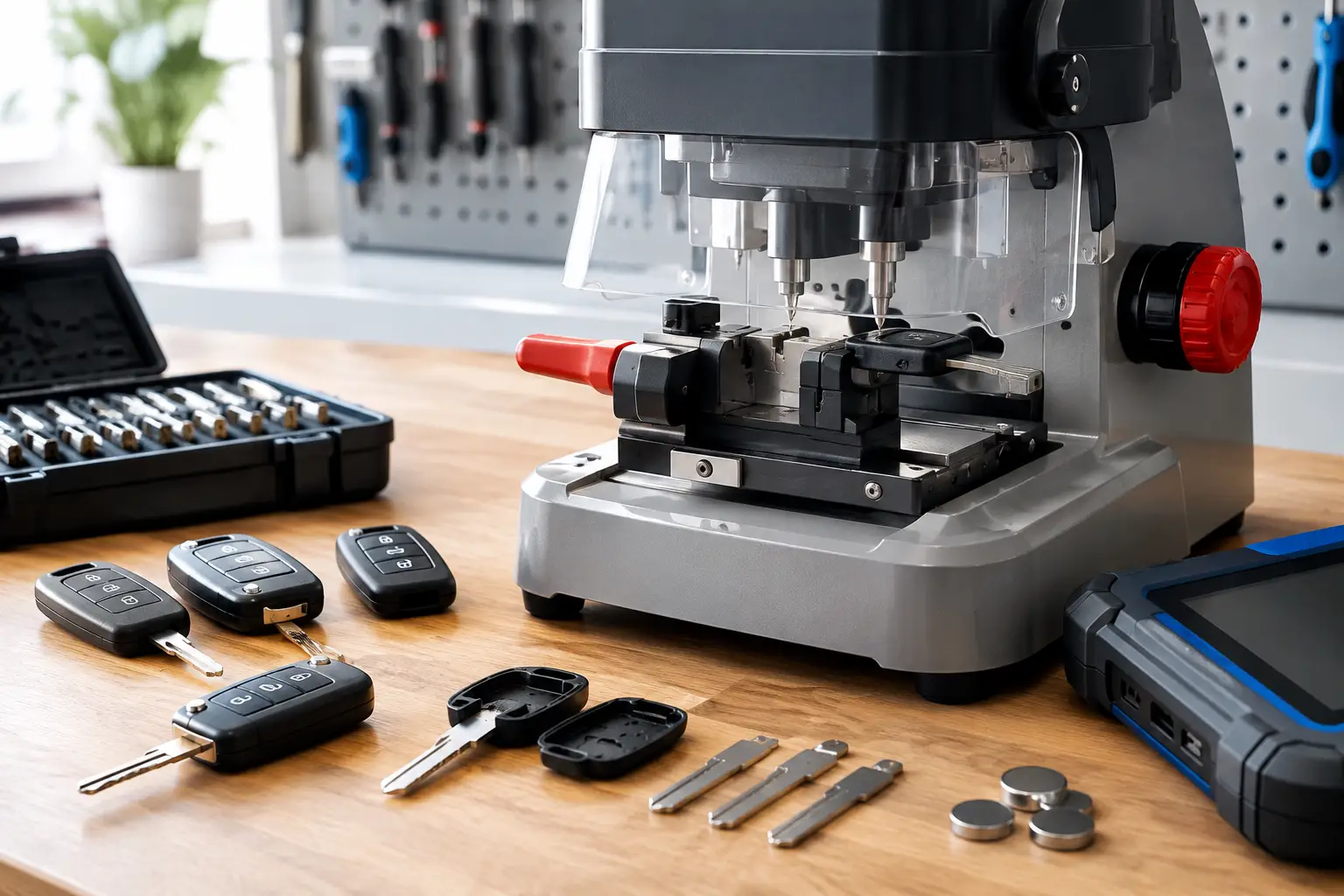
Key Cutting Machines for Professional Results
A key that turns stiffly, fails to enter the lock smoothly or leaves a customer returning to the counter is rarely just an inconvenience. It costs workshop time, stock and confidence. The right key cutting machines help prevent those avoidable returns by producing accurate cuts consistently, whether you are copying a worn mechanical key or preparing a replacement blade for an automotive remote.
For locksmiths, garages and automotive key professionals, the best choice is not always the most expensive machine. It is the machine that matches the key profiles you cut, the volume of work you complete and the level of guided support your workflow requires. For vehicle owners replacing a single key, professional cutting is usually the more practical route. For trade users, investing in the right equipment can improve turnaround time and broaden the jobs you can take on.
What a Key Cutting Machine Actually Does
A key cutting machine transfers or creates the physical profile on a key blade so that it can operate the relevant lock. That may mean copying an existing edge-cut key from an original, cutting a replacement blade from authorised key data, or preparing a blank for a remote or smart key assembly.
The cutting stage is separate from electronic programming. A newly cut transponder key or remote key may still need programming to the vehicle before it starts the engine or operates central locking. Treat these as two connected but distinct tasks. A precise blade does not programme a chip, and successful programming does not correct an inaccurate cut.
Automotive work also involves more variation than many first-time buyers expect. Traditional edge-cut blades, laser or sidewinder profiles, dimple-style keys and specialist designs such as Tibbe require different clamping arrangements, cutters or machine capability. Before purchasing any machine or blank, check the original key, blade profile, vehicle application and available product fitment information.
Types of Key Cutting Machines
The practical distinction between machines is how much of the cutting process they automate and which key types they support.
Manual duplicators
A manual duplicator is a straightforward choice for conventional edge-cut keys. The operator clamps the original and blank, aligns them carefully, then traces the original profile while the cutter reproduces it on the blank. These machines can be dependable, economical and fast for regular duplication work, particularly where the original key is in good condition.
Their limitation is that they copy what is in front of them. If the source key is badly worn, bent or previously cut inaccurately, the new key can inherit those faults. A manual duplicator also relies more heavily on operator technique, correct jaw selection and careful deburring.
Semi-automatic and electronic machines
Semi-automatic machines reduce some of the physical effort involved in copying and can improve repeatability on higher volumes. Electronic machines go further, using software, guided clamps and calibrated movements to decode a key or cut it from vehicle-specific data.
For automotive professionals handling a mixture of modern vehicles, this guidance can save valuable time. The screen-led process may identify clamp positions, cutter choice and cutting sequence, reducing the chance of a setup error. It does not remove the need for technical judgement. You still need to confirm that the selected profile, blade and vehicle details are correct before cutting begins.
Laser and sidewinder key machines
Many modern car keys use an internal-track design commonly described as laser or sidewinder. These blades require a compatible machine with the correct cutter, tracer or electronic decoding capability. A standard edge-cut duplicator will not cover this work.
Laser key machines can be an efficient addition for locksmiths and garages that regularly work with BMW, Ford, Vauxhall, Peugeot, Citroën, Volkswagen Group vehicles and other marques using these blade styles. Coverage varies by machine, software version and clamp set, so do not assume a model supports every profile from a manufacturer.
All-in-one automotive cutters
All-in-one or multi-function machines aim to handle a broader range of automotive blade formats from one platform. They can make sense for mobile trade operations, busy workshops and key specialists wanting to reduce the number of separate machines on the bench.
The trade-off is initial cost and the need to stay on top of updates, accessories and cutter maintenance. Broad capability is valuable only when it covers the work you actually receive. A specialist machine may be a more sensible investment if most jobs involve a narrow group of profiles.
Choosing Key Cutting Machines for Your Workload
Start with the jobs you complete now, then consider the work you expect to add over the next year. A garage that occasionally supplies replacement shells and duplicate blades has different needs from a locksmith processing multiple lost-key jobs each day.
Look closely at the vehicle range in your local customer base. If you commonly see older vehicles with standard edge-cut blades, a quality duplicator may cover much of the demand. If later-model laser-cut blades, smart keys and remote key cases form a regular part of your work, electronic automotive coverage becomes more relevant.
Software and data access matter as much as the machine body. A machine that supports code cutting or decoding may need current software, a subscription, internet access or compatible accessories. Understand what is included at purchase and what ongoing updates involve. This avoids discovering that an important vehicle profile requires an additional clamp, cutter or software package after a customer is waiting.
Also consider the practical workshop details: bench space, mains supply, swarf management, noise and access to replacement cutters. A compact machine may be ideal for a van or smaller counter area, while a heavier unit can offer stability for regular workshop use. Whichever format you choose, leave enough clear space to clamp keys safely and inspect each finished blade.
Accuracy Starts Before the Cut
A machine can only perform as well as its setup. Before cutting, inspect the original key for wear, cracking, twists and damaged shoulders. Confirm that the replacement blank is the correct profile and length, and that its shoulder or tip stop is positioned as the machine instructions require.
For automotive replacement keys, matching the blade is only one part of compatibility. Check the button layout, frequency, transponder chip type, keyless entry system and part numbers where applicable. A blade that fits the lock may not suit the electronics housed in the remote or smart key.
After cutting, remove burrs carefully and compare the new blade visually with the original where appropriate. Test mechanical operation only with the owner’s authority and in a controlled manner. If a copied key does not work, do not simply recut the same blank repeatedly. Recheck the source key, alignment, jaw selection and blank profile first.
Where an original is heavily worn, cutting from verified authorised key data can produce a better result than copying the worn pattern. That process should only be used through legitimate professional channels and with suitable proof of ownership or authority. It protects your customer, your business and the integrity of the work.
Maintenance Is Part of Cut Quality
Cutters gradually wear, and worn tooling can leave rough edges or inaccurate depths. Keep cutters clean, replace them when their finish or performance deteriorates, and use the correct type for the material and key profile. Brass, nickel silver and steel blades do not all behave identically during cutting.
Regular calibration is equally important, especially after moving a machine, changing a cutter or noticing a pattern of tight-fitting copies. Follow the manufacturer’s procedure rather than relying on visual adjustment. Check clamps for debris, keep moving parts clean and use any recommended lubricant sparingly.
Machine software deserves the same routine attention. Updates can add vehicle coverage, correct profile data or improve workflow prompts. Before installing updates, check compatibility with your current hardware and back up any job records or settings where the manufacturer advises it.
Building a Reliable Automotive Key Workflow
The most efficient workshops do not treat cutting as an isolated task. They identify the vehicle and key type, verify the replacement components, cut the blade accurately, then complete any required programming with compatible equipment. Each step has its own checks, but together they reduce repeat visits and unnecessary stock use.
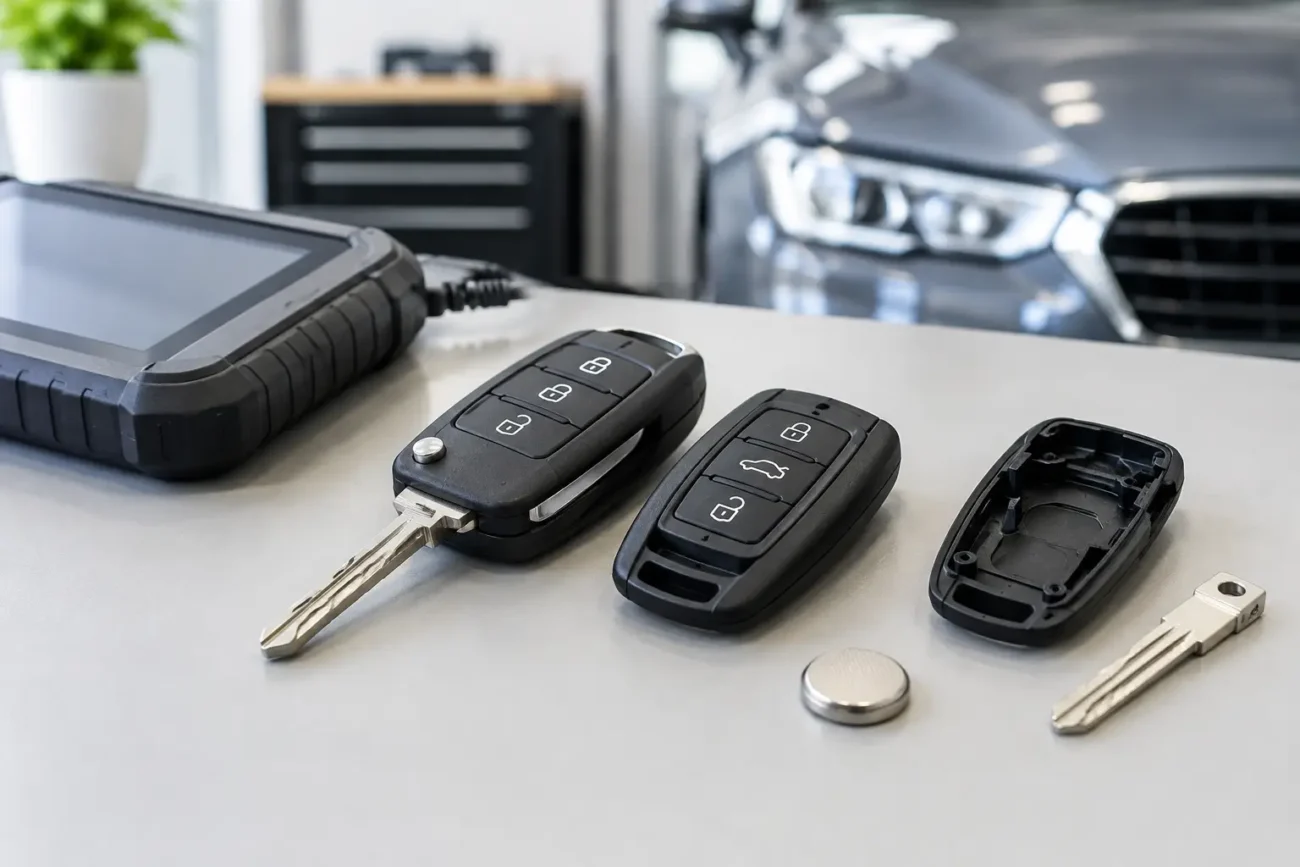
Keeping commonly requested blanks, remote shells, batteries and blades organised by vehicle application makes this process quicker. It also helps prevent the costly mistake of pairing a correct-looking case with the wrong blade or electronics. Global Keys Direct supports this kind of practical workflow with a wide range of vehicle-compatible key products and professional tools for UK trade buyers.
A key cutting machine should earn its place through dependable results, not just an impressive specification. Choose coverage that reflects your real jobs, maintain it properly and verify every key component before work starts. That is how a faster key service stays accurate when the counter is busy.
Add a review
Your email address will not be published. Required fields are marked *