
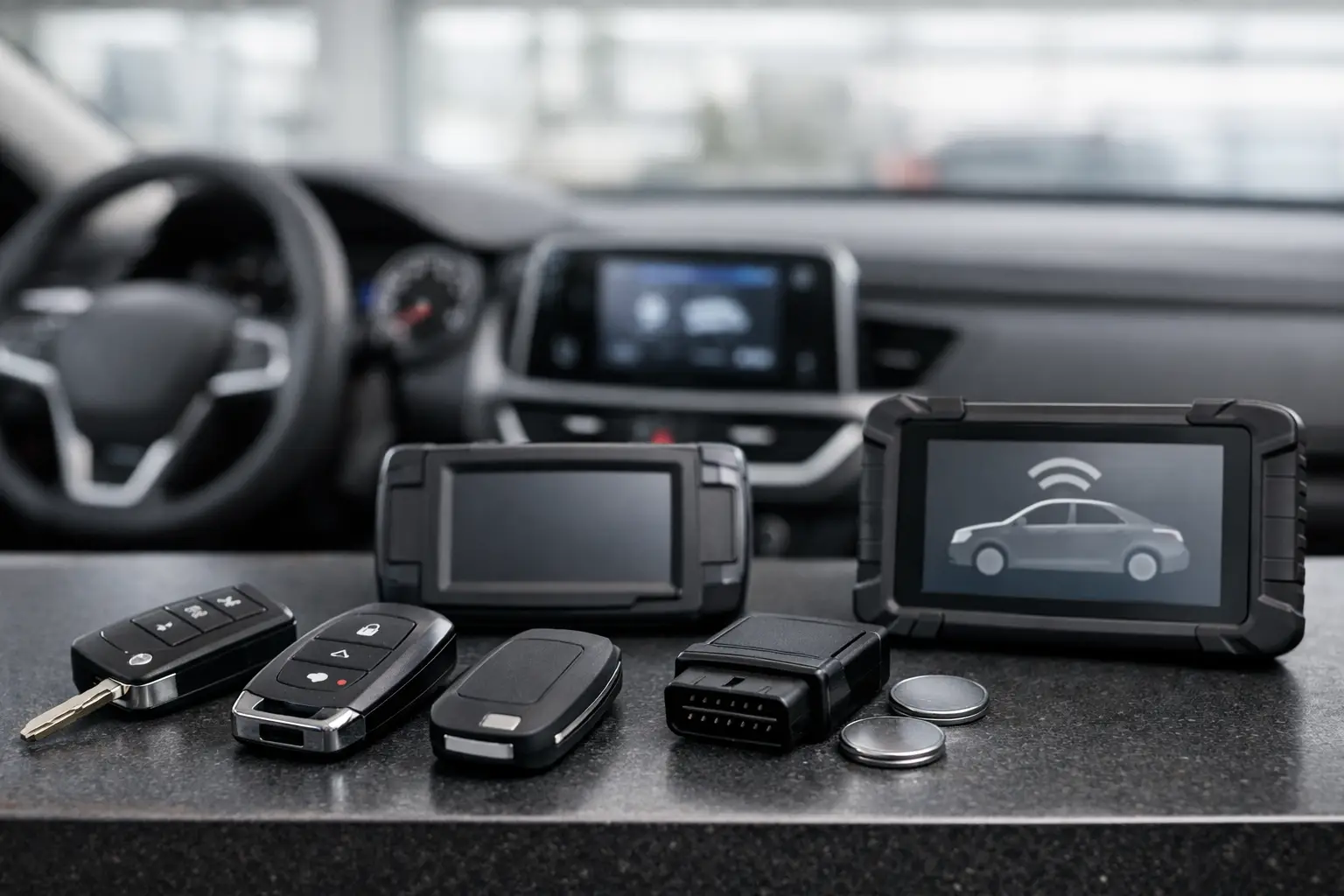
Smart Remote Compatibility Guide for UK Cars
A smart remote that looks identical to your existing key can still be the wrong replacement. The casing may fit, the button layout may match and the blade may even fold correctly, yet the remote may use a different frequency, transponder chip or electronic board. This smart remote compatibility guide explains what to check before ordering, whether you need a spare key for daily driving or stock for a customer repair.
What makes a smart remote compatible?
A smart remote is not one single standard. Depending on the vehicle, it may refer to a proximity key, keyless-entry fob, intelligent key, push-button-start remote or a conventional remote key containing a transponder chip. Each system has its own requirements.
For a replacement to be suitable, its physical design and electronic specification need to match the vehicle. That normally means checking the part number, frequency, button configuration, transponder type, blade profile and stated vehicle fitment. The programming method matters too. Some keys can be programmed with suitable diagnostic equipment, while others require specialist tools, an existing working key or a particular procedure for that make and model.
The registration year alone is rarely enough. Manufacturers can change key systems during a model run, and the same vehicle can have different remote versions depending on trim level, market, keyless-entry equipment and production date.
Start with the original key, not the vehicle badge
The most reliable starting point is the working key already paired to the car. Before searching for a replacement, inspect it carefully in good light. A clear photograph of the front, rear and blade can also help you compare the details against a product listing.
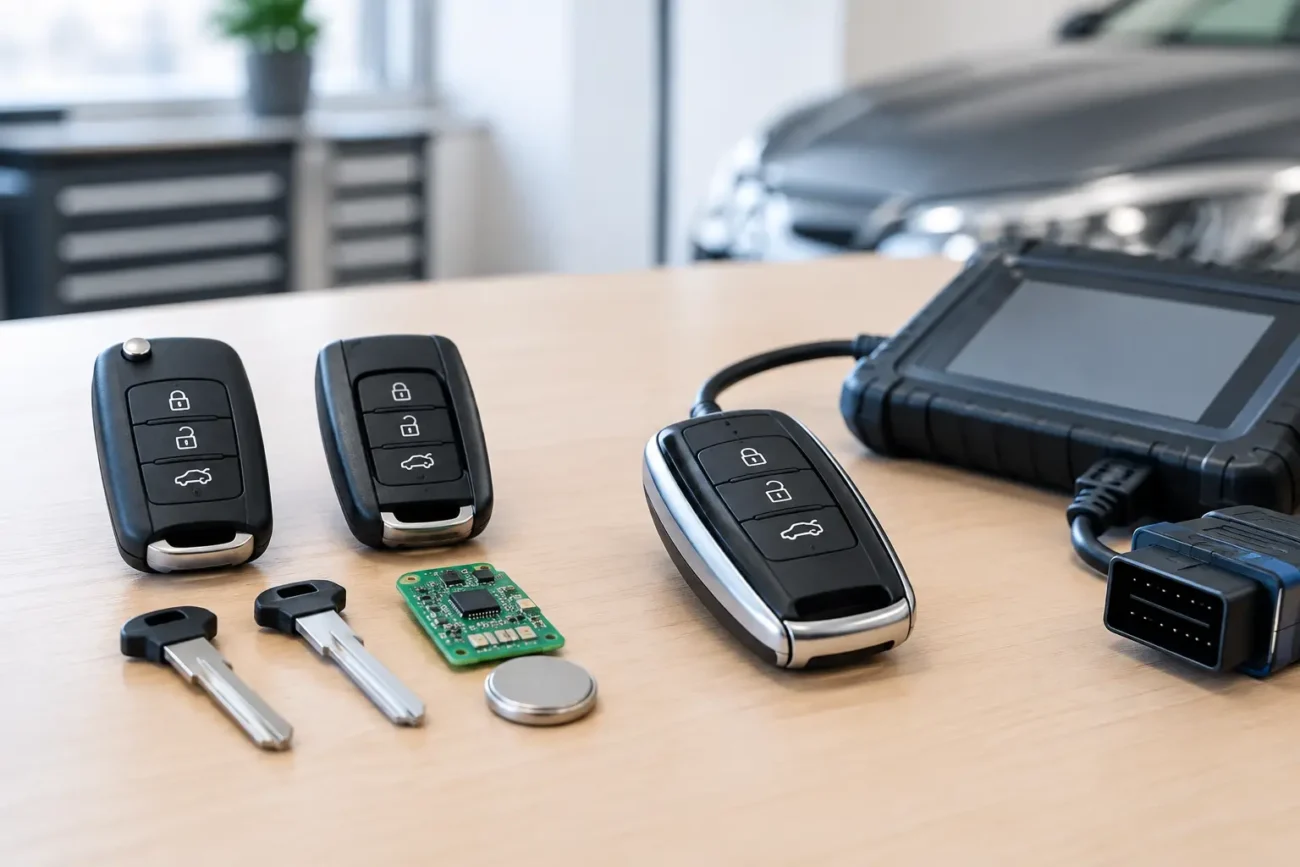
Look first for a printed, moulded or laser-marked part number. It may be on the rear casing, beneath an emergency blade, inside the battery compartment or on the circuit board. This reference is often the strongest compatibility indicator because it identifies the specific remote version rather than just the vehicle family.
If the outer shell is damaged, do not assume the number on the shell confirms the electronics inside. Previous owners may have fitted a replacement case, or a remote may have been repaired with a different board. Where practical, compare the circuit board number as well, particularly on older or commonly repaired keys.
Match the button layout and functions
Button count is a useful filter, but it is not a final compatibility test. A three-button remote may control lock, unlock and boot release, while another three-button version may use a panic function or a different tailgate command. The icon style and button positions can matter just as much as the number of buttons.
Check whether the vehicle has functions such as keyless entry, remote boot opening, power tailgate operation, alarm activation or remote parking features. A replacement remote without the required button or internal support will not add that feature simply because it can be programmed to the car.
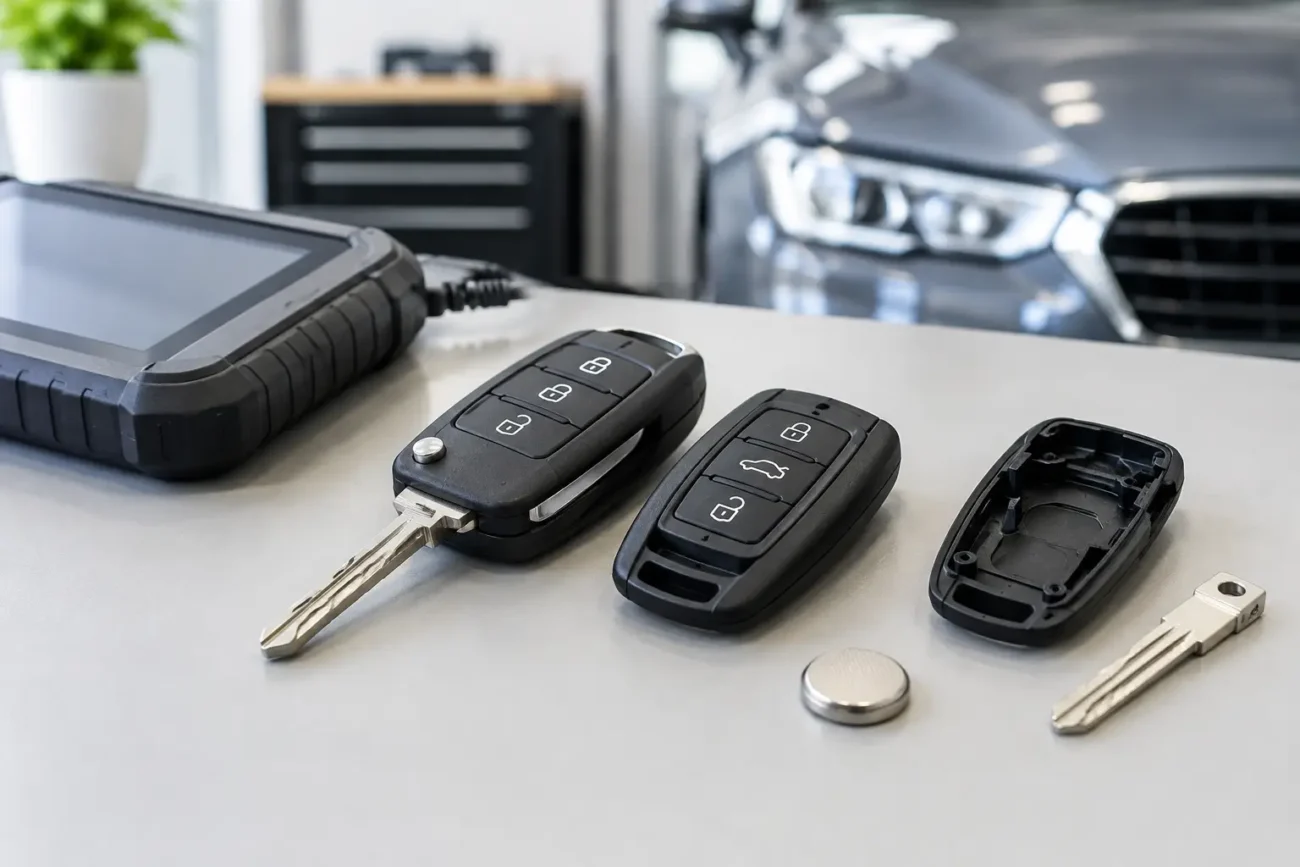
For trade buyers, it is worth confirming whether the job needs a complete smart key, a remote board, a replacement shell or an emergency blade. Supplying only a shell is often the correct, economical repair for worn buttons or a cracked housing, but it will not resolve a failed circuit board, damaged transponder or lost key.
Confirm the frequency
Remote frequency is one of the most commonly missed details. UK and European vehicles frequently use 433 MHz, but 315 MHz, 434 MHz, 868 MHz and other variants also exist. Two remotes can be visually identical while operating on different radio frequencies.
The frequency may be printed on the rear of the key, shown on the circuit board or included in the part number specification. Always compare it with the replacement listing. Do not rely on the assumption that every version of a particular Ford, BMW, Toyota, Audi, Hyundai or Kia model uses the same frequency.
A mismatched frequency may prevent the remote locking functions from programming or operating correctly. It is not a detail that can be corrected by changing a battery or transferring the case.
The transponder chip is separate from the remote signal
The remote buttons and the immobiliser transponder perform different jobs. The remote communicates with the central locking system, while the transponder is recognised by the immobiliser when the vehicle is started. A key can have working buttons but fail to start the vehicle, or start the vehicle while its remote buttons do nothing.
This distinction is especially important when moving electronics into a replacement shell. If the original board and transponder are transferred successfully, the vehicle may continue to operate without reprogramming because the recognised components have been retained. However, this depends on the key design. Some transponders are integrated into the board, while others are separate chips or coils within the housing.
When ordering a complete replacement smart key, check the chip type stated in the product details. Common chip families are not interchangeable just because they fit inside the same style of case. A correct-frequency remote with the wrong transponder specification is not a suitable replacement.
Blade type and emergency key details
Many smart keys contain a removable emergency blade for manual door access. This blade must match the correct keyway and, where applicable, be cut to the vehicle. Pay attention to whether the key uses a standard metal blade, sidewinder-style blade, HU profile, VA profile or another manufacturer-specific format.
Some smart remotes are supplied without a blade, while others include an uncut emergency blade. That can be appropriate when a locksmith or garage will cut the blade separately, but retail customers should confirm what is included before ordering. The blade is a physical fitment issue; it does not determine whether the remote electronics or immobiliser chip are compatible.
Programming requirements should shape the purchase
A compatible remote still needs to be introduced to the vehicle correctly. The required process varies significantly by manufacturer, model year and key system. Some earlier remote functions may have straightforward synchronisation procedures, but many modern smart keys need diagnostic programming equipment and authorised key-learning access.
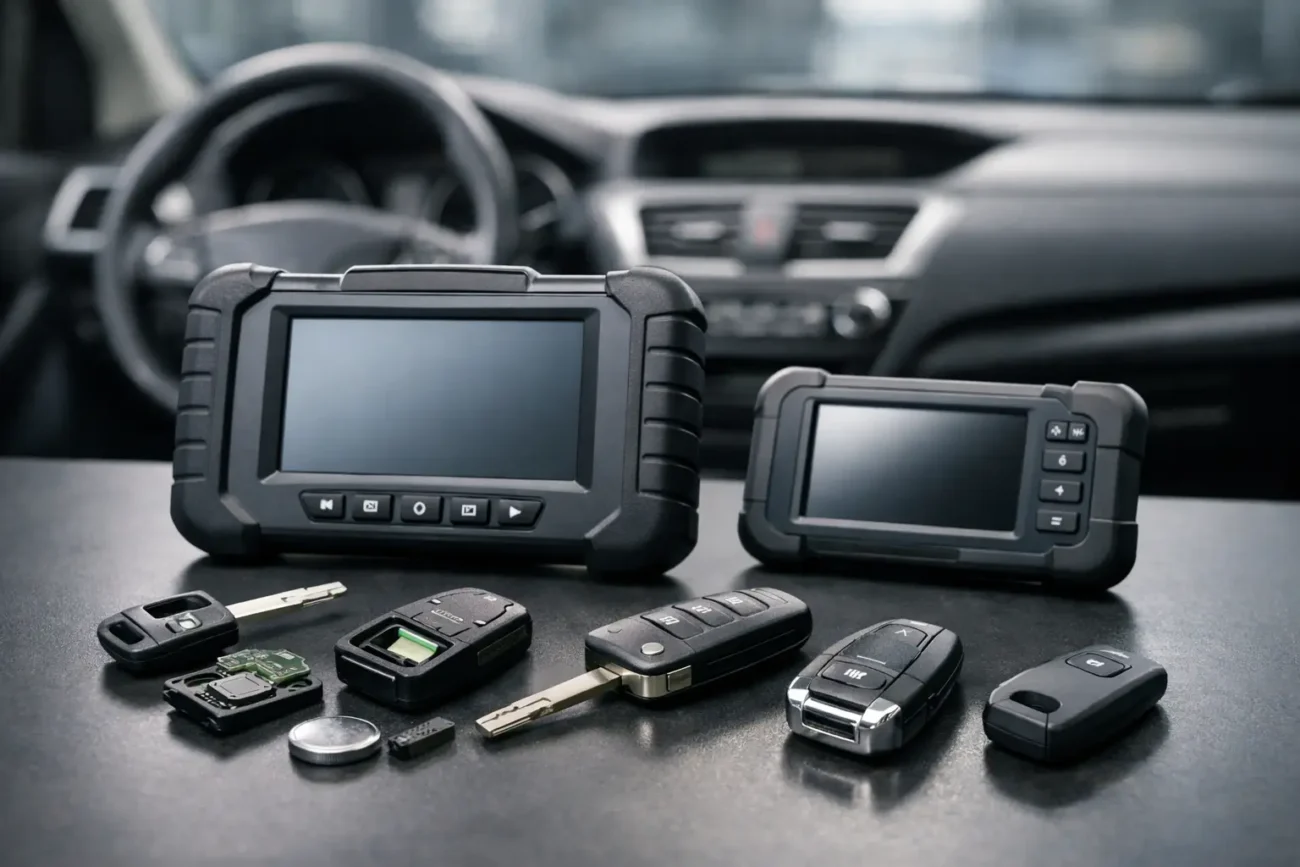
For professionals, the key question is not only whether a remote is technically compatible, but whether it is supported by the available programming tool, software version and vehicle system. Confirm whether the job requires a virgin key, a pre-coded remote, a board transfer, PIN or security data, or an existing working key. Product descriptions should be read alongside the relevant tool coverage rather than treated as a universal programming promise.
Vehicle owners should plan for programming before ordering a complete key. A local automotive locksmith, garage or key programming specialist may be able to confirm the required key specification from the vehicle registration, VIN and original key details. This avoids paying dealership-level prices for a key that has been ordered incorrectly or cannot be added using the intended equipment.
Replacement shell, remote board or complete smart key?
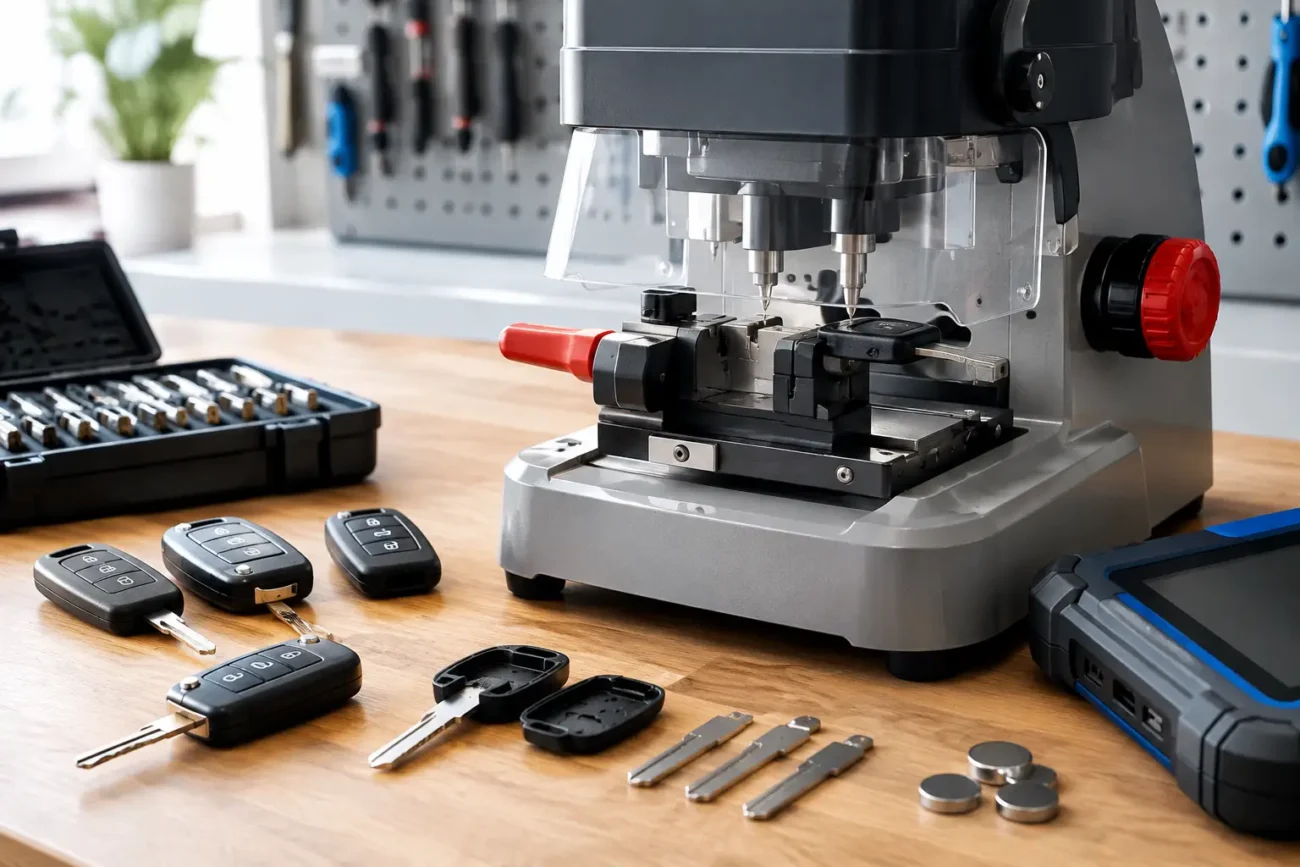
Choosing the right product type can keep a repair cost-effective. A replacement shell is usually suitable when the original electronics work but the casing is cracked, the buttons are worn or the blade mechanism has broken. The existing remote board, transponder and blade are transferred into the new housing.
A replacement remote board may be appropriate where the casing and blade can be retained but the electronic section has failed. In this case, frequency, board reference and chip arrangement need especially close attention.
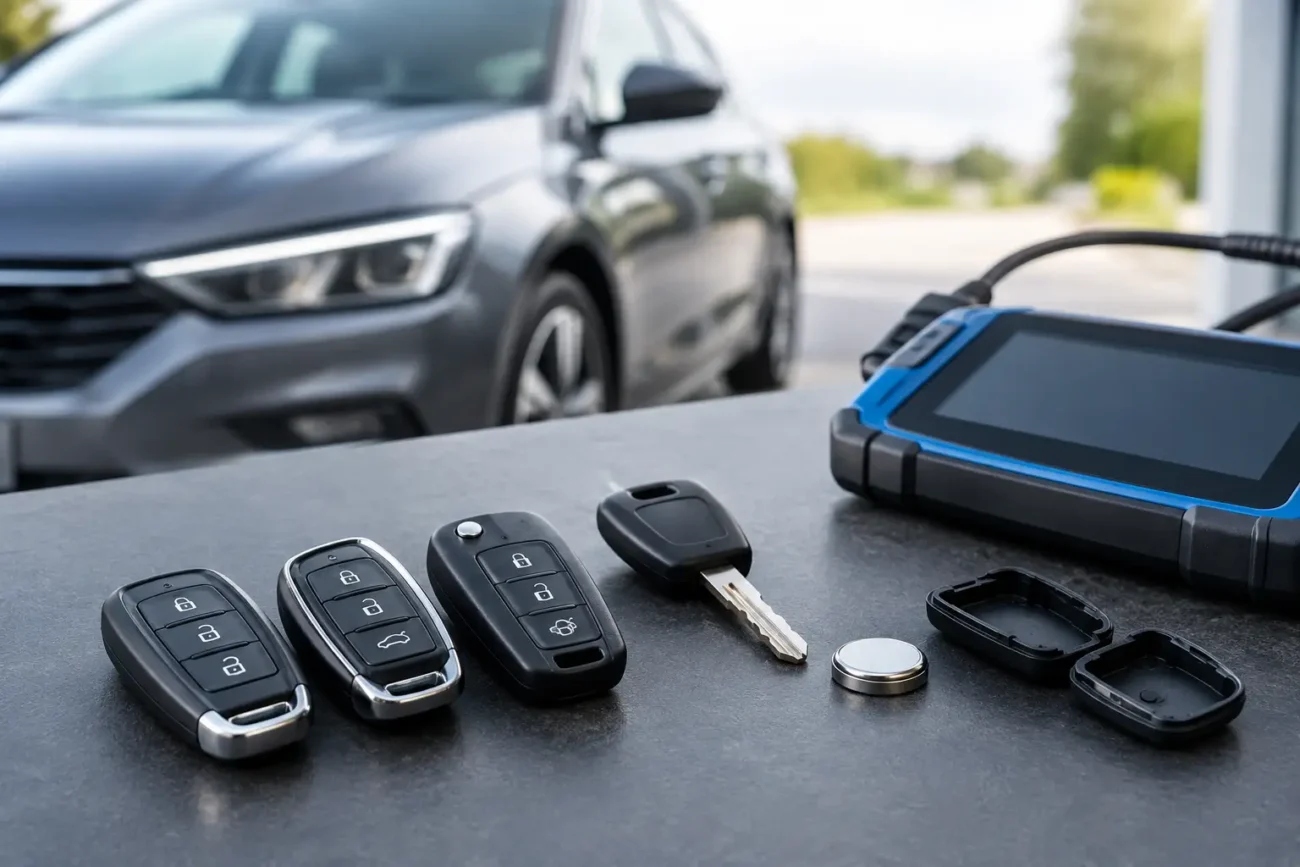
A complete smart key is normally the right choice for an additional key, a lost key situation or a remote with damaged electronics. It usually needs cutting and programming, and it may not include every item required for the finished job. Check the listing for the supplied blade, battery, chip status and whether the key is new, refurbished, aftermarket or intended for board transfer.
A practical smart remote compatibility checklist
Before placing an order, compare the product details against the original key and vehicle information. Check the following points together rather than relying on any one of them:
- Part number or circuit-board reference
- Remote frequency
- Button number, icons and available functions
- Transponder chip type and immobiliser specification
- Emergency blade profile and whether a blade is included
- Vehicle make, model, production year and stated fitment
- Keyless-entry or push-button-start system type
- Programming requirements and available equipment
Where a detail is missing or unclear, pause before purchasing. A part number photograph, the original key image and the vehicle’s exact specification can usually narrow the choice far more effectively than a broad search for a model name.
Common compatibility mistakes to avoid
The most expensive mistake is buying by appearance alone. Similar cases are widely used across different models and even across different years of the same model, but the internal electronics may not match.
Another issue is confusing a shell replacement with a complete functioning key. A shell cannot create a spare key on its own, and a complete unprogrammed remote will not immediately start most modern vehicles. Equally, replacing the battery may restore weak remote operation, but it will not repair a damaged board, missing transponder or unsuitable frequency.
Be cautious with descriptions that only state broad model coverage. A listing that specifies part numbers, chip type, frequency, blade type and model years gives you a stronger basis for comparison. Compatibility is about the combination of those details, not one headline vehicle application.
Order with the details that matter
A replacement smart remote can be a practical alternative to a dealer-supplied key when it is selected accurately and programmed correctly. Global Keys Direct stocks model-specific key products for both vehicle owners and trade professionals, with specifications designed to make comparison easier.
Take a few extra minutes to verify the original key’s part number, frequency, buttons, chip and blade before ordering. That small check is often the difference between a quick, cost-effective replacement and a remote that is close in appearance but unsuitable for the vehicle.
Add a review
Your email address will not be published. Required fields are marked *