
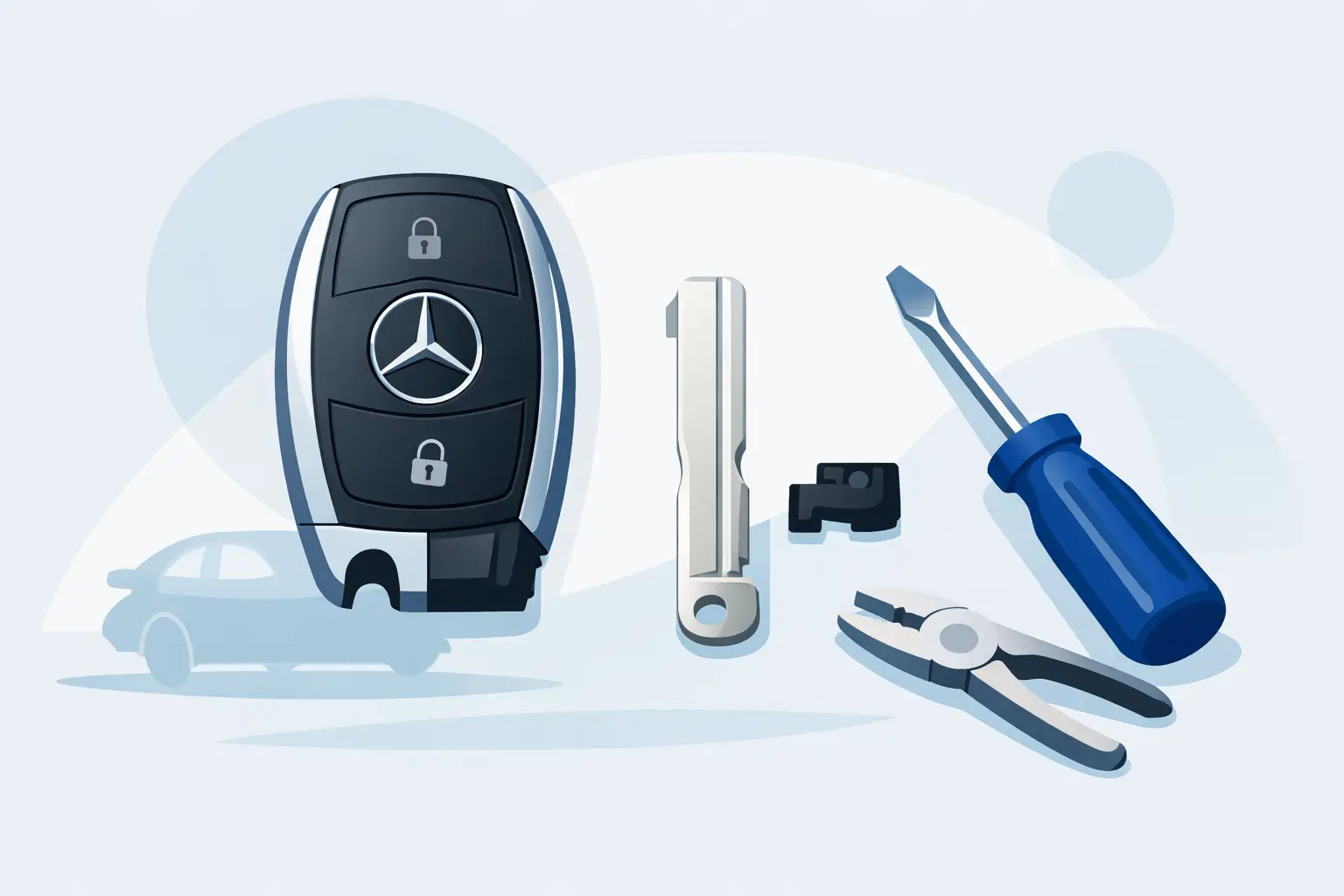
Mercedes Key Blade Replacement Guide
A worn or snapped key blade usually becomes a problem at the worst possible moment – outside the house, in a car park, or mid-job when a customer needs the vehicle back quickly. Mercedes key blade replacement sounds simple, but getting it right depends on more than just finding a blade that looks similar. Profile, housing style, and whether the blade is supplied cut or uncut all matter.
For private owners, the main concern is usually restoring a damaged or missing emergency blade without paying dealer prices. For locksmiths and garages, the priority is speed, fitment accuracy, and avoiding wasted time on the wrong profile. In both cases, the right part starts with understanding what the blade actually does in your Mercedes key.
What a Mercedes key blade actually does
On many Mercedes keys, the blade is not the main day-to-day method of starting the vehicle. In modern remote and smart key systems, it often serves as the emergency mechanical key. That means it can be used to unlock the door manually if the remote battery is flat, the vehicle battery has failed, or the remote functions are not responding.
That role makes the blade easy to overlook until it is needed. A damaged blade, a loose fit in the shell, or the wrong cut profile can turn a small replacement job into a full lockout problem. Even if the remote electronics still work perfectly, the mechanical side of the key should never be treated as an afterthought.
Mercedes key designs also vary by generation. Older style remote keys, flip arrangements, and later smart key formats do not all use the same blade type. Two keys may appear very similar externally while using different blade profiles or mounting points. That is why visual matching alone is risky.
When you need a Mercedes key blade replacement
The most obvious case is breakage. Key blades can bend, crack, or snap after years of use, especially if the key has been used with excessive force in a worn lock. Another common issue is wear. A blade that has rounded edges or visible smoothing may still enter the lock but fail to turn consistently.
Sometimes the problem is not damage at all. Many buyers simply want a spare shell and blade so they can rebuild a tired key case. In trade settings, a technician may need a replacement blade to complete a shell repair or prepare a spare key for cutting. There are also cases where the emergency blade has been lost from a smart key housing and needs replacing separately.
If the electronics are intact and the shell is serviceable, replacing just the blade is often the most cost-effective route. If the shell is cracked, buttons are worn through, or the battery compartment is failing, a complete shell replacement with a new compatible blade often makes more sense.
Mercedes key blade replacement is all about compatibility
This is where many replacement attempts go wrong. Buyers often search by model name only, but that is not always enough. A Mercedes C-Class, E-Class or Sprinter may have used different key formats depending on model year, market, and original key type.
The safest approach is to match the replacement blade against the existing key housing and blade shape. Pay attention to the mounting style where the blade fits into the shell, the length of the blade, and the groove profile. If the product listing includes compatibility details, compare them closely with your original key rather than assuming all Mercedes remotes are interchangeable.
For trade buyers, this is standard practice. For retail customers, it is the difference between a quick repair and ordering twice. A low-cost blade is only good value if it actually fits.
Check the housing style first
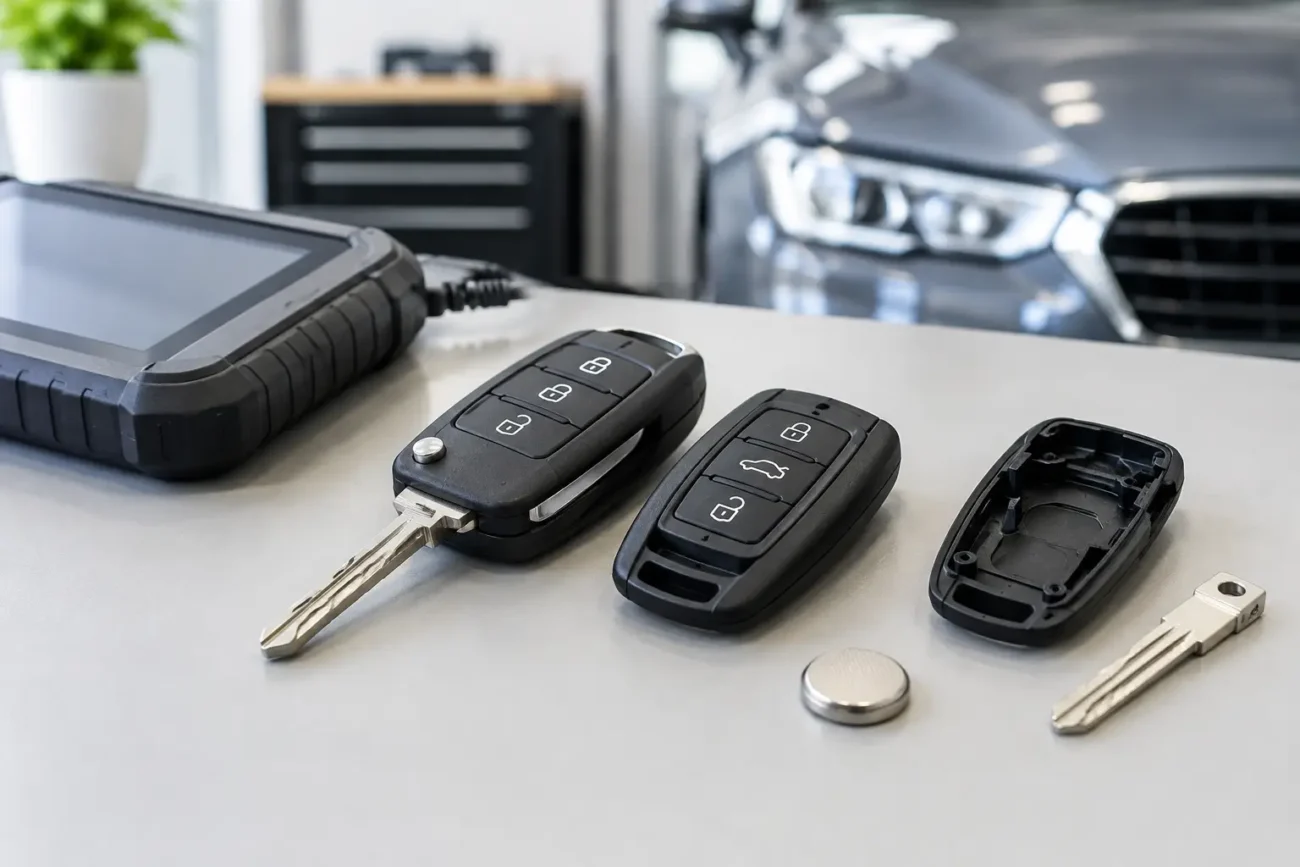
Before ordering, inspect the key shell itself. Is it an older chrome style key, a later smart key, or a flip remote arrangement? The blade may slide into the housing, pin into place, or form part of a replacement shell assembly. Even within the Mercedes range, retention methods differ.
If the original blade is missing, compare the shell shape and any visible blade slot details with the product images and specifications. If you still have the old blade, match it directly wherever possible.
Cut blade or uncut blade
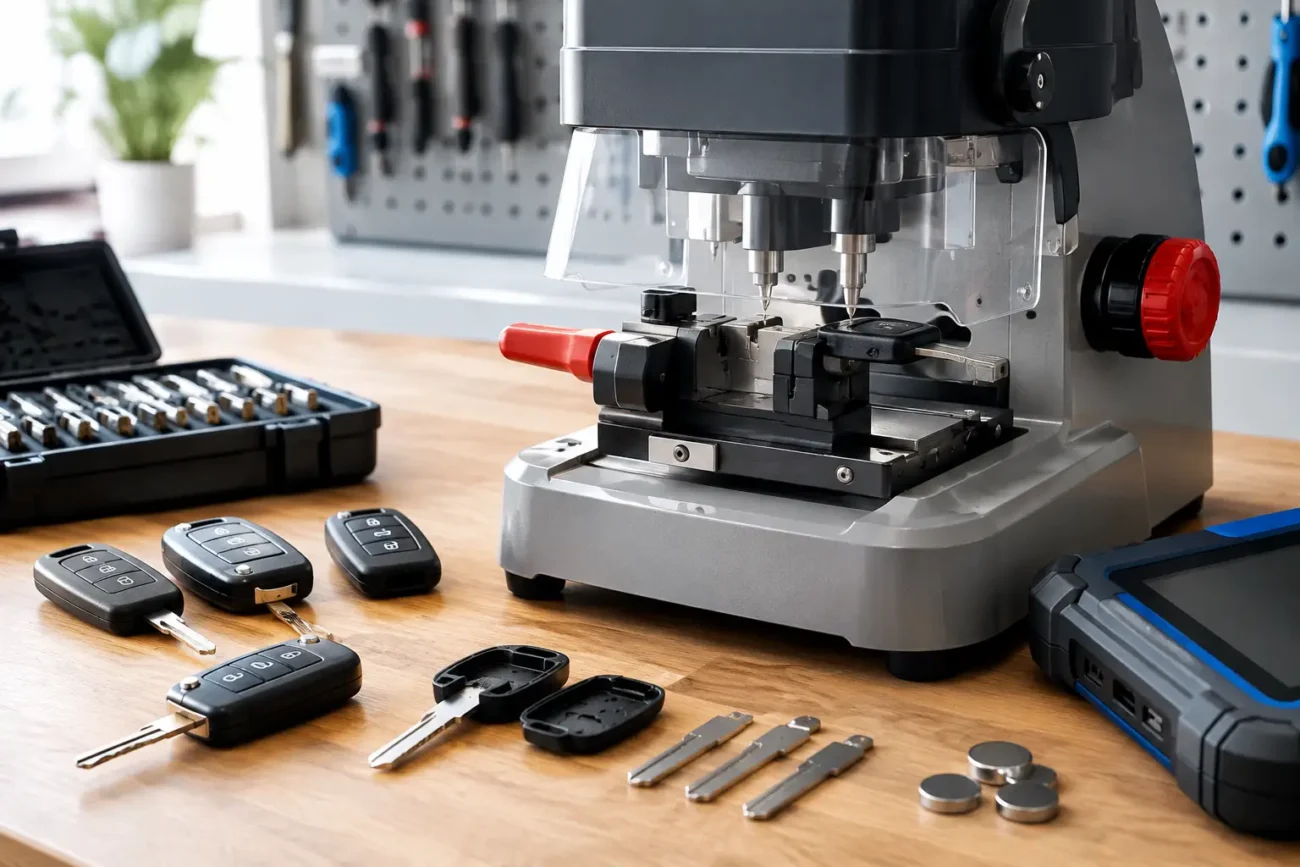
A Mercedes key blade replacement may be supplied already cut in rare cases where it is part of a specific repair service, but most aftermarket blades are supplied uncut. That means the blade will need to be cut to match your original key before it can operate the lock mechanically.
For the average vehicle owner, this usually means visiting a competent auto locksmith or key cutting specialist. For trade customers, it is a straightforward workshop step provided the correct blank has been sourced. The important point is simple: an uncut blade can fit the shell perfectly and still be useless in the lock until cut correctly.
Can you replace the blade without replacing the whole key?
Often, yes. If the remote board, transponder arrangement, and shell body are all in good condition, replacing only the blade is a sensible fix. It keeps costs down and avoids unnecessary replacement of working components.
That said, there are trade-offs. If the shell hinge, blade holder, or retaining mechanism is already worn, fitting a new blade into a tired housing may only solve half the problem. In those cases, a full shell with blade is usually the better long-term repair.
For owners dealing with a heavily worn key, the most practical route is often a shell replacement that allows the original electronics to be transferred over. That restores both appearance and function while keeping the immobiliser-related components unchanged.
What about programming?
A key blade replacement on its own does not normally involve programming. The blade is the mechanical part of the key, not the remote or transponder electronics. If you are only replacing the emergency blade or rebuilding the shell with your original internals, no coding is usually required.
Programming becomes relevant when the job involves a complete new remote, smart key, or transponder-equipped replacement rather than just the blade. This distinction matters because many customers assume any work on a Mercedes key will require specialist diagnostics. In blade-only cases, the real issue is physical compatibility and accurate cutting.
For locksmiths and garages, this can be a useful upsell distinction when quoting. A blade and shell repair is a very different job from supplying and programming a complete replacement key.
Common mistakes to avoid
The most common mistake is ordering by appearance alone. Mercedes keys have several similar-looking formats, and small differences in the blade or shell fitting point can make a part unusable. Another issue is assuming that because a remote works, the blade does not matter. It does – especially when the remote battery fails.
Poor cutting is another avoidable problem. Even the correct blade blank will not work properly if cut inaccurately. A rough copy from a worn original can also produce unreliable results. Where possible, use a clean original sample or verified key data.
Finally, avoid replacing only the visible damaged part when the shell itself is failing. If the blade holder is loose, the spring mechanism is weak, or the shell plastics are cracked, a piecemeal repair may not last.
Choosing the right replacement for long-term value
Price matters, especially when a dealer quote feels excessive, but value comes from fit, finish, and reliability. A quality aftermarket Mercedes blade should fit the housing correctly, accept an accurate cut, and stand up to repeated use without premature wear.
For trade buyers, dependable stock is just as important as unit cost. Delays caused by poor compatibility information or inconsistent blade quality can cost more than the part itself. For retail buyers, clear compatibility details make the process far less frustrating.
This is where a specialist automotive key supplier has a real advantage over a general marketplace seller. Product-specific information, model coverage, and a stock range built around actual key formats make it easier to choose correctly first time. That is particularly useful with Mercedes applications, where key styles can vary more than many buyers expect.
If you are sourcing parts regularly, it also pays to keep common Mercedes blade types on hand. For occasional one-off buyers, taking a few extra minutes to compare the existing key properly is usually enough to avoid the wrong order.
A Mercedes key does not need to be fully replaced every time something goes wrong. In many cases, the blade is the only failed component, and replacing it is a quick, cost-effective repair when the match is correct. Get the profile right, check the shell style carefully, and treat cutting quality as part of the job rather than an afterthought. If you do that, a small part can solve a very inconvenient problem without turning it into a bigger one.
Pingback: Mercedes Remote Fob Buttons and What They Do - GLOBAL KEYS DIRECT LTD