
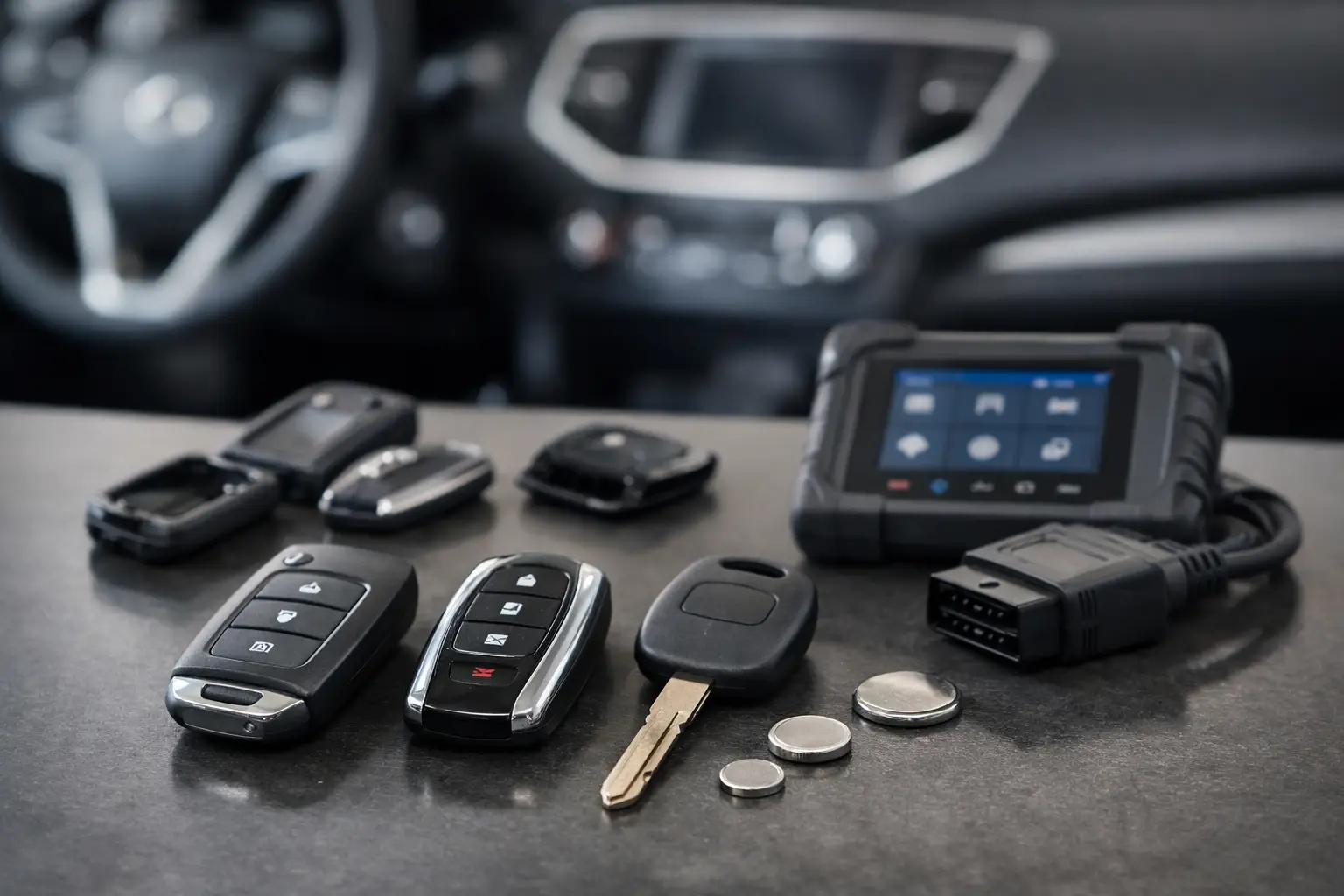
Choosing Replacement Car Keys That Actually Fit
A cracked remote case, a missing spare or a key that has stopped responding can turn an ordinary journey into an urgent problem. Replacement car keys are not a one-size-fits-all purchase: two keys that look almost identical can use different frequencies, transponders, blade profiles or circuit boards. Getting those details right before ordering is what keeps a cost-effective replacement from becoming an unusable part.
For vehicle owners, the aim is usually straightforward – restore reliable access and keep a working spare. For locksmiths, garages and automotive technicians, accurate identification protects workshop time and helps deliver a professional result for the customer. In both cases, the right replacement depends on the vehicle and on which part of the original key has failed.
Start by identifying the job
The word “key” can describe several different products. A damaged outer housing may only need a replacement shell. A vehicle with an intact, functioning remote board may not need a complete remote at all. Conversely, a lost key or a failed electronic board may require a new remote, transponder key or smart key that can be programmed to the vehicle.
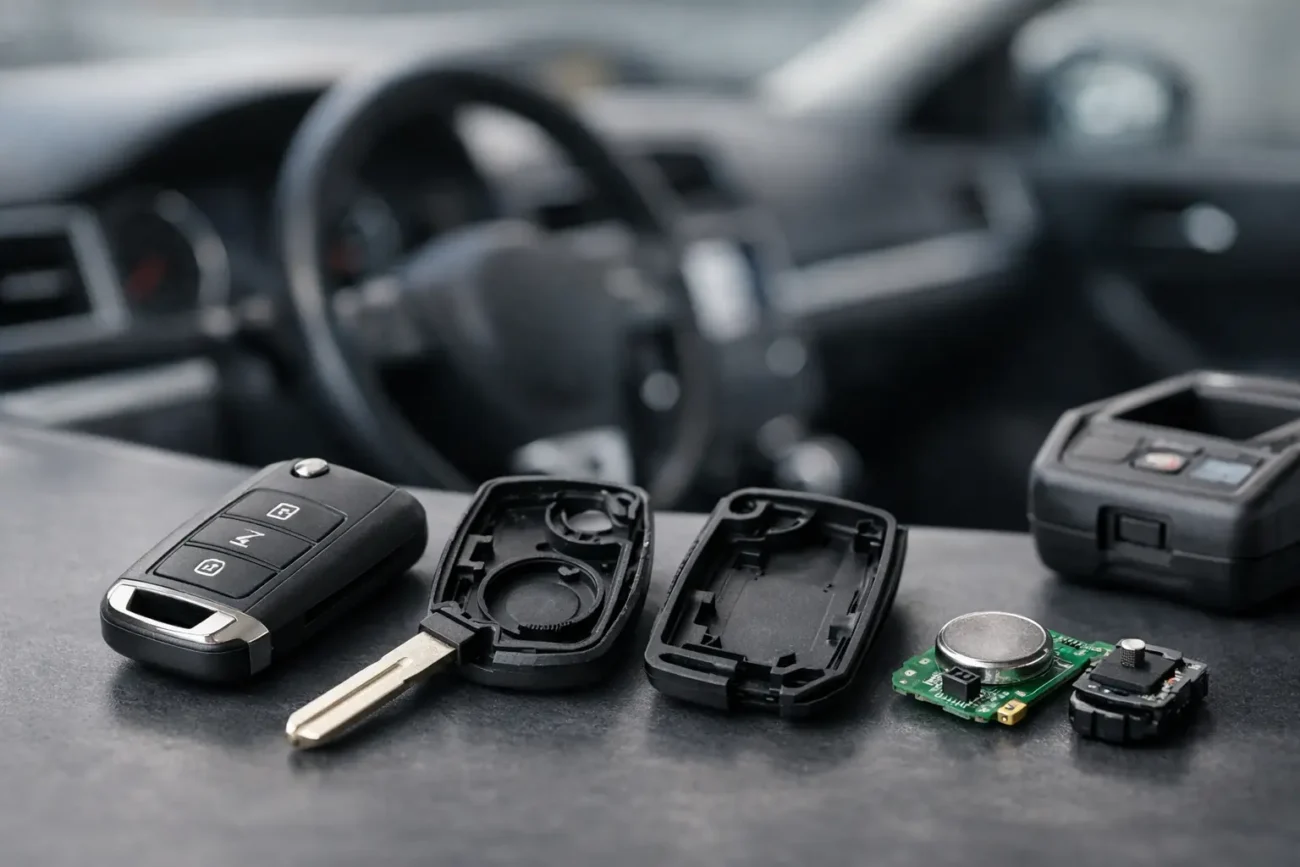
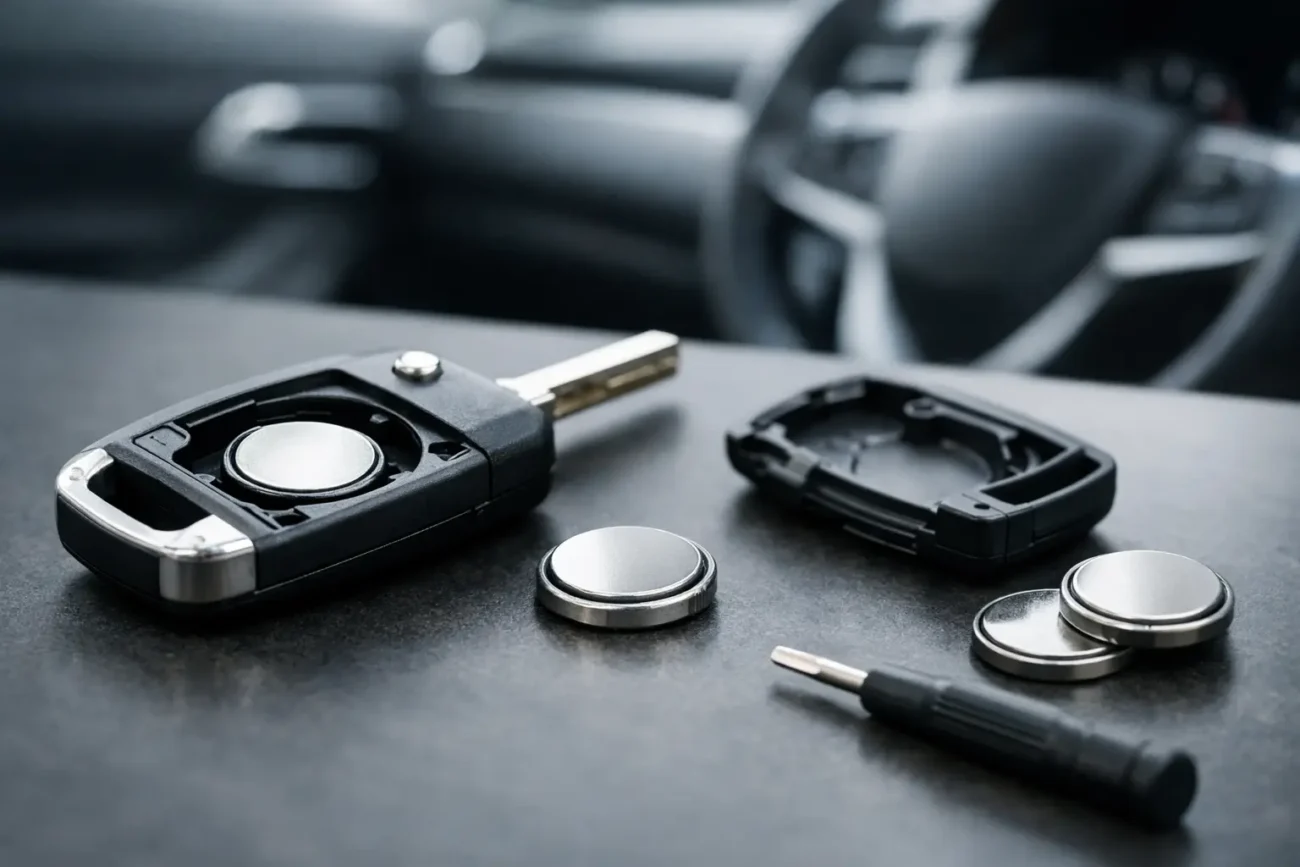
A replacement shell is often the most economical answer when the buttons are worn, the hinge has broken or the case has split. The original electronics, chip and battery are transferred into the new shell, and the blade may need to be moved across or cut to match. This is a repair to the key’s physical housing, not a replacement of its electronics.
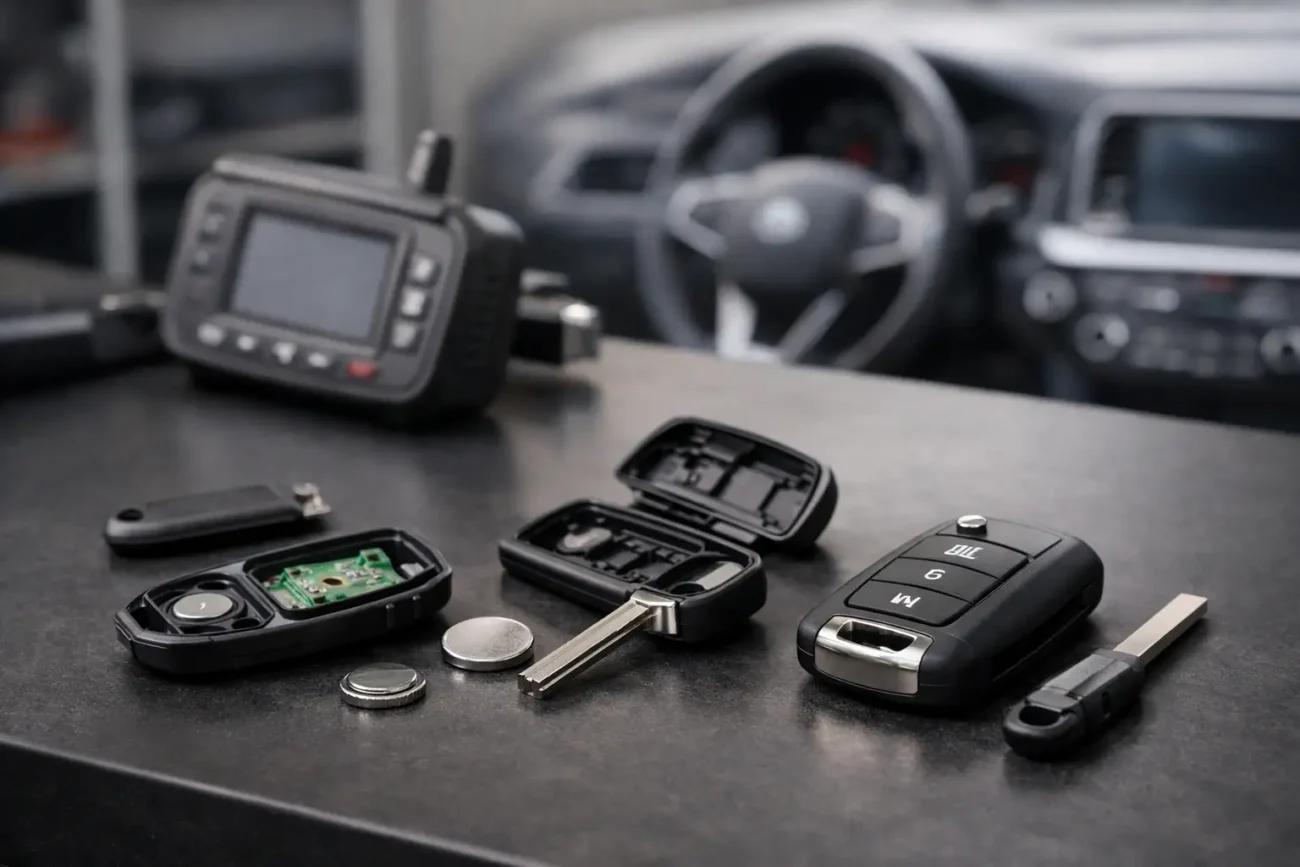
A remote fob or flip key is different. It may include a remote circuit board, battery contacts, button switches and a transponder chip. Depending on the product and vehicle, it may need blade cutting, remote synchronisation, immobiliser programming or all three. Smart keys and proximity fobs add further variables, such as keyless entry functions and a specific frequency.
Before selecting a product, establish whether the existing key still starts the vehicle, whether its remote buttons work, and whether the issue is cosmetic, mechanical or electronic. That simple diagnosis narrows the choice quickly.
What to check before buying replacement car keys
The vehicle registration and make are useful starting points, but they are not always enough. Manufacturers can use different key systems across model years, trim levels and production periods. A Ford, BMW, Toyota, Audi, Kia or Vauxhall key should be matched by its actual specification, not just by the badge on the bonnet.
Where possible, compare the original key against the product information. The most useful checks are the part number, button layout, blade type, frequency and transponder or chip type. On a remote, the part number is often found on the back casing, inside the fob or on the circuit board. A clear look at the original board can reveal details that a vehicle description alone cannot.
The blade matters just as much as the electronics. A flip-key blade may be HU66, HU83, VA2, TOY43 or another profile, and a visually similar blade can still be wrong. If the original blade is being reused in a shell, make sure the hinge design, retaining pin position and blade fitting match. If a new blade needs cutting, it must be the correct blank for the vehicle.
Frequency is especially relevant for remote and smart keys. Common options include 433 MHz and 434 MHz, but the correct frequency varies by manufacturer and application. Button count is also a useful indicator, although it should never be treated as the only compatibility check. A three-button fob with lock, unlock and boot release may look familiar while using a different board or radio frequency.
For trade customers, checking an FCC ID, IC number, PCB marking or manufacturer reference can prevent a return and avoid interrupting a booked job. For retail customers, taking a photo of both sides of the original key and its internal board is often the easiest way to compare specifications carefully.
Shell, remote, transponder or smart key?
Choosing the correct product category is where many replacement jobs are won or lost.
Replacement key shells
A shell suits a key with working electronics but damaged plastic. It can refresh worn buttons, replace a broken flip mechanism and give the key a more secure outer case. It is commonly the right choice when the remote still locks and unlocks the car, and the vehicle starts normally.
The trade-off is that transferring components requires care. The transponder chip is essential on many vehicles, and it can be a separate glass or carbon capsule rather than part of the circuit board. If it is not moved into the new shell, the key may turn in the ignition but fail to start the vehicle. Some shells are supplied with an uncut blade, while others are designed to reuse the original blade.
Remote fobs and flip keys
A complete remote is appropriate when the original circuit board is damaged, buttons no longer operate despite a new battery, or an additional functioning key is needed. These products may be aftermarket replacements, OEM-board solutions or model-specific remote units, depending on the application.
A new remote usually needs more than a battery fitting. The blade may require cutting, and the vehicle may require programming for the immobiliser and remote functions. The exact process depends on the vehicle system, so buyers should confirm the programming requirement before purchasing rather than assume a new fob will work straight from the packet.
Transponder keys
A transponder key is often used on vehicles with an immobiliser but without remote locking in the key itself, or as a practical spare key option. The chip communicates with the vehicle’s immobiliser system when the ignition is used. Even where the blade is correctly cut, an unprogrammed transponder chip will not normally start the vehicle.
For workshops and locksmiths, chip type and key generation are central to selecting the right blank. For vehicle owners, the safest route is to check the original key’s markings and seek programming support from an appropriately equipped automotive professional where required.
Smart and proximity keys
Smart keys are used on many push-button start vehicles and keyless entry systems. They can include passive entry, proximity start, remote boot release and emergency key blades. These are highly vehicle-specific products, so matching the part number, frequency, button configuration and internal specification is essential.
A smart key that resembles the original is not automatically suitable. Some systems differ between markets, production years and keyless configurations. Careful fitment checks are worth the extra minute, particularly where programming time and specialist equipment are involved.
Programming is part of the replacement decision
Programming is often the hidden part of a key replacement. A shell transfer normally avoids programming because it retains the original electronic board and transponder. A complete key, remote or smart fob may require programming to authorise starting, remote locking or both.
There is no universal rule. Some vehicles allow limited remote synchronisation procedures, while others require diagnostic equipment, security access or professional key programming. Modern systems can be particularly specific about supported key types and software procedures. Avoid buying solely on the assumption that a local method found for a similar model will apply to your exact vehicle.
For professional buyers, reliable coverage information, compatible programming tools and correct key stock are the foundation of an efficient job. Tools from established automotive key equipment ranges can support a broad set of applications, but the required function should always be checked against the make, model, year and system fitted. A well-stocked range of chips, blades, remotes and batteries also makes it easier to resolve the full job without delays.
For retail customers, a sensible approach is to confirm whether a local locksmith, garage or automotive key specialist can programme the chosen key before ordering it. This is especially helpful following total key loss, where the vehicle’s security system and available key data may affect the process.
Common ordering mistakes that cost time
Most key compatibility problems come from a handful of avoidable assumptions. The first is matching by appearance alone. Fob cases can share the same shape across different electronic versions, and a similar logo or button layout does not prove the board is correct.
The second is overlooking the blade. A compatible remote with the wrong blade blank will still need another part before it can be used. The third is forgetting the transponder chip when fitting a replacement shell. It is small, easy to miss and critical to starting many cars.
Battery issues create another source of confusion. A weak battery can cause reduced remote range, intermittent button response or no response at all. Before replacing an entire key, inspect the battery type, battery contacts and condition of the button switches. A correctly specified battery may solve the fault at minimal cost, while corrosion or a damaged board points towards a different repair.
Finally, do not confuse a remote problem with an immobiliser problem. If the vehicle starts but the buttons do not work, the issue may be limited to the remote side. If the remote works but the vehicle will not start, the transponder, chip position or programming may need attention. Separating those functions leads to a better buying decision.
A practical route to a reliable spare
A spare key is most useful before the original is lost, damaged or locked inside the vehicle. Creating one while a working key is available can make identification and programming more straightforward, and it reduces the pressure of an unexpected failure.
Global Keys Direct offers model-specific shells, remotes, blades, smart keys, batteries and professional key equipment for a wide range of vehicle applications. Whether ordering for a single vehicle or regular workshop work, use the available compatibility details to compare the original key properly before placing an order.
The best replacement is not necessarily the most expensive complete fob. It is the part that addresses the actual fault, matches the vehicle’s specification and leaves you with a key you can rely on when you need it most.
Add a review
Your email address will not be published. Required fields are marked *