

Audi Smart Key Replacement Explained
Losing access to an Audi rarely happens at a convenient time. Whether the key has stopped responding, the casing is broken, or you need a spare before it becomes urgent, Audi smart key replacement is usually less straightforward than swapping a battery and carrying on. Between model-specific frequencies, transponder data, emergency blades and programming requirements, getting the right part first time matters.
What makes Audi smart keys different?
Audi smart keys combine several functions in one unit. Depending on the model and year, the key may handle remote locking, keyless entry, push-button start, immobiliser authentication and the manual emergency blade. That means a replacement has to match more than just the shape of the original fob.
For many Audi vehicles, compatibility comes down to a mix of button layout, frequency, chip type, blade profile and board design. Two keys can look almost identical and still not work interchangeably. This is where many owners get caught out, especially when buying on appearance alone.
Trade buyers already know the issue – the wrong PCB, incorrect frequency or unsuitable transponder can turn a simple job into a return, a delay, or an unhappy customer. Retail buyers usually discover it when a bargain key arrives and cannot be programmed to the car.
When you need an Audi smart key replacement
Not every fault calls for a complete new key. Sometimes a replacement shell is enough. In other cases, the electronic board is fine but the blade has worn, the buttons have failed, or the battery terminals are damaged. The right solution depends on what has actually gone wrong.
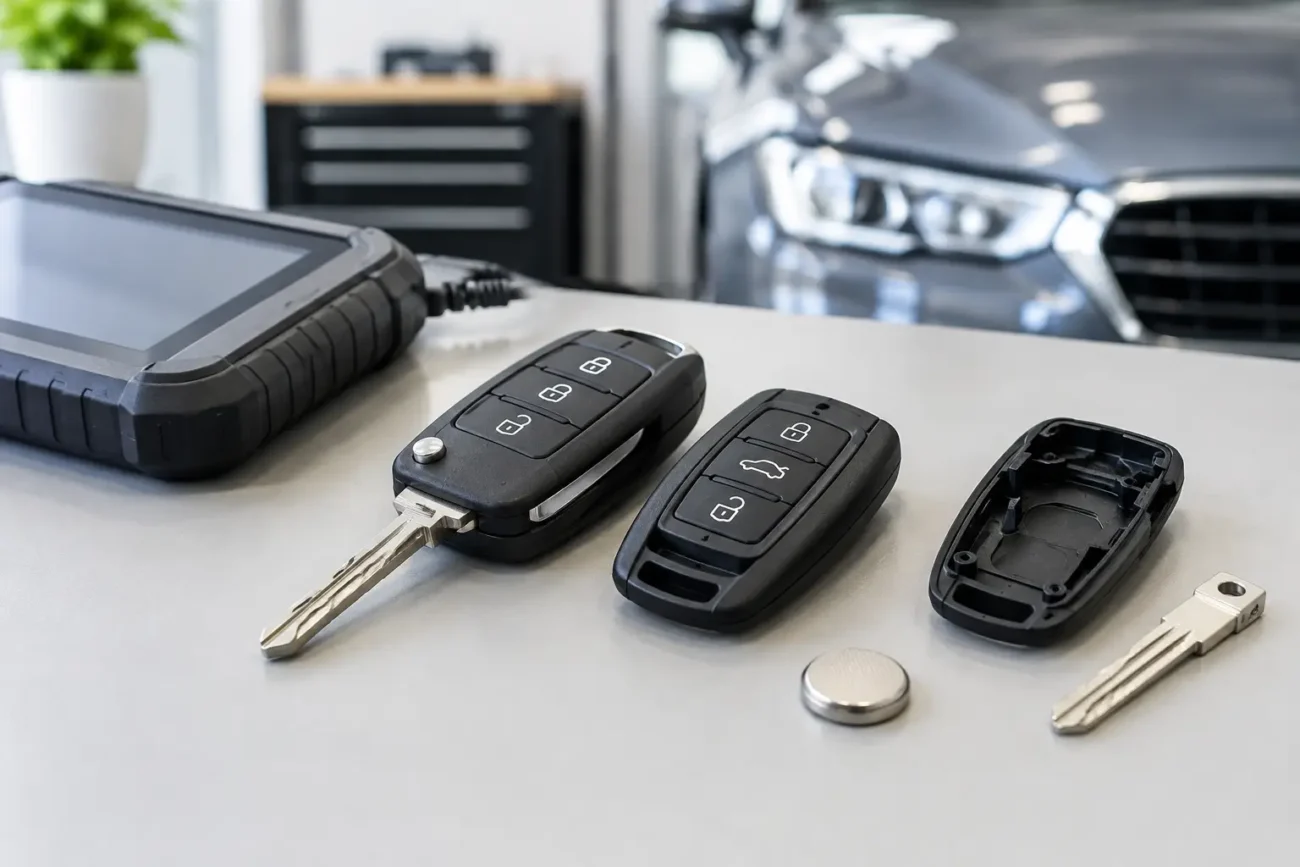
If the casing is cracked, the buttons are torn, or the flip mechanism feels loose, a shell replacement can often restore the key at a much lower cost than buying a full smart key. If the remote functions have stopped but the car still starts, the issue may sit with the buttons, battery contacts or board condition rather than the immobiliser side.
A full Audi smart key replacement becomes the more likely route when the key is lost, water damaged, electronically dead, or beyond repair. It is also the right option if you need an additional working key and want to avoid the risk of relying on a single original.
The main replacement options
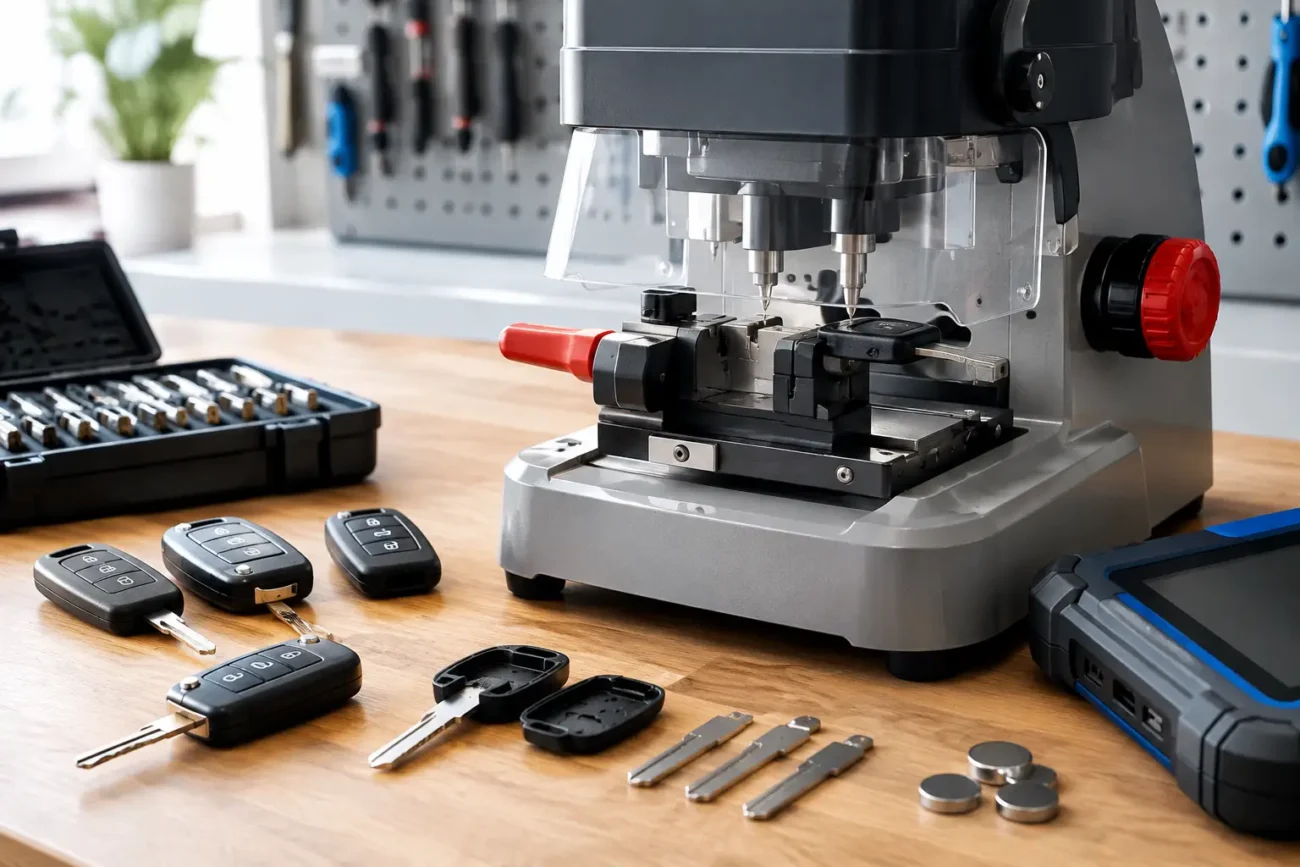
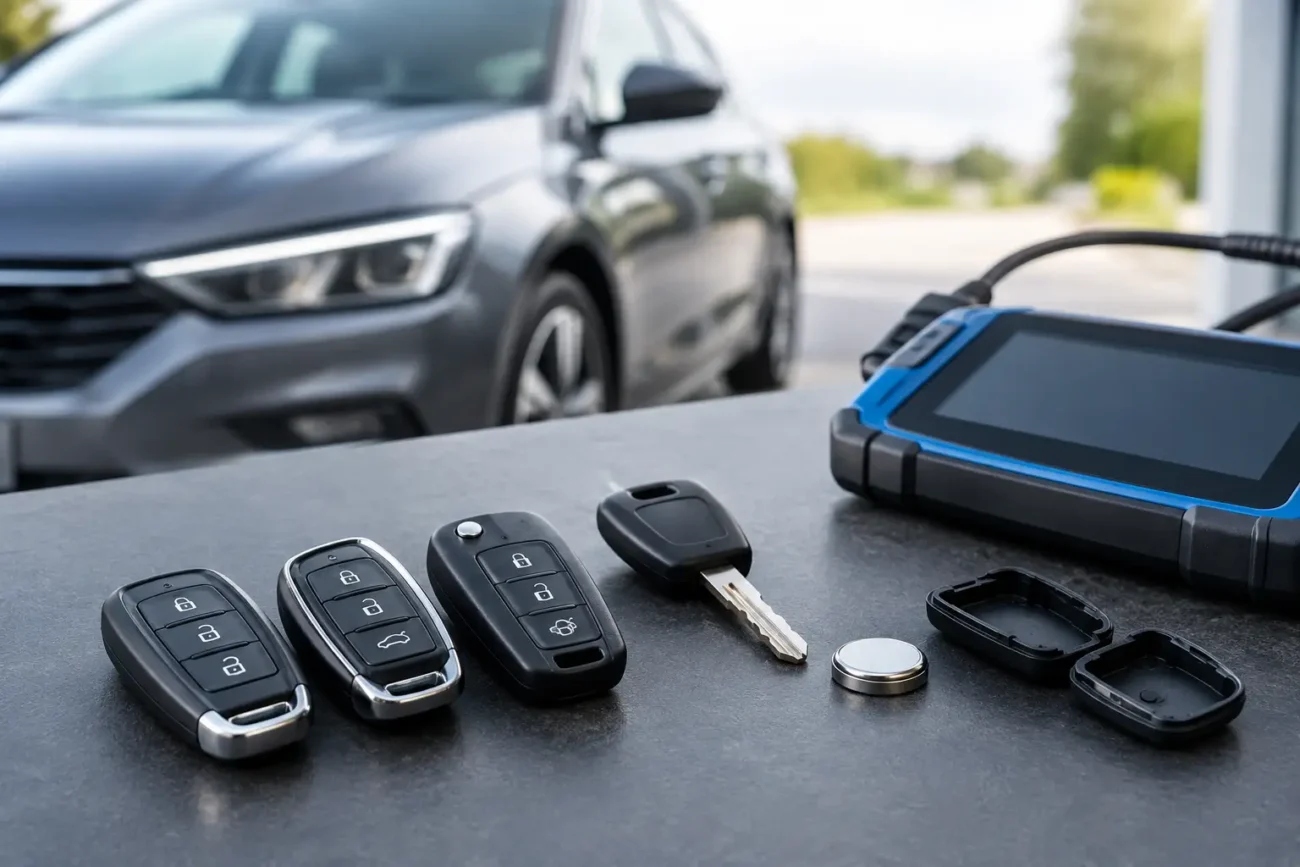
For Audi owners and key professionals, there are usually three realistic routes. The first is a replacement shell or repair part. This is suitable when the internals still work and only the outer housing, blade or buttons need attention.
The second is a complete replacement remote or smart key. This is the right choice when the original unit is missing or the electronics are no longer serviceable. In these cases, programming is normally part of the job.
The third is an OEM-board or aftermarket-compatible solution used by locksmiths and garages. This can be a cost-effective option, but only when the specification matches the vehicle exactly and the buyer understands the programming process.
There is no single best route for every Audi. A worn A4 key from one generation may be an easy shell swap, while a newer keyless Q5 or A6 setup may need a properly prepared smart key with the correct electronics and coding support.
Why compatibility is the part that matters most
The biggest mistake in Audi key replacement is treating all Audi remotes as interchangeable. They are not. The registration year helps, but it is not enough on its own. Audi used different systems across models and production periods, and mid-cycle changes are common.
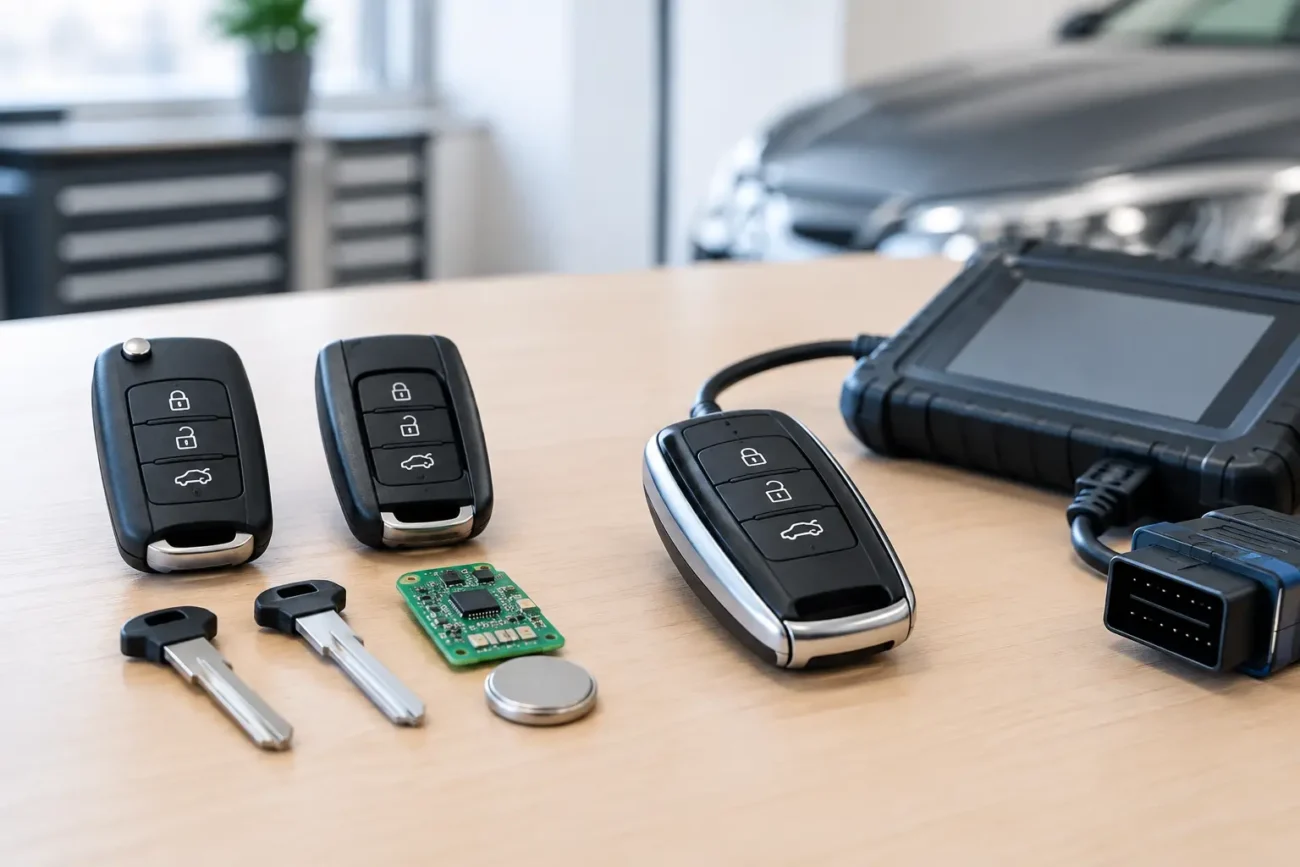
For accurate matching, buyers should check the part number where possible, compare the button configuration, confirm frequency, and look at the internal board style if the key can be opened safely. Blade type also matters if a mechanical emergency key is included. For trade buyers, immobiliser generation and programming method are just as important.
This is why product listings with precise compatibility detail matter. A vague description such as “fits Audi” does not help anyone. A useful listing should point to the models, years, button count and technical identifiers that let you verify the part before ordering.
Will a replacement key need programming?
In most cases, yes. A complete Audi smart key replacement usually needs programming to the vehicle so that the immobiliser recognises it and the remote functions operate correctly. Simply cutting the blade will not be enough for modern smart key systems.
That said, not every purchase involves programming. If you are replacing only the shell and moving over your existing board, transponder and blade, no electronic coding is normally needed. The same applies to some repair jobs where the original internals remain unchanged.
For professional buyers, the programming route depends on the vehicle platform, available equipment and whether the job involves dealer-level procedures, EEPROM work, pre-coded solutions or aftermarket programming tools. For retail customers, the practical question is simpler – if you are buying a full smart key rather than a shell, assume programming will be required unless the product clearly states otherwise.
Dealership versus aftermarket supply
This is where cost and lead time often shape the decision. Main dealers can supply genuine replacement keys, but pricing can be steep and turnaround is not always ideal if the problem is urgent. That route may suit some owners, particularly for very new vehicles, but it is rarely the only option.
Aftermarket supply gives buyers more flexibility. A well-matched replacement shell, remote or smart key can reduce cost significantly, especially when the issue is cosmetic wear or accidental damage rather than a complete system failure. For garages and locksmiths, aftermarket stock also makes more commercial sense when handling regular customer jobs.
The trade-off is that the buyer needs to be more careful. Aftermarket does not mean universal, and a cheap but incorrect key is no saving at all. The value sits in choosing a supplier that provides compatibility detail, quality assurance and stock breadth rather than generic key listings.
What retail buyers should check before ordering
If you are replacing your own Audi key, the safest approach is to gather the details from the existing key first. Check the number of buttons, the shape of the casing, whether the vehicle uses keyless start, and whether an emergency blade is present. If the key can be opened without damage, compare the internal board and any visible part numbers.
Also be clear about your goal. If the key still starts the car and you only want to fix a damaged shell, you may not need a complete smart key. If the key is lost or fully failed, a shell will not solve the problem.
Most returns in this category come from ordering the wrong item for the actual fault. Buying a complete remote when you only needed a shell wastes money. Buying a shell when the board is dead does the same.
What trade buyers will already be weighing up
For locksmiths, automotive technicians and garages, Audi jobs are usually about speed and certainty. You need stock that covers the common Audi platforms, and you need enough product detail to avoid trial-and-error ordering.
That means looking beyond the casing and checking board type, transponder support, frequency and programming path. It also means deciding whether the job is best handled with a shell, an aftermarket complete key, an OEM-board solution or a specialist programming setup.
Where margins matter, dependable supply matters just as much. A low-cost part that fails on-site or arrives with weak build quality slows the whole job down. Buyers in the trade tend to value consistency over headline cheap pricing, which is why specialist suppliers remain the practical choice for repeat work.
Is it worth replacing a damaged Audi key early?
Usually, yes. A key that still works intermittently can stop working completely with very little warning. Worn buttons, split casings and unstable battery contacts often get worse rather than staying manageable.
Replacing or repairing the key early is often cheaper than waiting until you are locked out, unable to start the vehicle, or forced into an urgent same-day solution. The same logic applies to spare keys. If you only have one working Audi key, getting a second sorted before there is a problem is usually the sensible move.
For both retail and trade customers, planning ahead reduces cost, stress and downtime. It also gives you more options, because you can focus on the correct product rather than whatever is available at short notice.
Choosing a supplier that gets the details right
Audi key replacement is not just about finding a fob that looks familiar. It is about getting the right specification, at the right price, with clear compatibility information and quick UK fulfilment. That is especially important when the vehicle is off the road or a customer is waiting.
For that reason, a specialist supplier is usually the better fit than a general parts seller. Global Keys Direct serves both vehicle owners and trade professionals by focusing on model-specific key products, replacement shells, smart keys and programming-related solutions with the detail buyers actually need.
If your Audi key is cracked, missing, unreliable or simply your only one, the best next step is to identify exactly what has failed before you order. A well-matched replacement saves time, avoids programming surprises and gets you back to a working key without paying for the wrong fix.
Add a review
Your email address will not be published. Required fields are marked *